Tharoor, Kerala Minister, Collector meet to fix Thiruvananthapuram issues
Synopsis
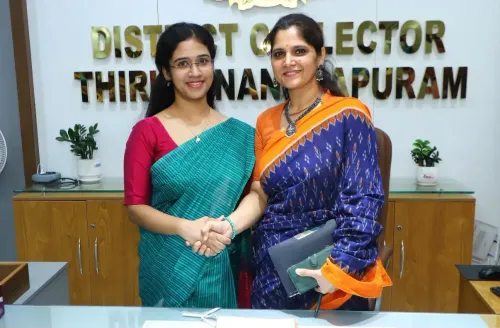
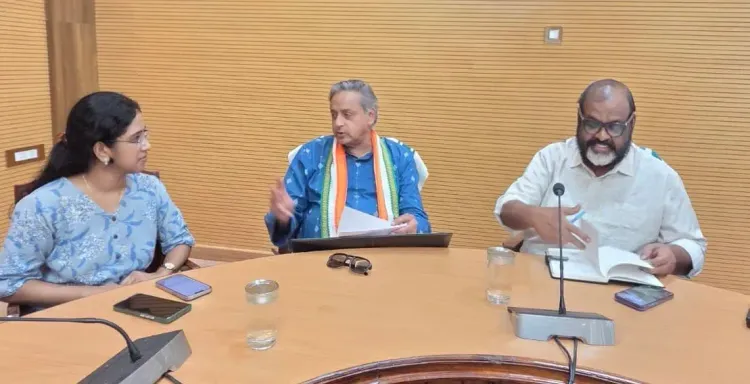
Congress MP Dr. Shashi Tharoor met Kerala Transport Minister C.P. John and Thiruvananthapuram Collector Anju K.S. on October 20 to review pending constituency issues, pledging to make the tripartite coordination a regular practice.
Key Takeaways
The meeting took place on Tuesday, October 20, 2026 in Thiruvananthapuram and lasted more than an hour.
Shashi Tharoor , Kerala Transport Minister C.P.
John , and District Collector Anju K.S. were the three participants.
John serves as both Transport Minister and the coordinating Minister for Thiruvananthapuram district.
The meeting reviewed issues requiring follow-up at the constituency and district level, though specific items were not publicly disclosed.
All three committed to making such coordination sessions a regular practice going forward.
The meeting reflects cross-party coordination between a Congress MP and an LDF state government, a common feature of Kerala's governance.
Even a public holiday became a working session in Thiruvananthapuram on Tuesday, October 20, as Congress MP Dr. Shashi Tharoor sat down for an hour-long coordination meeting with Kerala's Transport Minister and the district's new Collector to work through a backlog of civic and administrative issues facing the capital constituency.
Who was in the room and why it matters
Kerala Transport Minister C.P. John, who also serves as the coordinating Minister for Thiruvananthapuram, joined Tharoor for the session. The district's Collector, Anju K.S., participated as well — a significant presence, given that the Collector is the principal administrative officer responsible for executing government programmes at the ground level.
Tharoor described the meeting as lasting 'more than an hour' and focused on 'all the issues requiring our attention and follow-up.' The three committed to making such coordination a regular practice, signalling an intent to institutionalise what is often an ad hoc process.
Congress MP, LDF minister — an unlikely but practical pairing
The optics are quietly notable: Tharoor represents a Congress-held Lok Sabha seat while C.P. John serves in Kerala's Left Democratic Front government. In Kerala's political culture, cross-alignment coordination between a state government minister and an opposition MP is not uncommon — local infrastructure, transport connectivity, and civic administration do not pause for party arithmetic. For residents of Thiruvananthapuram, what matters is whether potholes get fixed, bus routes get rationalised, and pending projects get cleared.
Indian MPs routinely engage district collectors and state ministers to shepherd constituency-level concerns — pending road approvals, public transport upgrades, land acquisition status — through bureaucratic channels. The involvement of the Collector ensures that whatever emerges from these discussions has direct administrative traction.
The pledge to meet regularly
The line 'We will make this a regular practice' is the most consequential sentence in Tharoor's post. One-off review meetings are commonplace; scheduled, recurring tripartite coordination between an MP, a coordinating minister, and a district collector is rarer, and if maintained, could accelerate follow-up on issues that typically stall in inter-departmental correspondence. Whether that commitment translates into a formal calendar — and what specific outcomes it yields — is the story to watch.
Point of View
But the real test will be whether specific follow-up actions are publicly tracked or quietly absorbed into the bureaucratic timeline.
NationPress
20 Oct 2026
Frequently Asked Questions
Why did Shashi Tharoor meet Kerala Transport Minister C.P. John?
Tharoor held the meeting to review pending local issues in Thiruvananthapuram constituency and coordinate follow-up action. C.P. John is both the Transport Minister and the coordinating Minister for Thiruvananthapuram, making him a key state-government contact for constituency-level matters.
Who is Anju K.S., the Thiruvananthapuram Collector?
Anju K.S. is the District Collector of Thiruvananthapuram, the principal administrative officer responsible for government programme implementation at the district level. She joined the October 20 meeting with Tharoor and Minister C.P. John.
Is it unusual for a Congress MP to meet an LDF minister in Kerala?
Not in Kerala's governance culture. MPs from opposition parties frequently coordinate with state government ministers and district collectors on local civic and infrastructure issues, as these matters operate independently of party-political alignments.
What issues were discussed at the Thiruvananthapuram coordination meeting?
Tharoor described the agenda as 'all the issues requiring our attention and follow-up' but did not publicly specify individual items. Transport, civic infrastructure, and pending local projects are typical subjects for such MP-Minister-Collector reviews.
Will Tharoor hold more such meetings with the Kerala Transport Minister?
Yes, all three participants pledged to make the coordination meeting a regular practice, according to Tharoor's post on October 20, 2026.