Tharoor Hosts Kerala Transport Minister C.P. John on KSRTC Revamp
Synopsis
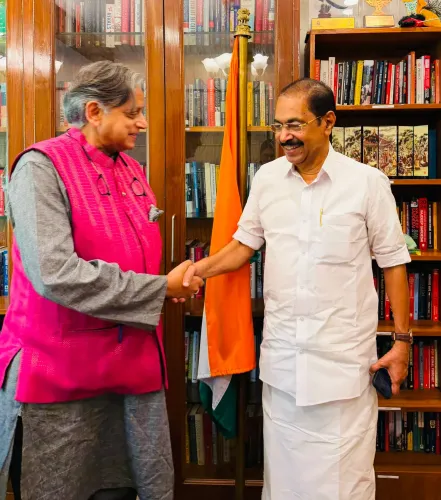
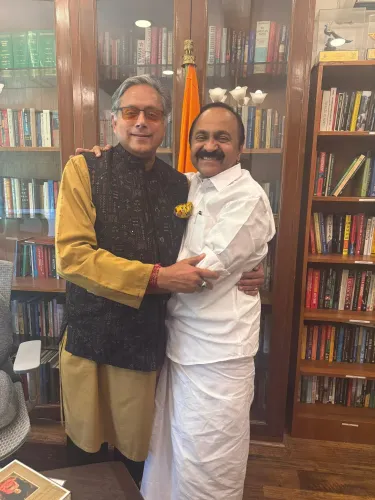
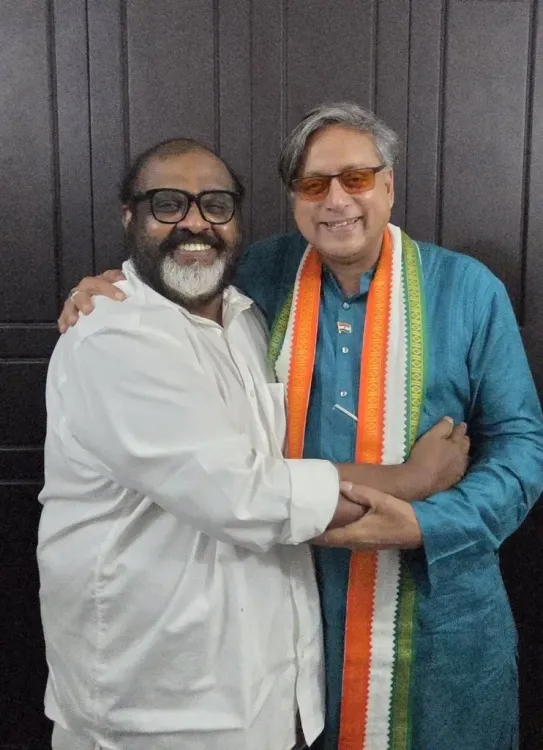
Congress MP Dr. Shashi Tharoor said Kerala Transport Minister C.P. John, who represents the Thiruvananthapuram Central Assembly segment, called on him with ambitious plans to revive and modernise the ageing KSRTC bus fleet. Tharoor described the minister as a long-standing UDF ally, framing the meeting as coordination on constituency-level public transport delivery.
Key Takeaways
Shashi Tharoor hosted Kerala Transport Minister C.P.
John at a courtesy meeting.
John represents the Thiruvananthapuram Central Assembly segment inside Tharoor's Lok Sabha seat.
The minister outlined plans to revive and modernise the ageing KSRTC bus fleet.
Tharoor called him 'a long-standing ally in the UDF Kerala family'.
KSRTC has faced persistent fleet ageing and financial stress over successive governments.
Congress MP Dr. Shashi Tharoor on Wednesday said he received a courtesy call from Kerala Transport Minister C.P. John, who also represents the Thiruvananthapuram Central Assembly segment within Tharoor's Lok Sabha constituency. The Thiruvananthapuram MP flagged the minister's intent to revive and modernise the ageing fleet of the state-run bus operator as a central agenda item from the meeting.
In his post, Tharoor described the visit as 'wonderful' and called Mr. John 'a long-standing ally in the UDF Kerala family'. He added that the minister has 'ambitious plans, including reviving and modernising the ageing bus fleet of the state transport corporation'.
Context
The reference is to the Kerala State Road Transport Corporation (KSRTC), the state-owned public bus operator that has for years grappled with an ageing vehicle pool, recurring operational losses and mounting employee dues. Fleet replacement has remained one of the most politically sensitive items on the corporation's balance sheet.
Mr. John, a veteran Left-turned-Congress-allied politician, represents the Thiruvananthapuram Central Assembly seat, which sits inside Tharoor's parliamentary constituency. The meeting therefore doubles as constituency coordination between an MP and an MLA-minister who share the same voter base.
Policy backdrop
Successive Kerala governments — both UDF and LDF — have announced KSRTC fleet renewal programmes since the 2000s, with periodic procurement of new buses to ease passenger complaints and tighten emission compliance. None of the rounds have decisively reversed the corporation's structural financial stress.
Modernisation typically involves a mix of diesel replacements, electric-bus induction under central schemes, and route rationalisation. Kerala's effort runs parallel to similar pushes by state transport undertakings across India seeking to upgrade urban mobility and cut fuel bills.
Stakeholders and impact
The immediate stakeholders are Kerala's daily bus commuters — students, government employees and long-distance inter-district travellers — for whom KSRTC remains a primary mode of transit. A second constituency is the corporation's large workforce of drivers, conductors and mechanics, whose salary cycles have repeatedly been a flashpoint.
For the Congress-led UDF, visible delivery on a flagship service like public transport offers a contrast point against the ruling LDF on governance metrics. Tharoor's public endorsement of the minister's plans signals alignment between the parliamentary and state-government wings of the alliance in the capital city.
What's next
The substance of any modernisation push will depend on Kerala's state budget allocations and cabinet clearances for fresh KSRTC procurement tenders. Central support for state road transport undertakings — through schemes for electric-bus deployment and urban mobility — is another lever that could be raised in Parliament.
For Thiruvananthapuram voters, the test will be whether the coordination on display translates into newer, more reliable buses on city and trunk routes in the months ahead.
Point of View
While spotlighting a service-delivery issue with broad resonance. KSRTC modernisation is among the few transport stories in Kerala that cuts across ideological lines, which makes it useful political ground for the UDF to claim. Tharoor's framing — ally, ambitious plans, modernisation — signals that the Congress wants public transport positioned as a governance differentiator. The follow-through, in budgets and tenders, will determine whether this is coordination or choreography.
NationPress
20 Oct 2026
Frequently Asked Questions
Who is C.P. John and what is his role in Kerala?
C.P. John is the Kerala Transport Minister and represents the Thiruvananthapuram Central Assembly constituency. He is part of the Congress-led UDF alliance in the state.
What did Shashi Tharoor say about the KSRTC bus fleet?
Tharoor said the Transport Minister has ambitious plans to revive and modernise the ageing bus fleet of the state transport corporation, KSRTC.
What is KSRTC and why does it need modernisation?
KSRTC is the Kerala State Road Transport Corporation, the state-run public bus operator. It has faced an ageing vehicle pool, recurring operating losses and employee-dues pressures for years.
Is C.P. John's constituency part of Tharoor's Lok Sabha seat?
Yes. The Thiruvananthapuram Central Assembly segment that Mr. John represents falls within Tharoor's Thiruvananthapuram Lok Sabha constituency.
What is the UDF in Kerala?
The UDF, or United Democratic Front, is the Congress-led political alliance in Kerala. Both Shashi Tharoor and C.P. John are part of this alliance.