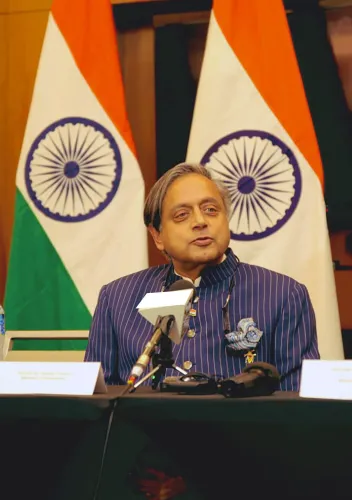
Tharoor Discusses Ageing Population Policy with Kerala Opposition Leader
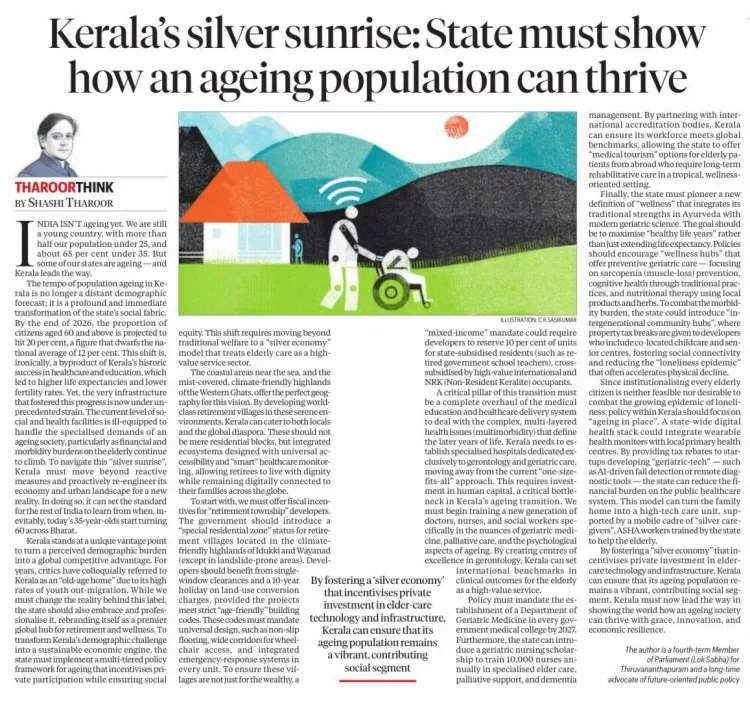
Synopsis
Congress MP Dr. Shashi Tharoor has said he is in active discussions with Kerala Congress leader V.D. Satheesan on a policy initiative for the state's ageing population, arguing Kerala can set a national example in managing one of India's sharpest demographic transitions.
Key Takeaways
Shashi Tharoor announced on 28 May 2026 that he is discussing an ageing-population policy initiative with Kerala Congress leader V.D.
Kerala has one of the highest proportions of elderly residents in India, driven by low fertility and high life expectancy.
India's elder-care framework rests on the National Policy for Older Persons (1999) and the Maintenance and Welfare of Parents and Senior Citizens Act (2007) .
Southern states including Kerala, Tamil Nadu and Andhra Pradesh are ageing faster than the national average; other states are projected to follow by 2030–2040 .
A formal Kerala-specific elderly policy framework, if developed, could serve as a model for other states approaching similar demographic profiles.
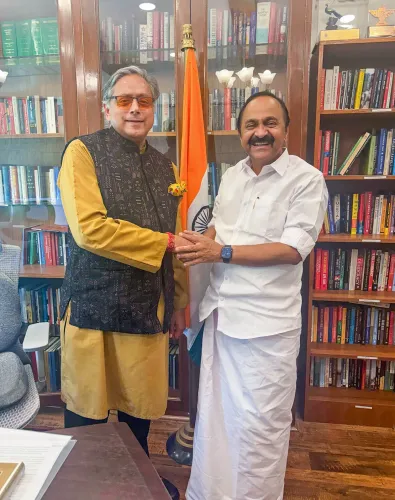
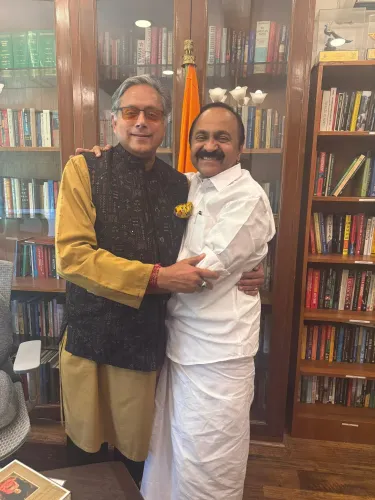
Congress MP Dr. Shashi Tharoor on Thursday, 28 May 2026, said he is in discussions with Kerala Congress leader V.D. Satheesan on a policy initiative to address the state's rapidly ageing population, describing Kerala as a potential national model for elder care.
Context
In his post, Dr. Tharoor wrote: 'I'm discussing this policy initiative with Chief Minister @vdsatheesan. Kerala can set an example to the rest of India in how to handle an ageing population effectively.' The reference to Satheesan as 'Chief Minister' appears to be informal or aspirational in usage; V.D. Satheesan currently serves as the Leader of the Opposition in the Kerala Legislative Assembly, with Pinarayi Vijayan holding the office of Chief Minister.
The exchange signals a cross-party policy conversation on one of Kerala's most pressing demographic challenges. The state has among the highest proportions of elderly residents in India, driven by sustained declines in fertility and improvements in life expectancy over several decades.
Policy Backdrop
India's foundational legislative framework for elder welfare rests on two pillars: the National Policy for Older Persons, 1999, which promotes financial security, healthcare and shelter for senior citizens, and the Maintenance and Welfare of Parents and Senior Citizens Act, 2007, which provides legal maintenance rights for the elderly.
Despite these instruments, coverage of geriatric services remains uneven across states. Successive central and state governments have incrementally expanded pension schemes, geriatric clinics and old-age homes, but demand continues to outpace supply, particularly in states experiencing faster ageing curves.
Stakeholders and Impact
Kerala, along with Tamil Nadu and Andhra Pradesh, has seen population ageing accelerate well ahead of the national average. Demographers project that several other Indian states will reach comparable elderly-population ratios by 2030–2040, making Kerala's policy experience directly relevant to national planning.
The primary stakeholders are Kerala's elderly citizens — a constituency that places growing pressure on state budgets for pensions, healthcare infrastructure and social support systems. Any formal policy framework developed in Kerala could serve as a template for states currently at earlier stages of the same demographic transition.
Dr. Tharoor, representing Thiruvananthapuram in the Lok Sabha, has long engaged with social-sector policy. His prior tenure as a Union Minister and as UN Under-Secretary-General has given him exposure to international models of ageing-population management, lending weight to his advocacy on the issue.
What's Next
Observers will watch for concrete outcomes from these discussions, including possible proposals ahead of the next Kerala Assembly session or state budget cycle. A formal Kerala-specific elderly policy framework, if announced, could elevate the state's standing as a laboratory for geriatric governance in India.
With India's demographic dividend gradually narrowing, the political momentum behind elder-care policy is expected to grow. Kerala's willingness to position itself as a model — and the bipartisan tone of Dr. Tharoor's outreach — suggests the issue may gain traction beyond state boundaries in the near term.
Point of View
And any credible framework developed there will inevitably feed into national policy debates as the rest of India ages. The move also allows Tharoor to occupy a constructive, technocratic space on social policy, drawing on his international background to shape discourse beyond routine parliamentary jousting. Whether the discussion translates into a concrete legislative or budgetary proposal will determine its real political weight.
NationPress
11 Oct 2026
Frequently Asked Questions
Why is Kerala considered a model for ageing population policy in India?
Kerala has one of the highest proportions of elderly residents in India due to decades of low fertility rates and high life expectancy, giving it early and extensive experience managing the pressures of an ageing society that other states are only beginning to face.
Who is V.D. Satheesan and what is his role in Kerala politics?
V.D. Satheesan is a senior Kerala Congress leader who serves as the Leader of the Opposition in the Kerala Legislative Assembly.
What is India's existing legal framework for elder care?
India's core elder-care framework comprises the National Policy for Older Persons adopted in 1999 and the Maintenance and Welfare of Parents and Senior Citizens Act enacted in 2007, which together provide for financial security, healthcare, shelter and legal maintenance rights for senior citizens.
What did Shashi Tharoor say about Kerala and ageing population policy?
Dr. Tharoor said he is discussing a policy initiative with Kerala Congress leader V.D. Satheesan and that Kerala can set an example to the rest of India in how to handle an ageing population effectively.
Which Indian states are ageing fastest?
Southern states including Kerala, Tamil Nadu and Andhra Pradesh are experiencing population ageing significantly faster than the national average, with demographers projecting that several other states will reach comparable elderly-population ratios by 2030–2040.