Tharoor Meets Sri Lanka's Jeevan Thondaman, Hails Young Leaders
Synopsis
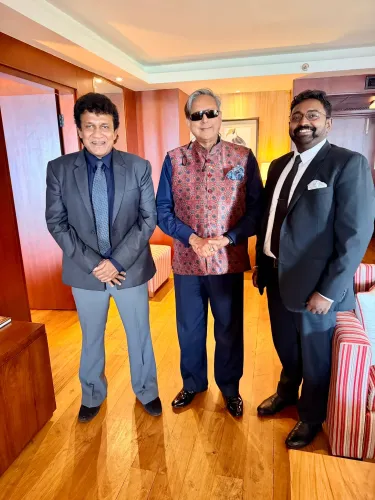
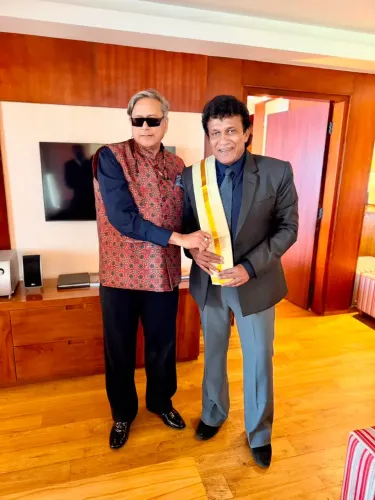
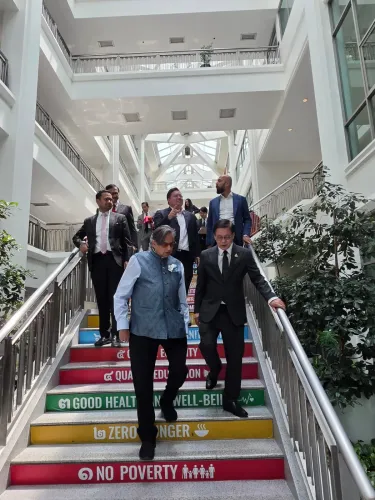
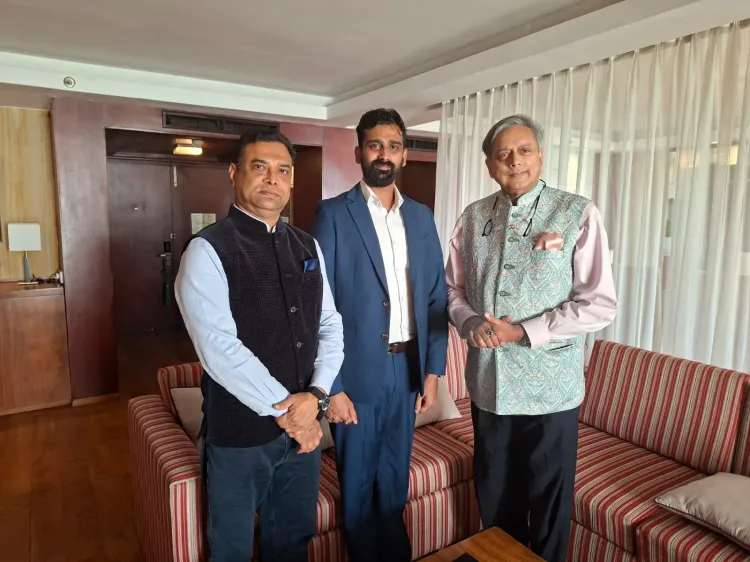
Congress MP Dr. Shashi Tharoor on July 26, 2026, met Sri Lankan politician Jeevan Thondaman — known for being Sri Lanka's youngest Cabinet Minister — and publicly praised him as an example of the educated, constructive young leadership the subcontinent needs.
Key Takeaways
Shashi Tharoor met Jeevan Thondaman of Sri Lanka on July 26, 2026 .
Thondaman is noted for having been Sri Lanka's youngest Cabinet Minister and represents the Ceylon Workers' Congress .
Tharoor described Thondaman as 'educated, well-spoken and constructive' and called such figures 'the future of the subcontinent.' The meeting reflects ongoing informal India-Sri Lanka political networking that complements formal bilateral diplomacy.
The up-country Tamil community of Sri Lanka, which Thondaman's party represents, has long been a focus of Indian parliamentary interest.
Tharoor previously engaged with Sri Lankan counterparts during his tenure as Minister of State for External Affairs between 2009 and 2010 .
Congress MP Dr. Shashi Tharoor on Sunday, July 26, 2026, shared a warm account of meeting Jeevan Thondaman, the Sri Lankan politician he has known since Thondaman served as Sri Lanka's youngest Cabinet Minister, calling him a model of constructive young leadership for the subcontinent.
Context
Tharoor described the encounter as a catch-up with a figure he has tracked for years, writing that 'educated, well-spoken and constructive young political figures like him are truly the future of the subcontinent.' The remark signals the kind of informal, person-to-person diplomatic contact that Indian parliamentarians maintain alongside formal bilateral channels.
Jeevan Thondaman is associated with the Ceylon Workers' Congress, a party that has historically represented the up-country Tamil community of Sri Lanka — plantation workers whose welfare has long been a point of humanitarian interest for Indian politicians, particularly those from Tamil-speaking constituencies.
Policy Backdrop
Dr. Tharoor's interest in India-Sri Lanka relations is not new. During his tenure as Minister of State for External Affairs (2009–2010), he engaged with Sri Lankan counterparts on bilateral relations and people-to-people contacts, including issues touching on the Tamil community's welfare.
The broader India-Sri Lanka relationship has in recent years been shaped by Sri Lanka's economic recovery, continued cooperation on trade, maritime security, and energy connectivity. Informal political networking between legislators and ministers of both countries has been a consistent feature of this engagement, reinforcing ties that go beyond official summits.
Stakeholders and Impact
The up-country Tamil community in Sri Lanka — historically linked to Indian-origin plantation workers — remains a community whose political representation is closely watched by Indian observers. Leaders like Thondaman, who have risen to cabinet-level positions at a young age, are seen as pivotal in channelling that community's aspirations within the Sri Lankan political mainstream.
For South Asia more broadly, Tharoor's public endorsement of a young Sri Lankan politician as 'the future of the subcontinent' carries symbolic weight. It underscores an Indian parliamentary interest in nurturing constructive, reform-oriented political figures across the region, independent of government-to-government diplomacy.
What's Next
Exchanges of this kind often precede or accompany more structured bilateral engagements. With SAARC-linked platforms and youth-oriented regional forums periodically on the agenda, meetings between Indian parliamentarians and Sri Lankan political figures could feed into broader multilateral conversations on generational leadership in South Asia. Whether this particular catch-up leads to any formal follow-up will be worth watching in the weeks ahead.
Point of View
Particularly those representing the island's Tamil minority. It fits a broader pattern in which Indian politicians use informal engagements to reinforce people-to-people diplomacy alongside government channels. The framing of Thondaman as 'the future of the subcontinent' also subtly positions India as a stakeholder in the quality of political leadership across South Asia. At a time when regional multilateralism through platforms like SAARC remains sluggish, such bilateral personal contacts carry outsized diplomatic value.
NationPress
26 Jul 2026
Frequently Asked Questions
Who is Jeevan Thondaman?
Jeevan Thondaman is a Sri Lankan politician associated with the Ceylon Workers' Congress, a party representing the up-country Tamil community, and gained prominence as Sri Lanka's youngest Cabinet Minister.
Why did Shashi Tharoor meet Jeevan Thondaman?
Tharoor described the meeting as a personal catch-up with someone he has known for years, using the occasion to publicly praise Thondaman as an example of constructive young political leadership in South Asia.
What is the Ceylon Workers' Congress?
The Ceylon Workers' Congress is a Sri Lankan political party that has historically represented the interests of up-country Tamils, largely descendants of Indian-origin plantation workers.
What is Shashi Tharoor's connection to Sri Lanka?
As Minister of State for External Affairs between 2009 and 2010, Tharoor engaged with Sri Lankan counterparts on bilateral relations and issues affecting the Tamil community, giving him longstanding familiarity with Sri Lankan politics.
What does this meeting mean for India-Sri Lanka relations?
While informal in nature, the meeting reflects the ongoing people-to-people and political networking that underpins the India-Sri Lanka relationship alongside formal diplomatic engagements.