Tharoor Returns to Delhi After J&K, Ladakh Tour
Synopsis
Congress MP Dr. Shashi Tharoor returned to Delhi on June 26 after a four-day tour spanning Jammu, Srinagar, Kargil and Leh. He announced a thread-based recap of the visit, which began on the afternoon of June 22 and covered both Union Territories created by the 2019 reorganisation.
Key Takeaways
Shashi Tharoor returned to New Delhi on June 26, 2026 after a multi-day tour of Jammu and Kashmir and Ladakh .
The tour covered Jammu , Srinagar , Kargil , Leh , and intermediate locations, starting from the afternoon of June 22 .
Tharoor described the tour as 'arduous but amazing' and said he was too preoccupied to post updates mid-tour.
He announced a detailed thread-based recap to follow, covering events from each leg of the journey.
The visit spans both Union Territories created under the Jammu and Kashmir Reorganisation Act, 2019 .
Political observers will watch for any parliamentary follow-up on governance, connectivity, or statehood issues in the region.
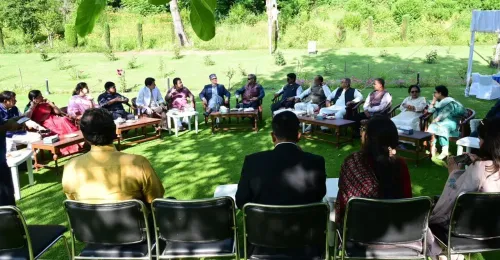
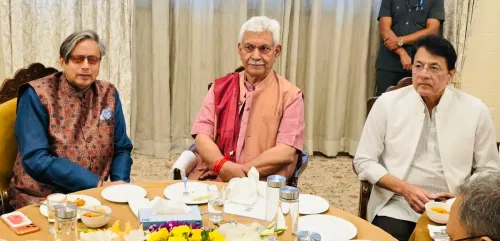
Congress MP Dr. Shashi Tharoor returned to New Delhi on Friday, June 26, after completing what he described as an 'arduous but amazing' tour covering Jammu, Srinagar, Kargil, Leh, and several locations in between, beginning from the afternoon of June 22. The Thiruvananthapuram MP announced his return on Saturday, June 27, promising a detailed thread-based recap of the multi-day visit across the Union Territory of Jammu and Kashmir and Ladakh.
Context
Tharoor noted that the pace of the tour had kept him too preoccupied to post updates since midway through the first day in Jammu, making June 27 the first occasion he could share a comprehensive account. The itinerary — spanning the Jammu region, the Kashmir Valley, and the high-altitude districts of Kargil and Leh in Ladakh — covered a broad geographic and administrative sweep of the two Union Territories created after the 2019 reorganisation.
In his post, Tharoor indicated he would share updates in a thread, 'starting from the afternoon of June 22,' suggesting the visit spanned at least four days and involved multiple stops across diverse terrain.
Policy Backdrop
Opposition MPs conducting tours of Jammu and Kashmir and Ladakh have become a recurring feature of Indian political life since the passage of the Jammu and Kashmir Reorganisation Act, 2019, which bifurcated the erstwhile state into two separate Union Territories — Jammu and Kashmir (with a legislature) and Ladakh (without one). These visits are typically aimed at engaging with local communities, assessing on-ground conditions, and building a parliamentary record of observations from the region.
Kargil, historically significant as the site of the 1999 Kargil conflict, and Leh, the administrative headquarters of Ladakh, have both been focal points of debates around connectivity, infrastructure investment, and political representation since Ladakh lost its legislature following the reorganisation. The region continues to attract parliamentary attention on questions of statehood, development funding, and border infrastructure.
Stakeholders and Impact
Residents of Jammu and Kashmir and Ladakh — including communities in border districts such as Kargil — are the primary stakeholders in any parliamentary engagement of this nature. Opposition visits serve as a mechanism for elected representatives to gather ground-level perspectives that can be raised in parliamentary debates, committee hearings, or public discourse.
As a former Union Minister of State for External Affairs and former UN Under-Secretary-General, Tharoor brings an additional layer of diplomatic and policy experience to such regional assessments. His observations, once fully shared through the promised thread, are likely to draw attention from political observers tracking the Congress party's engagement with J&K and Ladakh affairs.
What's Next
Tharoor has indicated that further posts will follow, offering a detailed account of events and interactions from each leg of the journey beginning June 22. Political observers will watch whether the tour generates formal parliamentary action — such as questions, adjournment motions, or committee inputs — related to governance, connectivity, or representation in the two Union Territories.
Broader attention remains fixed on the timeline for Jammu and Kashmir Assembly elections and any fresh central government announcements on development packages or the long-pending question of statehood restoration for the region.
Point of View
The Kashmir Valley, Kargil and Leh represents a deliberate and geographically comprehensive engagement with a region that has remained politically sensitive since the 2019 bifurcation. For the Congress party, such tours serve a dual purpose: building on-ground intelligence for parliamentary use and signalling continued opposition interest in a region where electoral stakes are rising ahead of any future Assembly polls. The promise of a detailed thread recap suggests the visit was substantive enough to warrant a structured public account, rather than routine optics. Whether the tour translates into concrete parliamentary action will determine its lasting political weight.
NationPress
27 Jun 2026
Frequently Asked Questions
Where did Shashi Tharoor travel in June 2026?
Dr. Shashi Tharoor travelled to Jammu, Srinagar, Kargil and Leh, along with several intermediate locations, between June 22 and June 26, 2026.
Why did Shashi Tharoor visit Jammu and Kashmir?
Tharoor conducted a political tour of Jammu and Kashmir and Ladakh, a pattern common among opposition MPs seeking to assess on-ground conditions and engage with local communities since the 2019 reorganisation.
What is the significance of Kargil and Leh in Indian politics?
Kargil is historically significant as the site of the 1999 conflict and is a key border district in Ladakh, while Leh is the administrative headquarters of Ladakh — both have been central to debates on connectivity, representation and statehood since Ladakh lost its legislature in 2019.
What did Shashi Tharoor say about his tour on X?
Tharoor described the tour as 'arduous but amazing' and said he had been too preoccupied to post updates since midway through his first day in Jammu, announcing a thread-based recap starting from June 22.
What is the status of Jammu and Kashmir after 2019?
Under the Jammu and Kashmir Reorganisation Act, 2019, the erstwhile state was bifurcated into two Union Territories — Jammu and Kashmir, which has a legislature, and Ladakh, which does not.