Tharoor on Authenticity: 'What You See Is What You Get'

Synopsis
Congress MP Dr. Shashi Tharoor responded to a compliment on X on 15 June 2026, stating that he presents a single, authentic version of himself to everyone he engages with — online or in person.
Key Takeaways
Shashi Tharoor replied to user @okkPriyanka on 15 June 2026 on X.
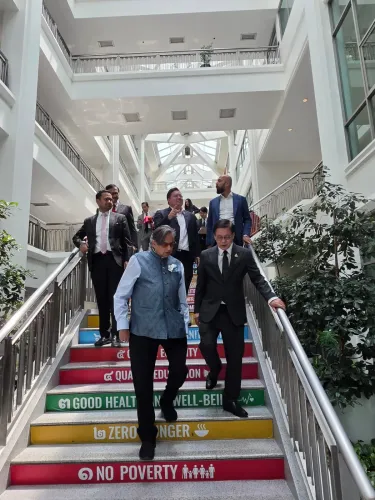
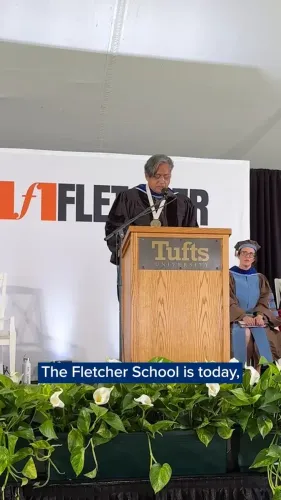
Tharoor stated: 'There's only one version of me for whoever I encounter or engage with.' The post was accompanied by 3 images and shared from his verified account.
Tharoor represents Thiruvananthapuram in the Lok Sabha and is a former UN Under-Secretary-General .
The exchange reflects his long-standing practice of direct citizen engagement on social media.
Congress MP Dr. Shashi Tharoor responded to a compliment from an X user on Monday, 15 June 2026, affirming that he presents a single, consistent version of himself to everyone he meets or engages with online.
Context
Replying to @okkPriyanka, who had expressed appreciation for him, Tharoor wrote: 'Whatever I am is what you see, hear and read from me! There's only one version of me for whoever I encounter or engage with — and what you see is what you get.' The post, accompanied by three images, was shared from his verified X account in the afternoon.
The exchange is characteristic of Tharoor's long-standing practice of responding directly to citizens and followers on social media, a habit that has contributed to his reputation for accessibility despite his senior standing in public life.
Policy Backdrop
Tharoor, who represents Thiruvananthapuram in the Lok Sabha, has served as a Union Minister of State and spent decades as an official at the United Nations, rising to the position of Under-Secretary-General. His public profile blends parliamentary politics, literary output, and an active digital presence.
Senior Indian politicians increasingly use platforms such as X to project personal consistency and engage directly with voters, bypassing traditional media intermediaries. Tharoor has been among the more prolific practitioners of this approach within the Indian National Congress.
Stakeholders and Impact
The exchange resonated with Tharoor's social media following, which spans supporters of the Congress party, readers of his books, and citizens interested in Indian foreign policy and parliamentary affairs. Posts of this nature reinforce a politician's personal brand and signal openness to public interaction.
For ordinary users, direct replies from elected representatives carry symbolic weight, suggesting accountability and approachability — qualities that hold particular value in the lead-up to electoral cycles.
What's Next
Tharoor's social media activity continues to be closely watched as the Indian National Congress positions itself ahead of state and national electoral contests. Exchanges such as this one, while personal in tone, form part of a broader digital outreach strategy that senior leaders across parties have embraced. His consistency in responding to both political commentary and personal appreciation underscores the role that direct citizen engagement now plays in Indian political communication.
Point of View
Publicly affirming personal consistency is a deliberate act of reputation management. In an era when Indian voters are increasingly sceptical of performative politics, such statements — however conversational — serve to reinforce an image of authenticity. The exchange fits a broader pattern among senior Congress leaders of using X not just for policy commentary but to humanise themselves ahead of electoral cycles.
NationPress
15 Sept 2026
Frequently Asked Questions
What did Shashi Tharoor post on X on 15 June 2026?
Tharoor replied to a compliment from user @okkPriyanka, saying 'What you see is what you get' and affirming that he presents one consistent version of himself to everyone he meets or engages with.
Who is Shashi Tharoor?
Dr. Shashi Tharoor is the Congress MP from Thiruvananthapuram, a former Union Minister of State, and a former UN Under-Secretary-General. He is also a widely read author.
Why does Shashi Tharoor respond to ordinary users on X?
Tharoor has a long-standing practice of engaging directly with citizens and followers on social media, which he uses for both political commentary and personal exchanges.
What does 'what you see is what you get' mean in Tharoor's post?
Tharoor used the phrase to convey that he does not change his personality or behaviour depending on who he is speaking to — his public and private personas are the same.
Is Shashi Tharoor active on social media?
Yes, Tharoor is among the more active senior Congress leaders on X, regularly posting on politics, policy, literature, and responding to followers.