Tharoor Wraps Ladakh Visit With Fire and Fury Corps Briefing
Synopsis
Congress MP Dr. Shashi Tharoor wrapped up a parliamentary visit to Ladakh with a briefing by the Fire and Fury Corps — raised after the 1999 Kargil War — and met Lt-Governor V.K. Saxena, who is pursuing water security and afforestation initiatives in the Union Territory.
Key Takeaways
Shashi Tharoor shared details of a concluded parliamentary trip to Ladakh on 27 June 2026 .
The delegation received a final briefing from the Fire and Fury Corps ( XIV Corps ), the Indian Army's dedicated Ladakh command headquartered in Leh .
The XIV Corps was raised in September 1999 directly after the Kargil War to provide corps-level command for the Himalayan frontier.
Saxena was credited with 'dramatically improving water security and afforestation' in the Union Territory .
Ladakh has been a Union Territory since 31 October 2019 , bordering both China and Pakistan .
The visit highlights parliamentary engagement with both defence preparedness and civilian development in one of India's most strategically sensitive regions.
Congress MP Dr. Shashi Tharoor on Saturday, 27 June 2026 shared the conclusion of a parliamentary visit to Ladakh, disclosing a final briefing by the Fire and Fury Corps — the Indian Army's XIV Corps headquartered in Leh — and a meeting with Lt-Governor Shri V.K. Saxena, who he said has been working to improve water security and afforestation in the Union Territory.
Context
In his post, Dr. Tharoor described the briefing by the evocatively named Fire and Fury Corps as the closing chapter of the delegation's trip, noting the Corps was 'commissioned after the Kargil War.' He also highlighted a separate meeting with Lt-Governor V.K. Saxena, crediting him with 'dramatically improving water security and afforestation in the Union Territory.'
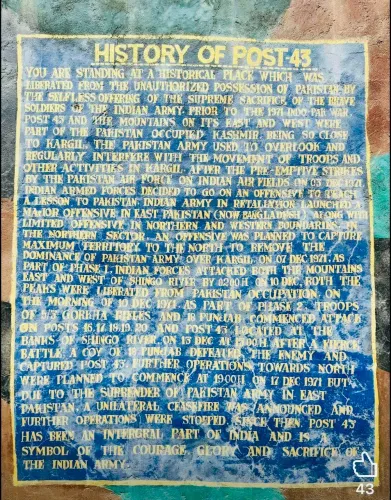
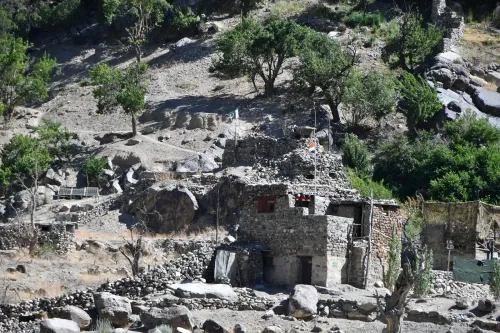
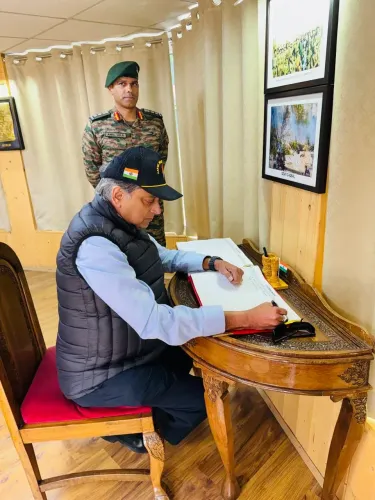
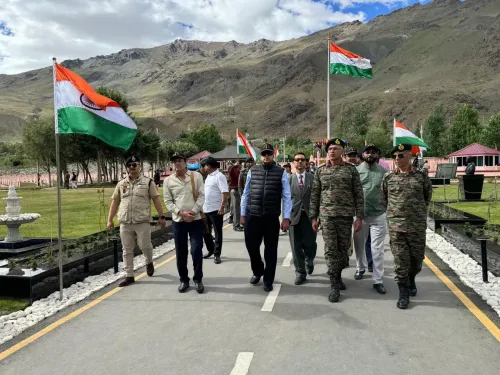
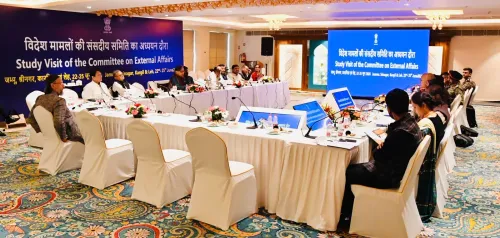
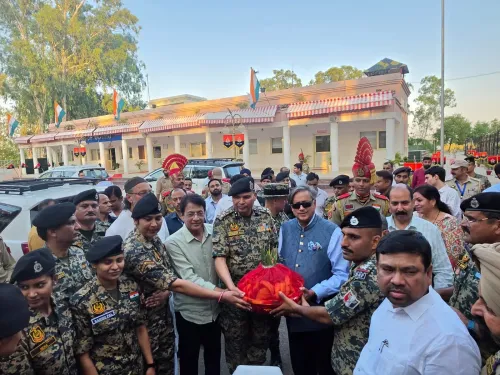
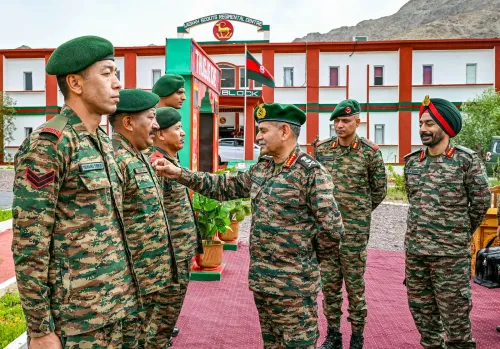
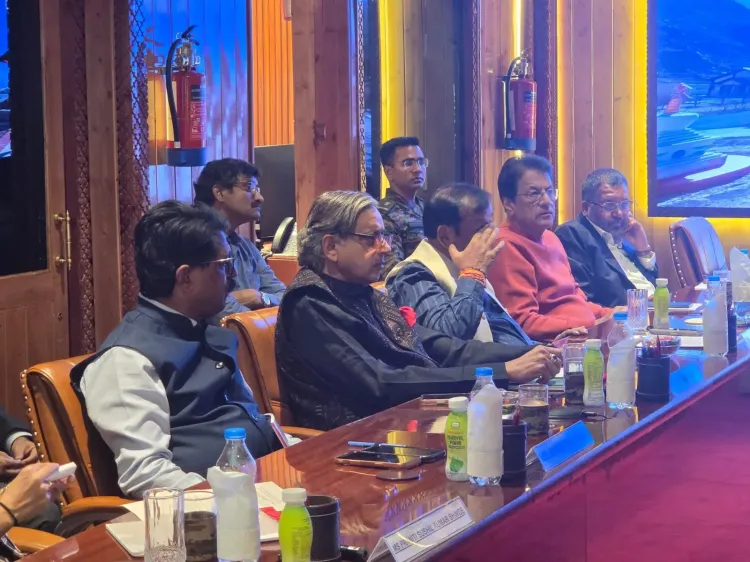
The post was accompanied by four images from the visit, offering a visual record of the parliamentary engagement with both military and civil administration in Ladakh.
Policy Backdrop
The Fire and Fury Corps, formally designated XIV Corps, was raised in September 1999 in the immediate aftermath of the Kargil War — the May–July 1999 armed conflict between India and Pakistan that exposed critical gaps in the Indian Army's command structure in the Himalayas. Its creation gave the armed forces a dedicated corps-level headquarters to manage simultaneous threats along the western and northern borders of the region.
Ladakh itself was carved out of the erstwhile state of Jammu and Kashmir and elevated to a Union Territory on 31 October 2019. The reorganisation, combined with the 2020 Galwan Valley clashes along the Line of Actual Control, has since accelerated both military infrastructure development and civilian resilience programmes — including water harvesting and large-scale afforestation drives — across the UT.
Stakeholders and Impact
For the Indian Army, parliamentary visits of this nature serve as an avenue for elected representatives to receive ground-level briefings on border security, force readiness, and infrastructure challenges in one of the world's most strategically sensitive theatres. The Fire and Fury Corps guards a frontier that borders both China and Pakistan.
For Ladakh's roughly 2.74 lakh residents, the Lt-Governor's focus on water security is particularly consequential: the UT faces acute glacial retreat and seasonal water scarcity, making afforestation and water-harvesting initiatives central to long-term habitability. Dr. Tharoor's public acknowledgement of these efforts draws additional national attention to the UT's environmental challenges.
What's Next
Parliamentary delegations to sensitive border regions typically generate committee notes or floor references that can shape legislative debate on defence budgets and UT governance. Any formal report from this trip to Ladakh could inform parliamentary scrutiny of both the Indian Army's northern-border posture and the Ladakh administration's civilian development agenda.
The next phase of the UT administration's announced water-security and plantation programmes will be closely watched, particularly as climate pressures on Himalayan glaciers intensify and cross-border tensions along the Line of Actual Control remain a live concern.
Point of View
Suggesting the delegation sought a holistic picture of the UT's strategic and developmental challenges. Parliamentary visits to border regions have historically fed into budget debates and committee scrutiny, making the timing — amid ongoing infrastructure build-up along the Line of Actual Control — politically significant. The acknowledgement of V.K. Saxena's water-security work, coming from an Opposition MP, is an unusually bipartisan note that could soften the usual adversarial framing around UT governance. Broader, it reflects a growing consensus across party lines that Ladakh's environmental fragility is as urgent a national-security concern as its military exposure.
NationPress
27 Jun 2026
Frequently Asked Questions
What is the Fire and Fury Corps?
The Fire and Fury Corps is the popular name for the Indian Army's XIV Corps, headquartered in Leh, Ladakh. It was raised in September 1999 after the Kargil War to provide dedicated corps-level command for the Ladakh sector along the Line of Actual Control with China and Pakistan.
Why did Shashi Tharoor visit Ladakh?
Dr. Shashi Tharoor visited Ladakh as part of a parliamentary delegation. The trip concluded with a briefing by the Fire and Fury Corps on defence matters and a meeting with Lt-Governor V.K. Saxena on water security and afforestation in the Union Territory.
When was Ladakh made a Union Territory?
Ladakh was separated from the erstwhile state of Jammu and Kashmir and designated a Union Territory of India on 31 October 2019.
What is the Kargil War and why does it matter for Ladakh?
The Kargil War was an armed conflict between India and Pakistan fought from May to July 1999 in the Kargil district of Ladakh. It prompted a major restructuring of Indian Army deployments in the Himalayas, leading directly to the creation of the Fire and Fury Corps.
What water security work is happening in Ladakh?
According to Dr. Tharoor's account of his meeting with Lt-Governor V.K. Saxena, the Ladakh administration has been working on dramatically improving water security and afforestation in the Union Territory, addressing the region's acute vulnerability to glacial retreat and seasonal water scarcity.