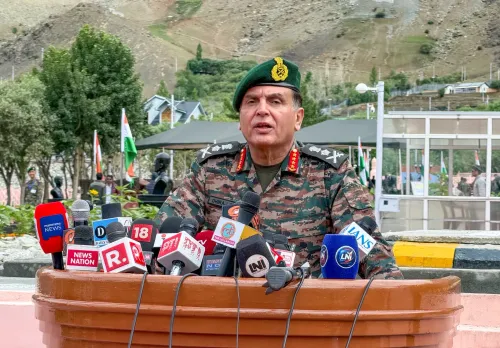
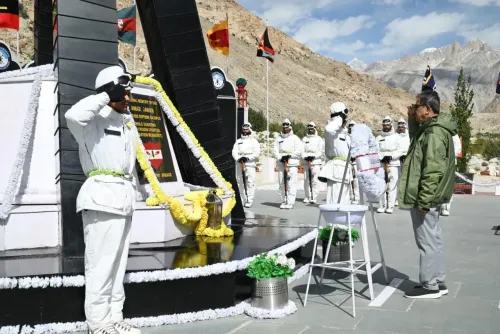
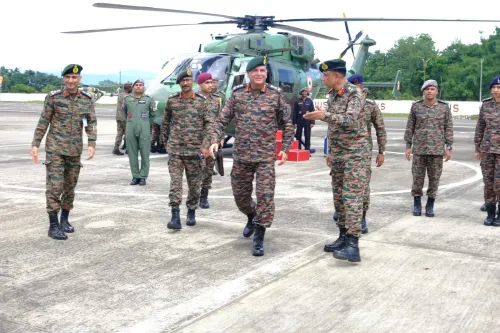
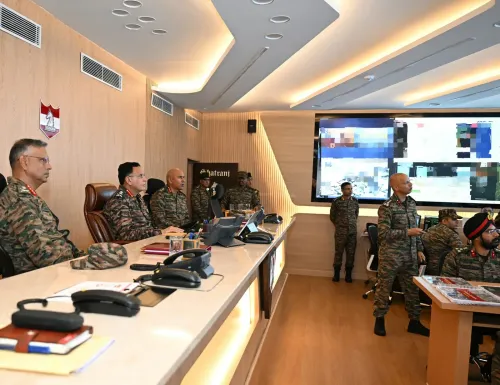
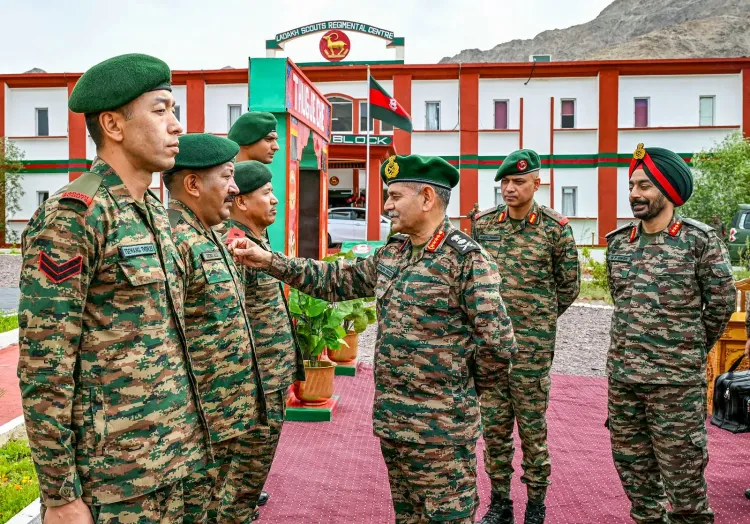
COAS General Upendra Dwivedi reviews Ladakh ops preparedness at Fire and Fury Corps
Synopsis
Army Chief General Upendra Dwivedi's unannounced visit to the Fire and Fury Corps in Leh is more than a morale call — it is a command-level signal that Ladakh remains the Indian Army's most watched frontier. With the Depsang standoff unresolved and infrastructure competition intensifying along the LAC, the COAS's personal review of combat readiness, surveillance, and mobility tells its own story.
Key Takeaways
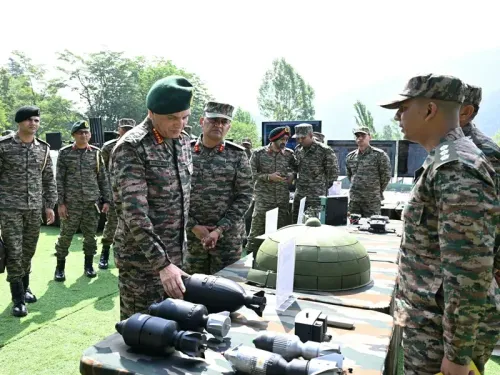
Chief of Army Staff General Upendra Dwivedi visited Fire and Fury Corps HQ in Leh on 27 June .
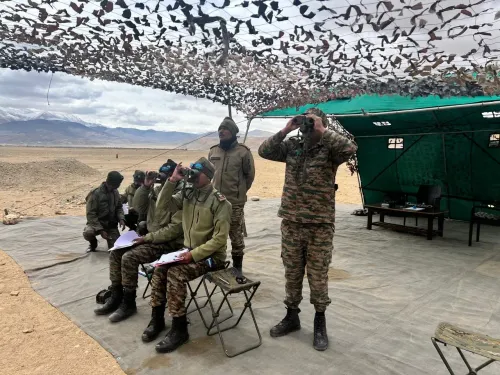
The COAS reviewed operational preparedness, combat readiness, capability development, and infrastructure progress in Ladakh .
General Dwivedi commended all ranks for professionalism in 'one of the world's most challenging terrains' and urged troops to stay 'mission-focused and operationally agile.' The XIV Corps guards India's frontiers with both China and Pakistan , including the Siachen Glacier .
The visit comes against the backdrop of the unresolved Depsang bulge standoff and ongoing LAC infrastructure build-up on both sides.
Chief of Army Staff General Upendra Dwivedi on Saturday, 27 June visited the headquarters of the Fire and Fury Corps in Leh, conducting a comprehensive review of operational preparedness, combat readiness, and capability development across the Ladakh region. The visit underscores the Indian Army's continued focus on maintaining a high state of alert along its most sensitive frontier.
What the COAS Reviewed
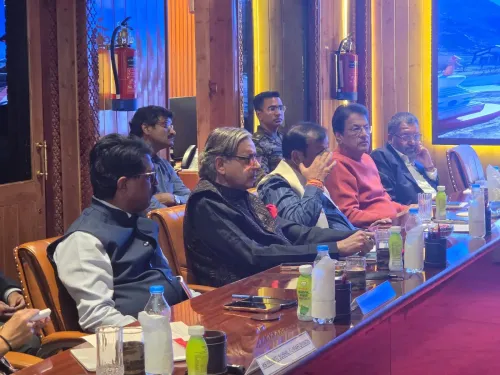
During the visit, General Dwivedi was briefed on the prevailing security situation, infrastructure development, and ongoing initiatives to enhance surveillance, mobility, and integrated operational capabilities. The Army's Additional Director General of Public Information confirmed the visit in a post on X, noting that the COAS assessed every dimension of the Corps' battlefield readiness.
The COAS commended all ranks of the XIV Corps for their 'exceptional professionalism, unwavering dedication and steadfast commitment while operating in one of the world's most challenging terrains,' according to the official statement. He further urged troops to remain 'mission-focused, operationally agile and ever prepared to meet emerging security challenges.'
About the Fire and Fury Corps
The XIV Corps — formally designated the Fire and Fury Corps — is a critical formation of the Indian Army's Northern Command, headquartered in Udhampur. Deployed across the Kargil-Leh belt, it guards India's frontiers with both China and Pakistan, including the strategically vital Siachen Glacier. The Corps commands the 3rd Division and 8th Division, formations with deep institutional roots in India's most consequential conflicts.
The 3rd Division was originally established in 1962 during the Sino-Indian War and spent nearly three decades in the East before relocating to Ladakh approximately two decades ago. During the Kargil War, the Corps deployed the 56th Mountain Brigade at Matayan, the 79th Mountain Brigade at Drass, and the 192nd Mountain Brigade — a combined force that proved decisive in recapturing occupied peaks.
Context: LAC Tensions and the Depsang Standoff
The review carries added significance given the unresolved complexities along the Line of Actual Control (LAC). During the Sino-Indian Border Dispute, the XIV Corps engaged in multiple rounds of talks with Chinese division commanders over the Depsang bulge standoff in eastern Ladakh. Despite sustained diplomatic engagement and Corps Commander-level negotiations, Chinese troops reportedly obstructed access to critical patrolling points for an extended period, prompting the Indian Army to prepare for a prolonged presence, including winter stocking of troops along the LAC.
This comes amid continued efforts to modernise surveillance and mobility infrastructure in the high-altitude sector. The Changthang Prahar Exercise — an integrated, all-arms drill conducted at super-high altitude — was last held in September 2019, reflecting the Corps' emphasis on joint operational capability in extreme terrain.
What This Visit Signals
A COAS-level review at the Fire and Fury Corps is not routine optics — it signals the Army's intent to keep command attention fixed on Ladakh even as diplomatic processes with China continue. With infrastructure build-up accelerating on both sides of the LAC, General Dwivedi's visit reinforces that operational readiness remains non-negotiable regardless of the status of talks. The next phase of capability development initiatives is expected to focus on enhanced surveillance grids and all-weather mobility along the frontier.
Point of View
Not a ceremonial gesture. With the Depsang patrolling dispute unresolved despite years of Corps Commander-level talks, General Dwivedi's personal review of surveillance and mobility capabilities suggests the Army is not waiting on diplomacy to set its readiness posture. What mainstream coverage often misses is the institutional depth here — the XIV Corps has fought on this ground since 1962 and through Kargil, and its muscle memory is the real deterrent. The question is whether the pace of Indian infrastructure development along the LAC can outrun the access restrictions that Chinese positioning has imposed on critical patrolling points.
NationPress
26 Sept 2026
Frequently Asked Questions
Why did Army Chief General Upendra Dwivedi visit Ladakh?
General Upendra Dwivedi visited the Fire and Fury Corps headquarters in Leh on 27 June to review the formation's operational preparedness, combat readiness, and capability development in the Ladakh region. The visit also covered infrastructure development and initiatives to enhance surveillance and mobility along the frontier.
What is the Fire and Fury Corps?
The Fire and Fury Corps, officially designated the XIV Corps, is an Indian Army formation deployed in the Kargil-Leh area under the Northern Command headquartered in Udhampur. It is responsible for guarding India's borders with China and Pakistan, including the Siachen Glacier.
What did the COAS say to troops during the visit?
General Dwivedi commended all ranks for their 'exceptional professionalism, unwavering dedication and steadfast commitment' in one of the world's most challenging terrains, according to the official Army statement. He urged them to remain 'mission-focused, operationally agile and ever prepared to meet emerging security challenges.'
What is the significance of the Depsang standoff mentioned in the context?
The Depsang bulge standoff in eastern Ladakh saw Chinese troops reportedly obstructing Indian access to critical patrolling points along the Line of Actual Control despite multiple diplomatic and Corps Commander-level negotiations. The Indian Army responded by preparing for a prolonged presence, including winter stocking of troops along the LAC.
What exercises has the Fire and Fury Corps conducted in high-altitude terrain?
The Corps conducted the Changthang Prahar Exercise in September 2019, an integrated, all-arms drill designed for super-high-altitude operations. The exercise reflects the Corps' emphasis on joint operational capability in the extreme conditions of the Ladakh plateau.