Army launches drone and VR lab in Ladakh at 4,500 metres
Synopsis
At 4,500 metres above sea level, the Indian Army has quietly raised the bar for high-altitude warfare training. The Fire & Fury Corps' new integrated drone and VR lab in Ladakh is not just a facility — it is a blueprint the Army intends to replicate across all high-altitude formations along the LAC.
Key Takeaways
The Indian Army's Fire & Fury Corps unveiled an Integrated Drone Training and Virtual Reality Observation Post Lab in Ladakh on 15 June .
The facility is located at an altitude of 4,500 metres , making it one of the highest military training labs in India.
It serves Infantry units , ITBP mortar fire controllers , and Artillery Observation Post officers through joint training modules.
Training culminates in live firing exercises using an Artillery Trainer to bridge simulation and battlefield application.
The lab is expected to serve as a model for similar facilities across other high-altitude Army formations.
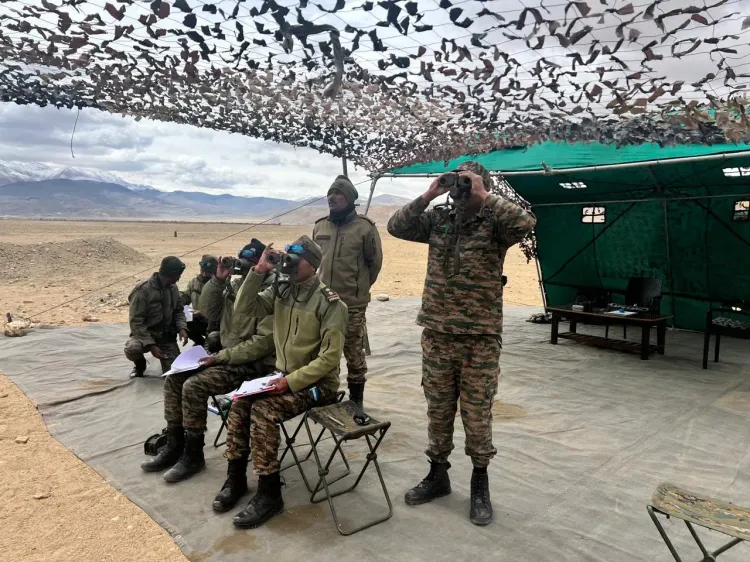
The Indian Army's Fire & Fury Corps has commissioned an Integrated Drone Training and Virtual Reality Observation Post Lab at an altitude of 4,500 metres in Ladakh, marking one of the most advanced high-altitude warfighting training facilities the Army has fielded along the Line of Actual Control (LAC). The lab, unveiled on 15 June, is designed to build future-ready combat capabilities in terrain where weather and elevation routinely complicate conventional operations.
What the Facility Offers
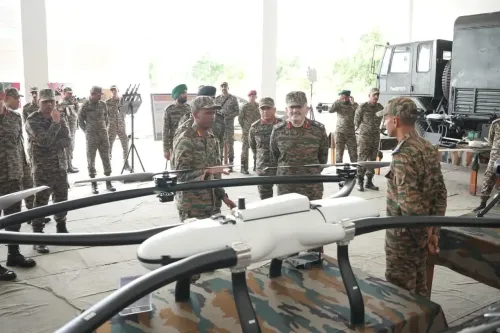
The lab integrates advanced drone training nodes with immersive virtual reality simulators, catering specifically to Infantry units, Indo-Tibetan Border Police (ITBP) mortar fire controllers, and Artillery Observation Post officers. Joint training modules focus on sharpening surveillance, target acquisition, fire direction, and precision engagement — skills that are especially critical at extreme altitudes where reaction time is compressed and coordination between units is harder to maintain.
The programme culminates in live firing exercises using an Artillery Trainer, ensuring that soldiers can translate simulated learning directly into battlefield application rather than remaining confined to virtual drills.
Why Drones and VR Together
The pairing of drone platforms with virtual reality is deliberate. By allowing troops to practise coordination between aerial surveillance and ground-based firepower within a single integrated environment, the facility addresses a gap that has become increasingly apparent in modern high-altitude conflict scenarios. Commanders noted that precision and speed now determine outcomes on such battlefields, and that this synergy is essential for effective fire control at the LAC.
Notably, this is not the Fire & Fury Corps' first investment in advanced training infrastructure — the formation has been steadily upgrading its facilities as part of a broader push to harden preparedness along Ladakh's sensitive sectors.
Strategic Significance
Senior Army officers indicated that the lab is expected to serve as a model for similar facilities across other high-altitude formations, suggesting a wider rollout is being planned. The Fire & Fury Corps is responsible for guarding some of the most operationally sensitive stretches of the LAC, making capability enhancement in this sector a priority for the Army's broader modernisation agenda.
Officials underlined that the initiative reflects the Army's focus on harnessing innovation and technology to enhance operational effectiveness, with the goal of ensuring personnel remain equipped to meet evolving security challenges in one of the world's most demanding theatres.
What Comes Next
With the Ladakh lab now operational, Army planners are expected to assess its training outcomes before replicating the model in other high-altitude formations. The integration of live fire exercises into the curriculum sets a benchmark for how simulation-based training can be validated against real-world battlefield conditions.
Point of View
500 metres, the challenge is not just hardware but human performance: hypoxia, cold, and compressed decision windows make simulation-to-live-fire transitions genuinely difficult to design. The Army's decision to anchor the programme in live Artillery Trainer exercises is the right instinct, but the real test will be whether training outcomes translate to measurable improvements in fire coordination response times along the LAC. If the model is replicated across formations as planned, the quality-control framework for that replication will matter as much as the original facility.
NationPress
14 Sept 2026
Frequently Asked Questions
What is the Integrated Drone Training and VR Observation Post Lab in Ladakh?
It is an advanced military training facility commissioned by the Indian Army's Fire & Fury Corps at an altitude of 4,500 metres in Ladakh. The lab combines drone training nodes with virtual reality simulators to prepare Infantry units, ITBP mortar fire controllers, and Artillery Observation Post officers for high-altitude combat scenarios.
Where exactly is the lab located and why does the altitude matter?
The facility is situated at 4,500 metres above sea level in Ladakh, along one of the most operationally sensitive stretches of the Line of Actual Control. At such altitudes, terrain and weather significantly complicate conventional operations, making specialised simulation-based training essential for troops deployed there.
Who is the Fire & Fury Corps and why is this significant?
The Fire & Fury Corps is the Indian Army formation responsible for guarding sensitive sectors along the Line of Actual Control in Ladakh. Its investment in this lab reflects a sustained push to modernise high-altitude training infrastructure, and officials say the facility is expected to serve as a model for similar labs across other high-altitude formations.
How does the lab combine drones and virtual reality?
The facility allows soldiers to practise coordination between aerial surveillance — using drone platforms — and ground-based firepower within a single integrated training environment. The programme concludes with live firing exercises using an Artillery Trainer, ensuring simulation translates into real battlefield application.
Will similar labs be set up elsewhere in India?
According to Army officials, the Ladakh facility is expected to serve as a blueprint for similar training infrastructure across other high-altitude formations. A wider rollout is being assessed based on the outcomes from this initial lab.