Army Chief Gen Dhiraj Seth reviews Gajraj Corps ops readiness in Tezpur
Synopsis
Army Chief Gen Dhiraj Seth wrapped up a three-corps sweep of the Eastern Command by reviewing the Gajraj Corps in Tezpur — the formation guarding Assam and the LAC in Arunachal Pradesh. With drone integration, IAF exercises, and civil-military coordination all on the agenda, the visit signals a focused operational audit of India's most sensitive northeastern frontier.
Key Takeaways
COAS General Dhiraj Seth reviewed the Gajraj Corps (IV Corps) in Tezpur on Thursday during an Eastern Command visit.
The visit also covered Trishakti Corps in Sukna and Spear Corps in Dimapur over two preceding days.
The Gajraj Corps guards Assam and parts of Arunachal Pradesh , with the 5th Mountain Division positioned near the LAC .
The corps has adopted modern platforms including drones and conducts airborne exercises with the Indian Air Force .
Gen Seth commended the formation's role in internal security in Assam and Meghalaya and its disaster relief operations.
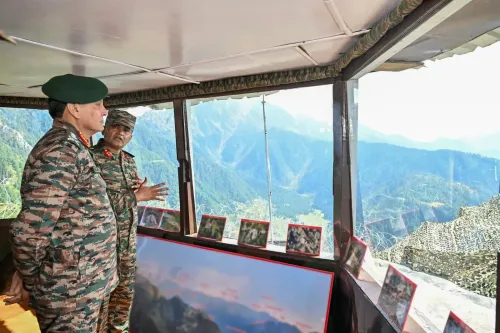
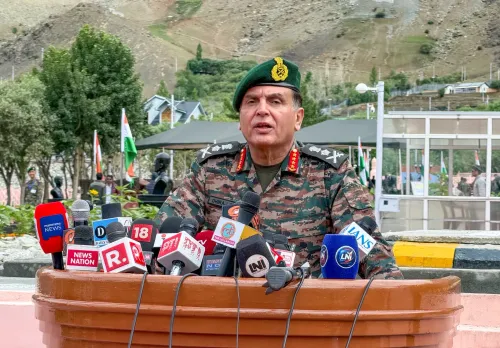
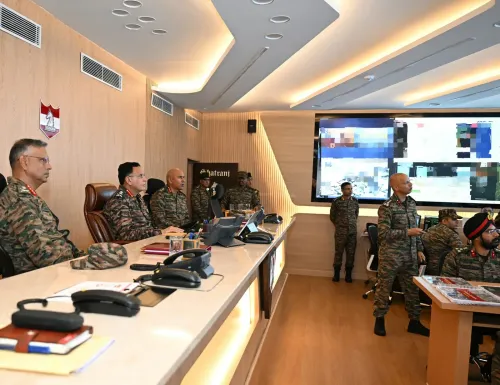
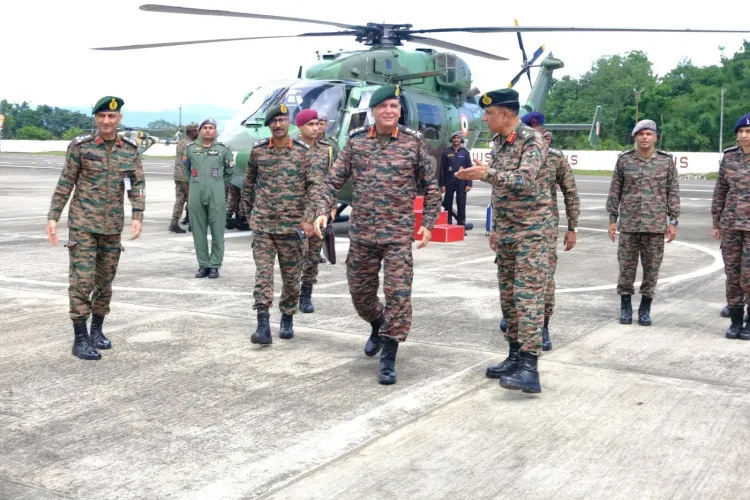
Chief of the Army Staff (COAS) General Dhiraj Seth on Thursday reviewed the operational preparedness of the Tezpur-based IV Corps, also known as the Gajraj Corps, as part of an ongoing visit to the Eastern Command. The review covered security readiness, capability development, and civil-military coordination across one of India's most strategically sensitive frontier zones.
A Multi-Corps Tour of the Eastern Frontier
The visit to the Gajraj Corps followed back-to-back inspections over the preceding two days. Gen Seth had earlier visited the headquarters of the XXXIII Corps (Trishakti Corps) in Sukna and the III Corps (Spear Corps) in Dimapur, completing a sweep of the Eastern Command's three principal corps formations. The structured itinerary signals a comprehensive operational audit of the command's readiness posture.
Gajraj Corps: Role and Composition
The Gajraj Corps is entrusted with the security of Assam and parts of Arunachal Pradesh, including areas in proximity to the Line of Actual Control (LAC). The corps comprises three Mountain Divisions: the 71st Mountain Division, based at Missamari, Assam; the 21st Mountain Division (Red Horn Division), stationed at Rangia, Assam; and the 5th Mountain Division (Ball of Fire Division), headquartered at Rupa, near Bomdila in Arunachal Pradesh. The 5th Division's positioning — close to the LAC and to the west of the 2nd Mountain Division under the Spear Corps — underscores its forward defence role.
Key Developments from the Review
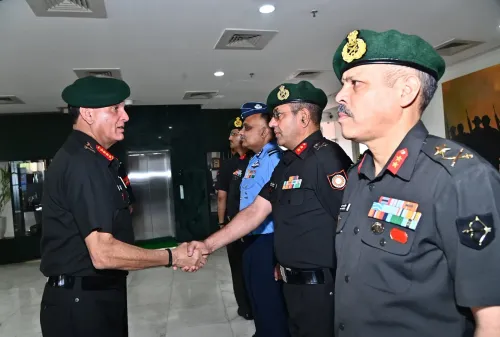
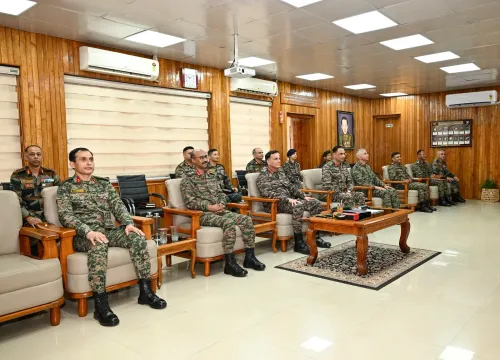
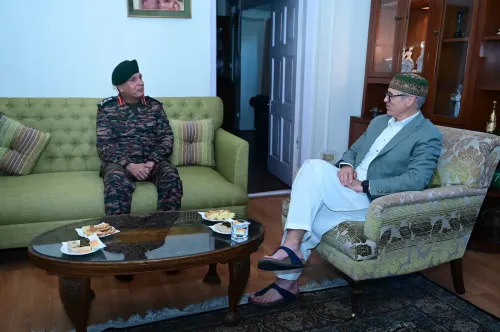
Gen Seth met senior commanders and was briefed on the prevailing security situation, operational readiness, and ongoing capability development initiatives. He also reviewed measures undertaken to maintain peace, stability, and a secure environment across the region. The COAS was apprised of the corps' close coordination with civil administration and Central Armed Police Forces (CAPF) through developmental programmes, community outreach, and assistance to local authorities.
Notably, Gen Seth commended the formation for its contribution to internal security in Assam and Meghalaya, and for its prompt response during disaster relief and humanitarian assistance operations — roles that have grown in salience given the region's vulnerability to floods and seismic events.
Technology Adoption and Operational Mandate
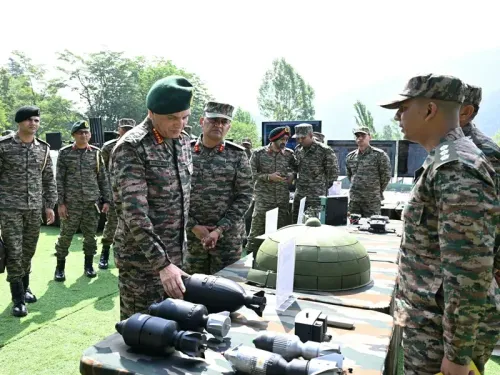
The Gajraj Corps has integrated modern platforms including drones into its operational toolkit and participates in airborne exercises with the Indian Air Force. Gen Seth appreciated the formation's innovative adoption of emerging technologies to enhance battlefield capability. During his address to troops, the COAS exhorted all ranks to remain mission-focused, strengthen inter-agency synergy, and uphold the highest standards of readiness to address security challenges in an evolving multi-domain environment.
The COAS's interaction with troops — during which he lauded their professionalism, high morale, and commitment — comes at a time when the Eastern Command remains one of the Indian Army's most operationally active theatres, given ongoing boundary sensitivities along the LAC.
Point of View
Though stabilised at several friction points, remains unresolved in principle. The Gajraj Corps' dual mandate — forward LAC defence and internal security across flood-prone, insurgency-affected Assam and Meghalaya — makes it one of the most stretched formations in the order of battle. The emphasis on drone integration and multi-domain readiness signals that the Army is pushing technological modernisation down to the corps level, not just at command headquarters. Whether procurement timelines and training cycles can keep pace with that ambition is the question mainstream coverage rarely asks.
NationPress
15 Oct 2026
Frequently Asked Questions
What is the Gajraj Corps and where is it based?
The Gajraj Corps, officially the IV Corps, is headquartered in Tezpur, Assam, and is responsible for the security of Assam and parts of Arunachal Pradesh, including areas close to the Line of Actual Control. It comprises three Mountain Divisions deployed across Assam and Arunachal Pradesh.
Why did Army Chief Gen Dhiraj Seth visit the Gajraj Corps?
Gen Seth visited as part of an operational review of the Eastern Command, assessing the corps' security readiness, capability development, civil-military coordination, and adoption of emerging technologies such as drones. The visit was the third stop in a multi-corps inspection that also covered the Trishakti Corps in Sukna and the Spear Corps in Dimapur.
Which Mountain Divisions make up the Gajraj Corps?
The Gajraj Corps comprises the 71st Mountain Division at Missamari, Assam; the 21st Mountain Division (Red Horn Division) at Rangia, Assam; and the 5th Mountain Division (Ball of Fire Division) at Rupa, near Bomdila in Arunachal Pradesh — the last being the closest to the LAC.
What did the Army Chief commend the Gajraj Corps for?
Gen Seth commended the formation for its contributions to internal security in Assam and Meghalaya, its prompt disaster relief and humanitarian assistance operations, and its innovative adoption of technologies including drones to enhance operational capability.
How does the Gajraj Corps coordinate with civilian agencies?
The corps works closely with civil administration and Central Armed Police Forces through developmental initiatives, community outreach programmes, and sustained assistance to local authorities, a role that Gen Seth specifically acknowledged during his visit.