CM Manik Saha Urges Gen-Z to Study Rath Yatra's Message of Equality
Synopsis
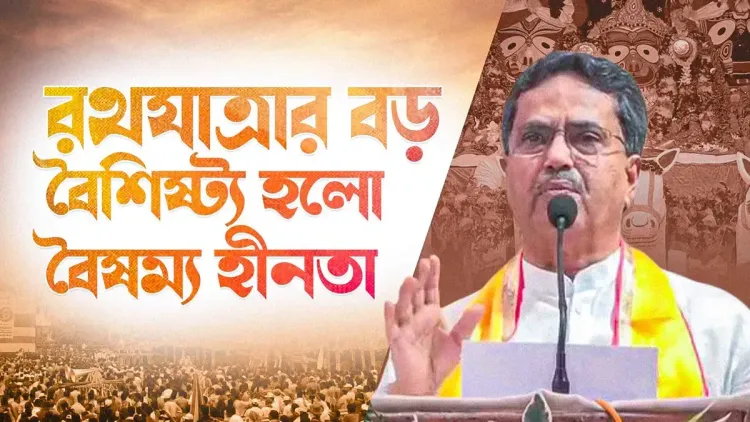
Tripura Chief Minister Dr. Manik Saha on 16 July 2026 urged India's Gen-Z to study the egalitarian philosophy of Rath Yatra, saying Lord Jagannath's message of non-discrimination is essential for social welfare. The appeal was posted in Bengali on his X account during the annual chariot festival.
Key Takeaways
Manik Saha , Chief Minister of Tripura , posted on 16 July 2026 urging Gen-Z to study the philosophy of Rath Yatra .
He described non-discrimination ( বৈষম্যহীনতা ) as the defining characteristic of the festival.
The post frames Lord Jagannath as a universal benefactor who transcends all social divisions.
Saha argued that only by internalising this message can today's generation contribute to societal welfare.
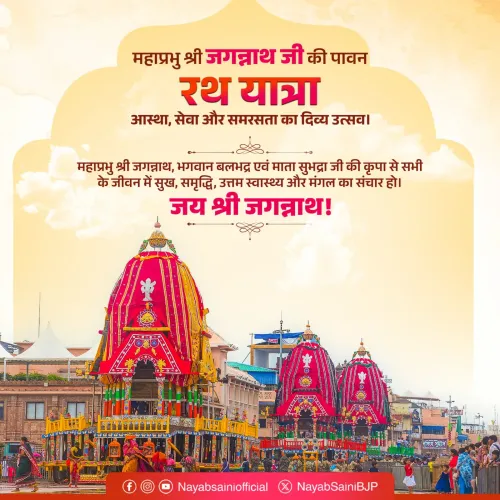
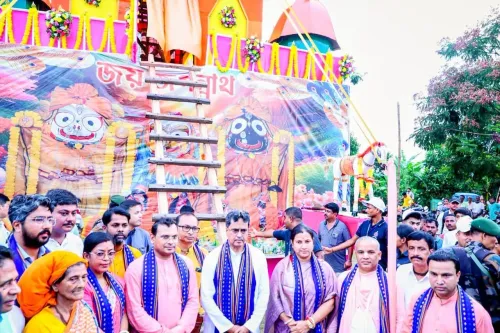
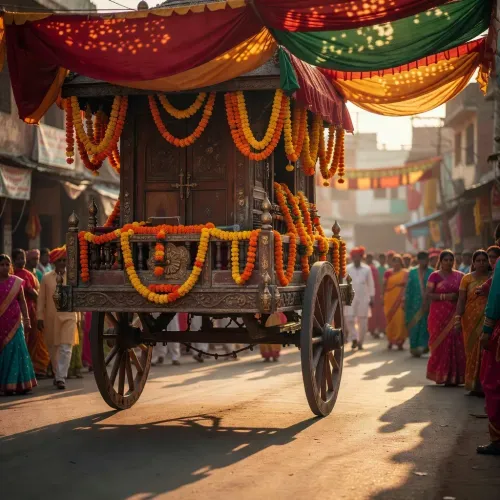
The statement comes amid the annual Rath Yatra season, most prominently observed in Puri, Odisha , and widely celebrated across India including in Tripura .
The appeal reflects a broader pattern of BJP -led state governments linking Hindu festival values to civic and cultural education.
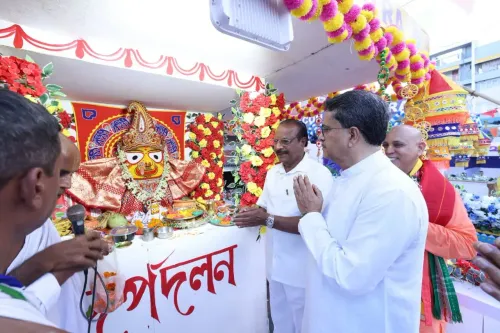
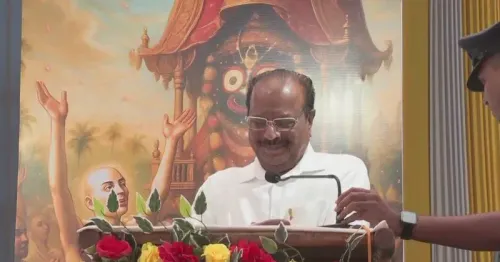
Tripura Chief Minister Dr. Manik Saha on Thursday, 16 July 2026 called on the younger generation to study the egalitarian spirit of Rath Yatra, arguing that the festival's core message of non-discrimination holds lessons vital for social harmony in contemporary India. The appeal, shared on his official X account, came as communities across the country observed the annual chariot festival of Lord Jagannath.
In his post, written in Bengali, Dr. Saha stated: 'The defining characteristic of Rath Yatra is the absence of discrimination. Gen-Z — that is, today's generation — must study how, through this festival, Lord Jagannath has manifested as a benefactor of all, transcending every kind of division. Only then, I believe, will the welfare of society be achieved.'
Context
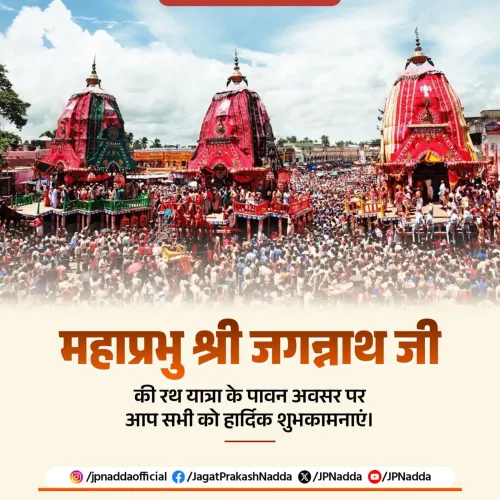
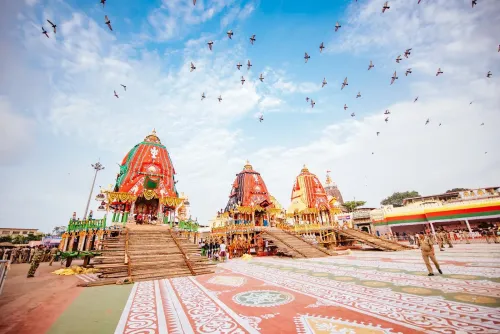
Rath Yatra is one of India's oldest and most widely observed Hindu festivals, most famously celebrated in Puri, Odisha, where the chariot procession of Lord Jagannath draws millions of devotees each year. A central theological premise of the festival is that the deity descends from the temple to be accessible to all — irrespective of caste, class, or creed — a tradition that has historically been cited as a symbol of social equality.
The festival holds particular resonance in Tripura, a northeastern state with a diverse population comprising Bengali-speaking communities, tribal groups, and various religious minorities. Dr. Saha, who has led the state since 2022, has consistently drawn on pan-Indian cultural narratives in his public communications.
Policy Backdrop
State governments across India have long promoted Rath Yatra as a civic and cultural event, with political leaders of multiple affiliations participating in processions to underscore messages of unity. The BJP, in particular, has made the invocation of Hindu festival values a consistent strand of its public outreach, especially in states where cultural integration is seen as a governance priority.
Dr. Saha's specific focus on Gen-Z reflects a broader governmental preoccupation with cultural education among younger demographics. His framing — urging youth to 'study' (অধ্যয়ন করতে হবে, 'adhyayan korte hobe') the festival's philosophy — positions traditional religious observance as a source of civic values rather than purely devotional practice.
Stakeholders and Impact
The statement is directed most immediately at young people in Tripura and beyond, whom Dr. Saha identifies as the generation that must internalise the festival's egalitarian ethos. Devotees and community organisations that organise Rath Yatra processions across the state are also implicitly recognised as custodians of this message.
In a state where social cohesion between tribal and non-tribal communities remains an ongoing policy concern, the Chief Minister's invocation of a festival explicitly associated with non-discrimination carries a degree of social signalling beyond the purely ceremonial.
What's Next
Observers will watch whether Dr. Saha's appeal translates into concrete youth cultural programmes or school-level initiatives around festival education in Tripura. State-level Rath Yatra processions in subsequent years, and any formal announcements linking the festival's philosophy to youth outreach, will indicate whether this statement marks the beginning of a policy direction or remains a seasonal cultural message.
Point of View
Particularly in states with complex demographic compositions. By foregrounding the festival's egalitarian theology rather than its devotional dimension, he positions the party as a custodian of social harmony — a framing that carries weight in Tripura, where tribal-non-tribal relations remain politically sensitive. The specific targeting of younger audiences signals an awareness that cultural narratives must be actively transmitted rather than assumed. Whether this translates into programmatic action will determine if the statement is strategic positioning or seasonal outreach.
NationPress
16 Jul 2026
Frequently Asked Questions
What did Tripura CM Manik Saha say about Rath Yatra?
On 16 July 2026, Dr. Manik Saha said that non-discrimination is the defining feature of Rath Yatra and urged Gen-Z to study how Lord Jagannath manifests as a benefactor of all people, arguing this is essential for social welfare.
What is the significance of Rath Yatra?
Rath Yatra is an annual Hindu chariot festival most famously celebrated in Puri, Odisha, in which Lord Jagannath is taken out of the temple in a procession accessible to all devotees regardless of caste or class, symbolising equality and universal grace.
Why did Manik Saha write his post in Bengali?
Dr. Manik Saha frequently communicates in Bengali, which is the majority language in Tripura and the primary language of a large portion of his constituency.
What is Gen-Z's connection to Rath Yatra according to Manik Saha?
Dr. Saha argued that today's younger generation — Gen-Z — must actively study the philosophy of Rath Yatra, particularly its message of transcending social divisions, in order to contribute to the betterment of society.
Is Rath Yatra celebrated in Tripura?
Yes, Rath Yatra is observed in Tripura alongside its most prominent celebration in Puri, Odisha, with local processions and community events held across the northeastern state.