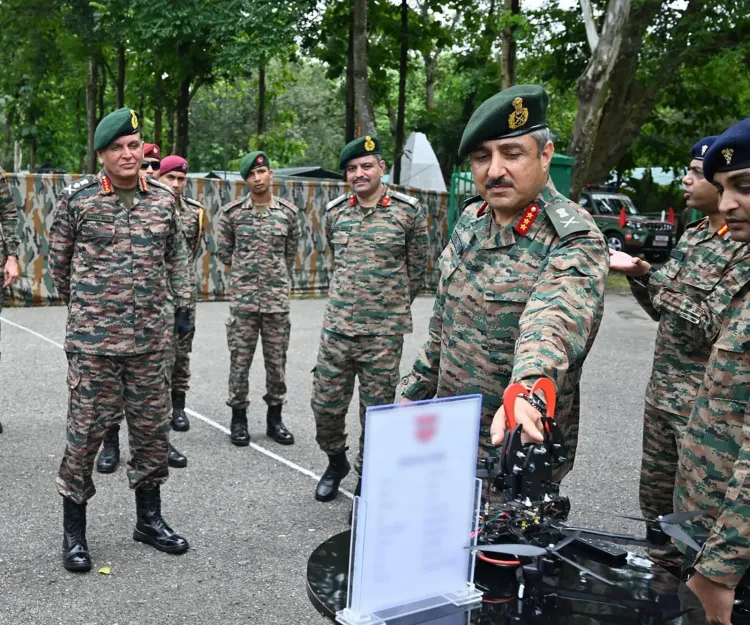
Army Chief General Dhiraj Seth reviews Trishakti Corps ops at Sukna
Synopsis
Army Chief General Dhiraj Seth's visit to the Trishakti Corps at Sukna is more than a routine inspection — it puts a spotlight on India's most geopolitically charged frontier. With the Doklam trijunction and the Sikkim sector of the LAC under this Corps' watch, the emphasis on technological upgrades and joint civil-military operations signals that India's eastern defence posture is being actively hardened.
Key Takeaways
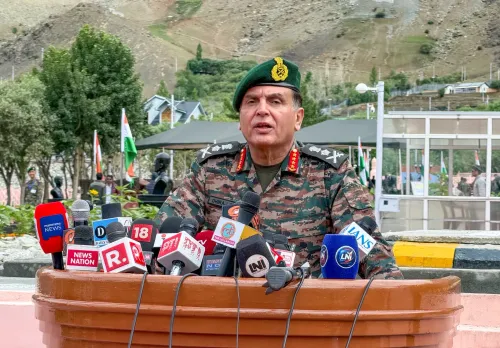
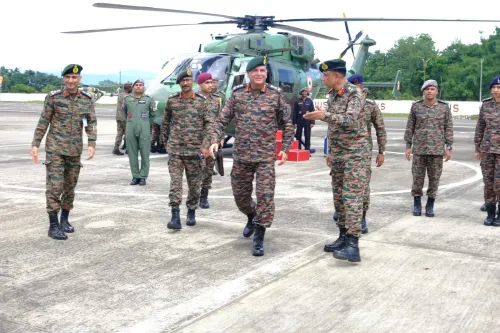
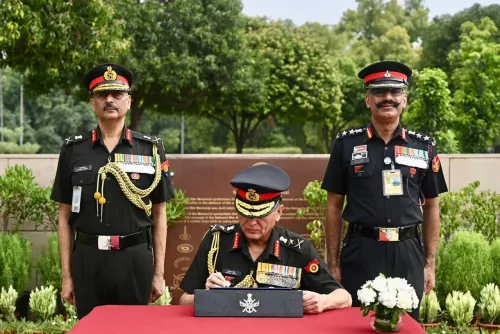
Chief of Army Staff General Dhiraj Seth visited Trishakti Corps (XXXIII Corps) headquarters at Sukna, West Bengal on 15 July .
The Corps guards the China border in Sikkim under the Eastern Command and includes three mountain divisions based in Gangtok , Binnaguri , and Kalimpong .
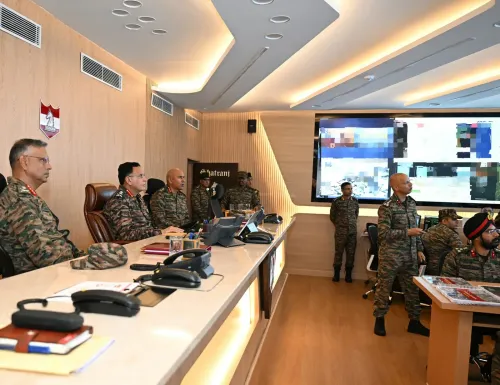
General Seth was briefed on operational deployments, evolving security dynamics, and technological advancement initiatives.
The Corps covers the Doklam trijunction — site of the 73-day India-China stand-off in 2017 .
The Army chief emphasised jointness and military-civil fusion as essential to managing the region's complex security environment.
The Corps also fields an MR-SAM regiment and an Army Aviation squadron at Sevoke, alongside HADR responsibilities in Sikkim.
Chief of Army Staff General Dhiraj Seth on 15 July visited the headquarters of the XXXIII Corps — popularly known as the Trishakti Corps — at Sukna, West Bengal, reviewing operational preparedness along one of India's most strategically sensitive frontiers. The Corps, operating under the Eastern Command, is the primary formation responsible for guarding the China border in Sikkim.
What the Army Chief Reviewed
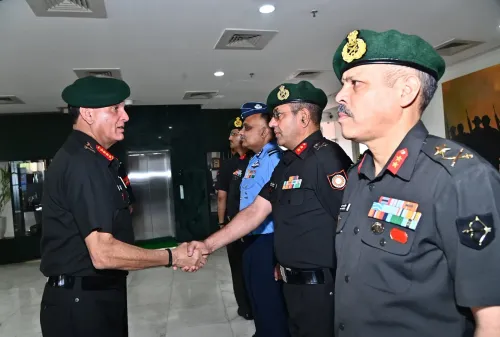
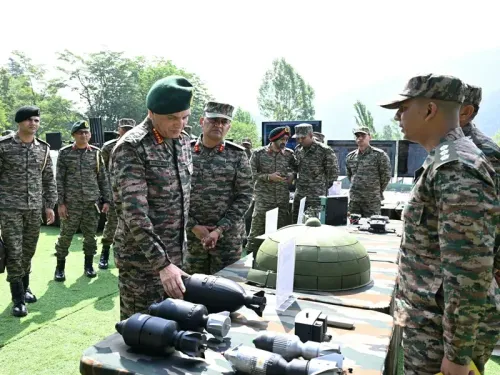
General Seth met senior commanders and received comprehensive briefings on operational deployments, evolving security dynamics, and ongoing technological advancement initiatives. According to an Army statement, the focus was on sharpening operational effectiveness and strengthening logistic capabilities across the Corps' area of responsibility.
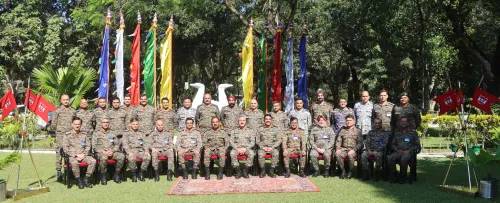
The Army chief also interacted directly with personnel of the Indian Army and Central Armed Police Forces (CAPFs), commending their professionalism and commitment in what the Army described as 'some of the harshest terrain in the country.'
Jointness and Civil-Military Synergy Emphasised
General Seth highlighted the importance of seamless coordination among the forces deployed in the region. He underscored that jointness and military-civil fusion remain critical to navigating the complexities of the evolving security environment — a message that carries particular weight given the multi-agency nature of border management in the northeast.
The Trishakti Corps: Structure and Strategic Mandate
The Trishakti Corps comprises three mountain divisions deployed across the region. The 17th Mountain Division (Blackcat Division) is based in Gangtok, Sikkim; the 20th Mountain Division (Kirpan Division) is stationed in Binnaguri, North Bengal; and the 27th Mountain Division (Striking Lion Division) operates from Kalimpong, North Bengal.
Beyond its infantry strength, the Corps fields an artillery brigade, a Medium Range – Surface to Air Missile (MR-SAM) regiment, and an Army Aviation helicopter squadron based at Sevoke — a force mix designed for both high-altitude combat and rapid response.
Doklam and the Broader Security Context
Among the most critical areas under the Corps' watch is the Doklam trijunction — the point where India, Bhutan, and Tibet converge. It was here that a 73-day military stand-off between Indian Army troops and China's People's Liberation Army (PLA) unfolded in 2017, making it a perennial flashpoint in India-China relations.
This comes amid continued attention on the eastern sector following the Galwan Valley clash of 2020 and subsequent disengagement processes along the Line of Actual Control (LAC). The Trishakti Corps also shoulders responsibility for Humanitarian Aid and Disaster Relief (HADR) operations in the ecologically fragile state of Sikkim, which draws significant tourist footfall year-round.
What This Visit Signals
Senior command visits of this nature are standard practice but carry symbolic and operational weight, particularly when tensions along the LAC remain unresolved in certain sectors. The emphasis on technological upgrades and logistic strengthening suggests the Army is continuing its push to modernise high-altitude warfare capabilities. Further operational reviews across Eastern Command formations are expected as part of the Army's ongoing readiness cycle.
Point of View
A gap that has narrowed but not closed. What mainstream coverage tends to underplay is the HADR dimension: the same Corps that must deter a nuclear-armed neighbour also manages disaster response in an ecologically fragile Himalayan state increasingly battered by climate-linked events. That dual mandate — warfighting and humanitarian — makes the Trishakti Corps one of the most complex commands in the Indian Army, and General Seth's visit signals that both dimensions are being taken seriously.
NationPress
14 Oct 2026
Frequently Asked Questions
Why did the Army Chief visit the Trishakti Corps?
Chief of Army Staff General Dhiraj Seth visited the Trishakti Corps headquarters at Sukna on 15 July to review operational preparedness, security deployments, and technological initiatives along the China border in Sikkim. Such visits are part of the Army's regular senior command engagement cycle, though they carry added significance given the strategic sensitivity of the eastern sector.
What is the Trishakti Corps and where is it based?
The Trishakti Corps, officially the XXXIII Corps, is headquartered at Sukna in West Bengal and operates under the Eastern Command. It is responsible for guarding the China border in Sikkim and comprises three mountain divisions — the 17th (Gangtok), 20th (Binnaguri), and 27th (Kalimpong) — along with an artillery brigade, an MR-SAM regiment, and an Army Aviation squadron.
What is the significance of the Doklam trijunction for this Corps?
The Doklam trijunction — where India, Bhutan, and Tibet meet — falls under the Trishakti Corps' area of responsibility. It was the site of a 73-day military stand-off between Indian Army troops and China's People's Liberation Army in 2017, making it one of the most geopolitically sensitive points on India's border.
What did General Seth emphasise during the visit?
According to the Army, General Seth stressed the importance of jointness and military-civil fusion in addressing evolving security challenges. He also commended Indian Army and CAPF personnel for their professionalism and operational readiness in difficult high-altitude terrain.
Does the Trishakti Corps have roles beyond border security?
Yes. In addition to its combat mandate along the China border, the Trishakti Corps is responsible for Humanitarian Aid and Disaster Relief (HADR) operations in Sikkim — an ecologically fragile Himalayan state that is prone to natural disasters and sees significant tourist activity year-round.