Amit Shah backs ₹62,500 cr mobile manufacturing scheme
Synopsis
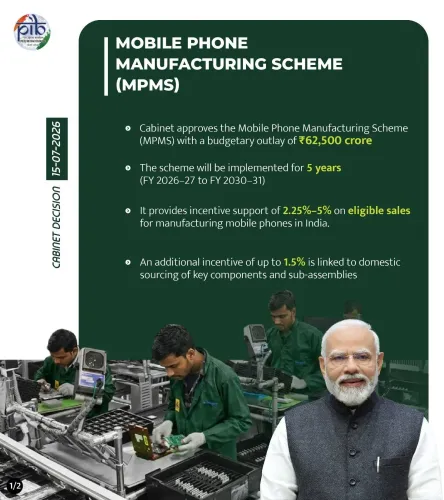
The Union Cabinet has approved the ₹62,500 crore Mobile Phone Manufacturing Scheme (MPMS), with Home Minister Amit Shah calling it a 'big leap towards self-reliance.' The scheme aims to scale domestic mobile production, create jobs, and cement India's role as a global electronics manufacturing hub, extending the policy lineage of the 2020 PLI scheme.
Key Takeaways
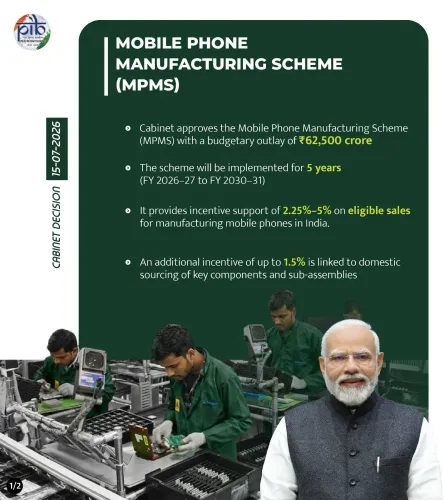
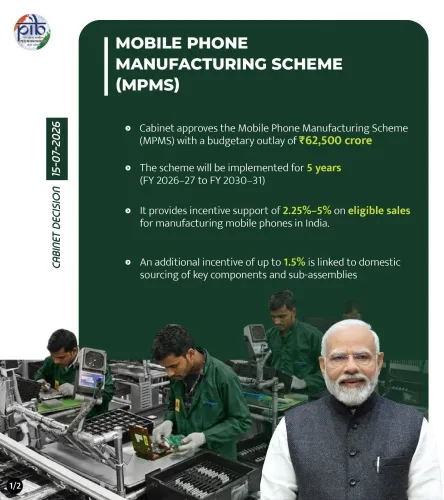
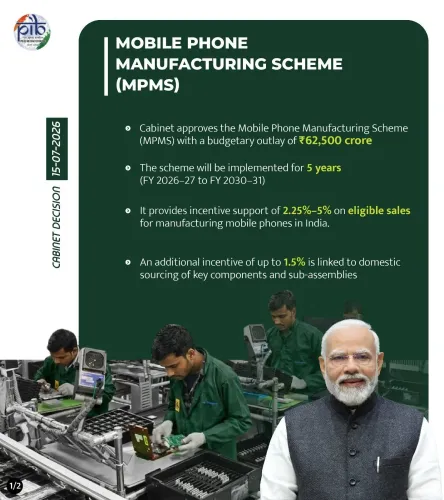
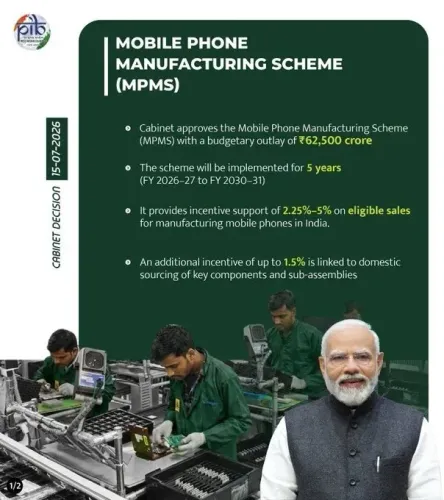
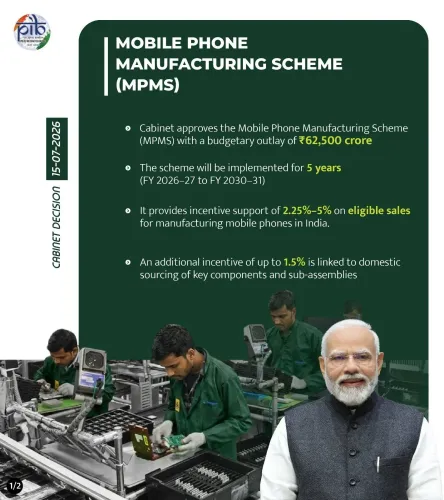
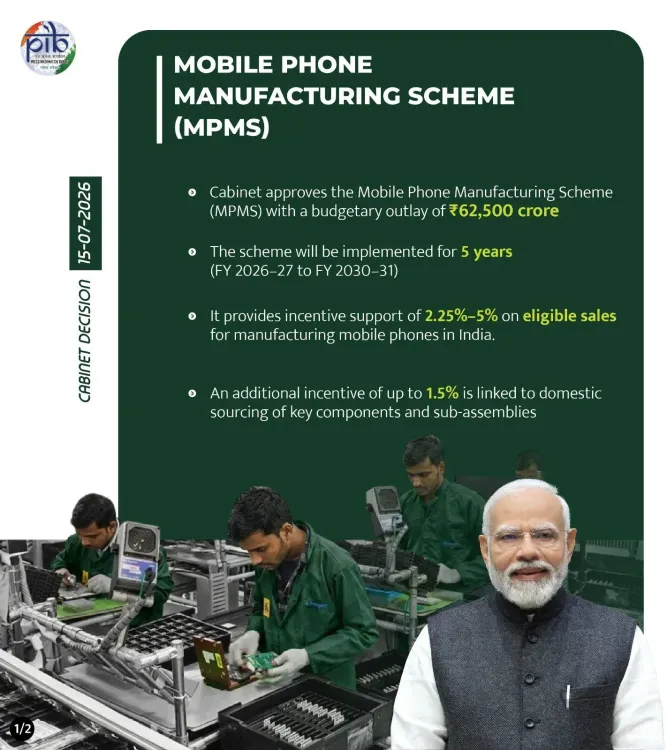
The Union Cabinet approved the Mobile Phone Manufacturing Scheme (MPMS) with an outlay of ₹62,500 crore .
Union Home Minister Amit Shah described the approval as a 'big leap towards self-reliance in mobile manufacturing.' The scheme promises a range of incentives aimed at boosting both production volumes and job creation in the electronics sector.
The MPMS builds on the Production Linked Incentive (PLI) scheme for mobile manufacturing first launched in 2020 .
India's electronics manufacturing push has been a policy priority since the Make in India initiative launched in 2014 .
Implementation details, including eligible companies and investment benchmarks, are expected in forthcoming MeitY notifications.
Union Home Minister Amit Shah on Wednesday, 15 July 2026, welcomed the Union Cabinet's approval of the Mobile Phone Manufacturing Scheme (MPMS), describing the ₹62,500 crore outlay as a 'big leap towards self-reliance in mobile manufacturing' that will boost production, job creation, and India's standing as a global electronics hub.
Context
Posting on X, Shah said the scheme 'will infuse fresh energy into the industry, rolling out a range of incentives' and strengthen India as a global electronics manufacturing hub. The Cabinet approval marks one of the largest single-scheme commitments to the mobile manufacturing sector in recent years, with the stated twin goals of scaling domestic production and generating employment across the electronics value chain.
The announcement follows a broader pattern of incentive-led industrial policy that the government has pursued since 2014, when the Make in India initiative was launched to reduce the country's dependence on electronics imports, particularly from China.
Policy Backdrop
The MPMS builds on the foundation laid by the Production Linked Incentive (PLI) scheme for mobile manufacturing, first approved in 2020, which provided financial incentives tied to incremental domestic output and drew investments from global manufacturers into India. That earlier scheme is widely credited with integrating India into premium smartphone supply chains and lifting export volumes substantially.
The new scheme extends this incentive architecture with a significantly larger financial envelope of ₹62,500 crore, signalling the government's intent to deepen, rather than merely sustain, India's position in global electronics manufacturing as geopolitical supply-chain diversification accelerates worldwide.
Stakeholders and Impact
The primary beneficiaries are expected to be mobile phone manufacturers — both domestic firms and multinational contract manufacturers — as well as the electronics workforce across India's manufacturing states. State governments hosting existing or planned electronics clusters are likely to compete for investments unlocked by the scheme's incentive structure.
For workers, the government's stated emphasis on 'job creation' suggests the scheme's eligibility or incentive criteria may be linked to employment benchmarks, a design feature used in earlier PLI rounds. Rollout notifications from the Ministry of Electronics and Information Technology (MeitY) are expected to detail eligible companies, investment thresholds, and disbursement timelines.
What's Next
Attention will now shift to MeitY's implementation notifications, which will specify which companies qualify, what production and investment commitments are required, and how incentives will be disbursed over the scheme's tenure. Quarterly production and export data will serve as the key metrics to gauge whether the ₹62,500 crore commitment translates into the manufacturing scale and employment the government has projected.
If the scheme follows the trajectory of its PLI predecessor, India could consolidate its position as the world's second-largest mobile phone producer — a milestone that would carry significant weight in ongoing negotiations over global supply-chain partnerships and trade agreements.
Point of View
With the ₹62,500 crore outlay dwarfing earlier PLI commitments and signalling that New Delhi sees mobile manufacturing as a strategic, not merely economic, priority. Shah's public endorsement — unusual for a Home Minister on an industrial policy matter — underscores the BJP's intent to present the scheme as a whole-of-government push ahead of a politically sensitive period. The scheme's success will ultimately hinge on implementation rigour: whether MeitY can disburse incentives efficiently, and whether manufacturers convert approvals into factory floors and payroll. Watched against the backdrop of global supply-chain realignment away from China, India's ability to absorb this investment could reshape its position in the global electronics order.
NationPress
15 Jul 2026
Frequently Asked Questions
What is the Mobile Phone Manufacturing Scheme (MPMS)?
The Mobile Phone Manufacturing Scheme (MPMS) is a Union Cabinet-approved initiative with an outlay of ₹62,500 crore designed to provide incentives to mobile phone manufacturers in India, with the goals of scaling domestic production, creating jobs, and strengthening India as a global electronics manufacturing hub.
How much money has the government allocated for the MPMS?
The Union Cabinet has approved an outlay of ₹62,500 crore for the Mobile Phone Manufacturing Scheme (MPMS).
How is MPMS different from the PLI scheme for mobile manufacturing?
The MPMS extends the incentive-based framework established by the Production Linked Incentive (PLI) scheme first approved in 2020, but with a significantly larger financial envelope, signalling a deeper commitment to scaling India's mobile manufacturing capacity.
Who will benefit from the Mobile Phone Manufacturing Scheme?
The primary beneficiaries are expected to be mobile phone manufacturers — both domestic firms and multinational contract manufacturers — along with electronics workers and state governments hosting electronics manufacturing clusters.
What did Amit Shah say about the mobile manufacturing scheme?
Union Home Minister Amit Shah called the Cabinet's approval a 'big leap towards self-reliance in mobile manufacturing,' saying the scheme 'will infuse fresh energy into the industry' by rolling out incentives that boost production, job creation, and India's position as a global electronics hub.