The Decline of Asansol: From Industrial Powerhouse to Silent Gates

Synopsis
The industrial landscape of Asansol in West Bengal has transformed dramatically. Once a thriving hub with a rich coal and manufacturing heritage, the region now bears the weight of closures and unfulfilled promises. Discover the stories behind the abandoned gates and the legacy of companies that shaped the area.
Key Takeaways
Asansol's industrial history is tied to coal extraction.
Technological changes led to significant factory closures.
Nationalization impacted local employment dynamics.
Many employees benefited from VRS during closures.
The legacy of companies like BSCL remains significant.
Asansol, March 20 (NationPress) The extraction of coal from Raniganj for centuries has propelled growth in the Paschim Bardhaman district of West Bengal, establishing Asansol–Durgapur as a significant center for heavy industry and rail-connected manufacturing.
Currently, the region is marked by numerous closed industrial gates, a stark reminder of its once-thriving economy.
The rise of steel, engineering, and related industries was closely tied to coal and rail connectivity, leading to the development of extensive industrial townships and a skilled workforce.
However, challenges such as technological obsolescence and changes in ownership have impacted competitiveness, causing many older mills and factories to struggle with modernization and ultimately shut down.
Additionally, nationalization and restructuring have reshaped the industrial landscape; non-coking coal was nationalized in the 1970s, and significant steel companies like the Indian Iron and Steel Company (IISCO) were taken over and incorporated into SAIL, altering local employment dynamics.
Shifts in mining practices from underground to large-scale open-cast operations and the closure of less-viable mines have further reduced local job opportunities, resulting in some areas resembling 'ghost towns.'
While coal production persists under government ownership and a few steel and heavy engineering operations continue, these have become more consolidated and capital-intensive.
Among the abandoned facilities is the Burnpur unit of Burn Standard Company Limited (BSCL), now overgrown with wild grass.
The Union Cabinet sanctioned its closure in 2018 after determining that reviving the unit was unfeasible, given years of consistent losses, inadequate performance, and over-reliance on government assistance.
The aim was to halt the outflow of public funds and reallocate resources to other developmental initiatives.
A one-time grant of ₹417.10 crore was provided to cover severance packages and settle the company's current liabilities, in addition to forgiving a ₹35 crore loan from the Ministry of Railways.
This allowed 508 BSCL employees to take advantage of the Voluntary Retirement Scheme (VRS).
Asish Bagh, 61, a former crane operator at BSCL, reflected on the company's legacy, stating, "Burn Standard Company Limited contributed to the construction of numerous iconic structures and civic amenities, including the Howrah Bridge, Dakshineswar Kali Temple, underground hume pipes, and even the outer shells of cannonballs and later, BrahMos casings." He noted that railway wagons were also produced in their factories.
Bagh, a second-generation employee following his father's passing in 1984, expressed discontent after the company was taken over by the Railways.
He remarked, "After the takeover in 2010 during Mamata Banerjee's tenure as Union Railways Minister, workers lost their identification with the new Ministry," attributing the closure to policy failures and the appointment of non-engineering officials.
BSCL was established in 1976 after the nationalization and merger of Burn and Company with Indian Standard Wagon Company Limited in 1987, under the Department of Heavy Industries.
The company was referred to the Board of Industrial and Financial Reconstruction (BIFR) in 1994 and declared sick the following year.
Control of the company was shifted from the Department of Heavy Industries to the Ministry of Railways in September 2010, as sanctioned by the Cabinet Committee on Economic Affairs.
Another second-generation employee, Tej Naran Mishra, now 68, witnessed the closure of Sen Raleigh Limited, a once-renowned cycle manufacturer in Asansol, where his father had worked since the late 1950s.
Mishra joined the company in 1990 after his father's death, only to see it shut down later that decade.
In 1975, the Union government took over management, continuing production under the Cycle Corporation of India Limited brand.
However, the company faced numerous legal challenges that ultimately led to its closure.
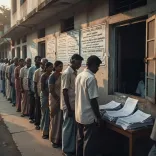
"Every election, politicians promise to reopen the factory," Mishra lamented. "Yet, over time, they become silent on the matter."
Point of View
It is evident that the industrial decline in Asansol represents a complex interplay of technological changes, policy decisions, and market dynamics. The stories of former workers illustrate the profound impact of these closures on local communities, raising questions about the future of industrialization in such regions.
NationPress
24 Sept 2026
Frequently Asked Questions
What led to the decline of industries in Asansol?
The decline was primarily due to technological obsolescence, ownership changes, and nationalization, which affected competitiveness and led to many factories shutting down.
What happened to the employees of closed factories?
Many employees received benefits from Voluntary Retirement Schemes (VRS) and one-time grants to assist with the transition.
What is the legacy of Burn Standard Company Limited?
BSCL was known for its contributions to iconic structures and facilities, including the Howrah Bridge and railway wagons, but faced continuous losses and was ultimately closed.
How did nationalization impact the industrial landscape?
Nationalization in the 1970s altered local employment patterns and led to the integration of major steel companies, which impacted the workforce.
Is there any hope for the reopening of closed factories?
While political promises are made during elections, many remain unfulfilled, leaving the future of these factories uncertain.