Bengal's Heavy Industry Hub: From Thriving to Decline
Synopsis
Once a vibrant industrial center, the Asansol-Durgapur region in West Bengal is now facing significant challenges, including industrial decline and job shortages. This article explores the complex reasons behind this transformation and the calls for revitalization.
Key Takeaways
Asansol-Durgapur was once a major industrial hub in eastern India.
The region is facing deindustrialisation and job losses.
Revocation of industrial incentive schemes has impacted investments.
Many educated youth are leaving the district in search of better jobs.
Local leaders are calling for revitalization efforts and government support.
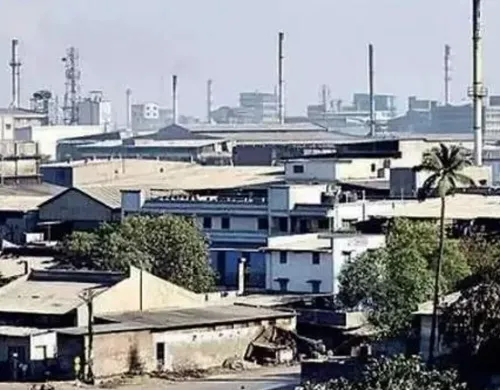
Asansol, March 13 (NationPress) The Asansol-Durgapur area, located in West Bengal's Paschim Bardhaman district, was once recognized as a vital hub of heavy industry in eastern India, marked by significant steel and engineering operations built upon the rich Raniganj coalfield. However, since the late 20th century, this region has experienced a dramatic industrial downturn, including mine closures and a significant restructuring. While active coal and steel operations still exist today, the area grapples with deindustrialisation, widespread job losses, and a noticeable transition towards service-oriented sectors and smaller industries.
“The advent of MSMEs in the region is promising. Still, we urgently require at least one major industry in the Paschim Bardhaman district, which encompasses both Durgapur and Asansol. Unfortunately, we currently see no potential for such investment,” expressed Sambhunath Jha, Secretary of the Asansol Chamber of Commerce.
“The primary driver for people leaving the state is employment opportunities. The only solution to halt this outflow and mitigate regional unrest is to promote industrial growth and generate jobs. With increased income potential, other issues will diminish,” he asserted.
Supporting his viewpoint, a 27-year-old hotel executive in Asansol noted that the shuttering of numerous industries has resulted in a significant job shortage. “Many educated young people are opting to leave the district, even the state, in search of better employment,” he stated while remaining anonymous.
“In the past, individuals from neighboring states flocked here for various job opportunities, both skilled and unskilled. Now, the reverse is occurring,” he lamented.
Jha pointed out that the problems facing the region are multifaceted. The sudden discontinuation of an industrial incentive scheme by the state government has adversely affected the industrial landscape. This scheme, originally introduced by the Left Front government to stimulate industrial investment in West Bengal after Buddhadeb Bhattacharjee assumed office, was revoked in March of last year by the Mamata Banerjee-led Trinamool Congress government.
Suvendu Adhikari, the Leader of Opposition in the state Assembly, described the enactment of the Revocation of West Bengal Incentive Schemes and Obligations in the Nature of Grants and Incentives Bill, 2025, as an “unconstitutional” move that could be “devastating” for the industry.
“While other states are enticing industries with subsidies, West Bengal has not only withdrawn the 2002-2002 scheme but has also eliminated all previously established incentives dating back to 1993,” Jha highlighted.
The state government's decision to revoke the incentive scheme was primarily aimed at reallocating resources towards social welfare initiatives targeting disadvantaged and marginalized groups, according to reports.
Moreover, the state has a long-standing history of governance by a party politically opposed to the ruling party at the Centre—except for brief periods—over nearly fifty years. This has led to various obstacles concerning investments and operational activities, Jha added.
“We have made representations to the state government; we have also urged our MP to bring our issues to light in Parliament and before the Union government. Thus far, we are still awaiting a response,” stated a local real estate developer.
Data from the Lok Sabha website indicates that Shatrughan Sinha, the Trinamool Congress MP from Asansol, has posed six questions during the 18th session of the Lower House since winning the seat in 2024, yet none addressed the specific issues raised by the Chamber.
Jha further emphasized that, unlike other states where the government assists in acquiring land for industrial ventures, in West Bengal, while space is made available for MSMEs, larger industries are expected to procure land independently. He advocated for the state and Union governments to consider reallocating the lands of defunct and closed industries to potential investors.
Notably, vast areas of land are currently overgrown with wild grass and shrubbery, alongside crumbling structures, such as those behind the closed gates of Burn Standard Company Limited (BSCL) in Asansol and the Mining and Allied Machinery Corporation (MAMC) in Durgapur.
Meanwhile, squatters, primarily former employees, continue to inhabit the residential quarters, many of which lack essential amenities such as electricity and water supply.
BSCL, a former public sector undertaking specializing in railway wagons and heavy engineering, has been officially closed and liquidated by the Government of India, while MAMC, which manufactured machinery for the mining sector, is currently under liquidation.
Point of View
Marked by job losses and industrial closures. Stakeholders express urgent needs for government intervention to attract investment and foster job creation. The commentary presents a balanced view on the challenges faced by the region and potential pathways for revitalization.
NationPress
19 Sept 2026
Frequently Asked Questions
What caused the industrial decline in Asansol-Durgapur?
The decline is attributed to mine closures, industrial restructuring, and the withdrawal of government incentive schemes aimed at attracting investments.
How has this decline affected local employment?
The closure of several industries has resulted in significant job shortages, prompting educated youth to leave the region in search of better opportunities.
What steps are being taken to revitalize the area?
Local leaders are advocating for the establishment of a major industry and urging government support for land acquisition to attract potential investors.
What was the role of the government in this situation?
The state government previously implemented incentive schemes for industrial investment, which have recently been revoked, leading to a decline in industrial activity.
Are there any active industries left in the region?
Yes, there are still active coal and steel operations, but they are insufficient to combat the overall industrial decline.