Three rebel SP MLAs join BJP in Lucknow ahead of UP 2027 polls
Synopsis
Three sitting SP MLAs with a history of rebellion — including Rakesh Pratap Singh, a three-time winner from Amethi's Gauriganj — formally joined the BJP in Amethi on 14 October, with Smriti Irani and UP BJP chief Pankaj Chaudhary presiding over the induction. Singh claims up to 1,000 public representatives will follow, though the figures are unverified. With the 2027 UP Assembly elections drawing closer, the defections signal an accelerating pre-election realignment.
Key Takeaways
Three SP MLAs — Rakesh Pratap Singh (Gauriganj), Abhay Singh (Gosaiganj), and Vinod Chaturvedi (Kalpi) — joined the BJP on 14 October 2026 .
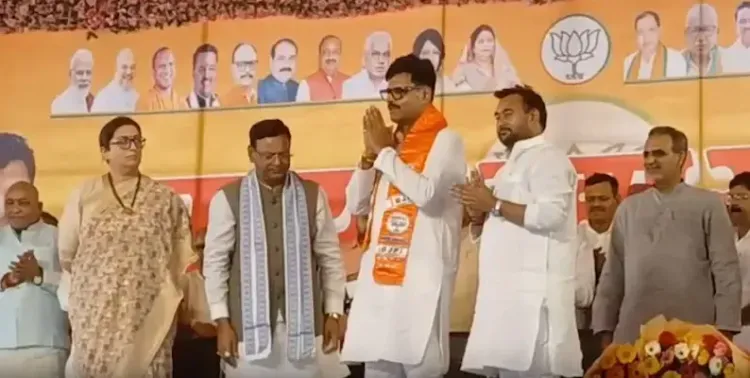
The induction ceremony was held in Amethi and was presided over by UP BJP President Pankaj Chaudhary and National General Secretary Smriti Irani .
Rakesh Pratap Singh won the Gauriganj seat three consecutive times ( 2012, 2017, 2022 ) on an SP ticket before being expelled by the SP in June 2025 .
Singh claims approximately 1,000 current and former public representatives and 700 Gram Pradhans will join the BJP alongside him — but these figures remain unverified .
The defections come roughly 12-15 months ahead of the 2027 Uttar Pradesh Assembly elections , intensifying pressure on the SP to consolidate its organisational base.
Three Samajwadi Party (SP) legislators who had long been at odds with their own party formally switched allegiance to the Bharatiya Janata Party (BJP) on Wednesday, 14 October 2026, in a development that adds political momentum to the BJP's ground-level consolidation ahead of the 2027 Uttar Pradesh Assembly elections.
The three MLAs are Rakesh Pratap Singh (Gauriganj constituency, Amethi district), Abhay Singh (Gosaiganj constituency, Ayodhya district), and Vinod Chaturvedi (Kalpi constituency, Jalaun district). They were inducted into the BJP at a formal ceremony held in Amethi.
Key Developments at the Induction Event
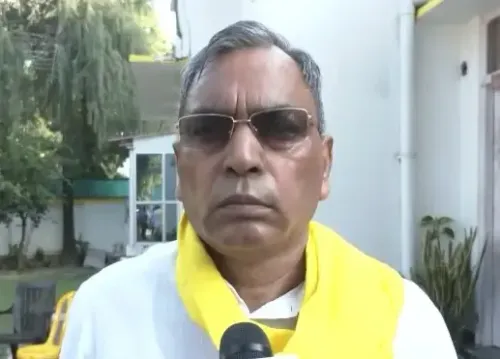
Uttar Pradesh BJP President Pankaj Chaudhary and the party's National General Secretary Smriti Irani formally welcomed the three legislators, presenting them with saffron stoles at the event. Cabinet Minister Dara Singh Chauhan, National President of the Pichhda Varg Morcha Amarpal Maurya, and several other senior BJP leaders, MLAs, and office-bearers were also in attendance.
Who Is Rakesh Pratap Singh?
Rakesh Pratap Singh is among the more consequential of the three defectors. He first won the Gauriganj seat on an SP ticket in 2012 and successfully defended it in both 2017 and 2022 — a rare hat-trick of Assembly victories. His estrangement from the SP leadership, however, deepened steadily over recent years.
During the 2024 Rajya Sabha elections, Singh voted in favour of the BJP candidate, a clear signal of his drift. The SP responded by expelling him from the party in June 2025. He had also publicly disagreed with the SP's position on the Ramcharitmanas controversy and, during the 2024 Lok Sabha elections, actively campaigned for BJP candidate Smriti Irani in Amethi. Some members of his family had already joined the BJP before his own formal induction.
Claims of a Larger Exodus — But Unverified
After joining the BJP, Singh claimed that approximately 98 per cent of booth-level workers in his constituency were poised to leave the SP and join the BJP with him. He further claimed that roughly 700 Gram Pradhans (village heads), former Gram Pradhans, Kshetra Panchayat members, Zila Panchayat members, and around 1,000 current and former public representatives would follow him into the BJP.
However, there has been no independent verification of these figures, and the actual scale of any accompanying political migration remains to be seen.
What This Means for Both Parties
For the BJP, absorbing three sitting MLAs with established local networks ahead of a state election is a tactical gain — but the party's challenge will be integrating their political influence without alienating existing local cadres. Managing coordination between the new entrants and longstanding BJP workers in these constituencies will be critical.
For the SP, the departures spotlight the ongoing difficulty of retaining legislators who have won on the party's ticket but developed independent political identities. The party now faces the task of shoring up its organisational presence in Gauriganj, Gosaiganj, and Kalpi before 2027.
Notably, this is not an isolated episode — defections and cross-party movements have historically intensified in Uttar Pradesh in the 12 to 18 months preceding Assembly elections, as legislators recalculate their electoral prospects. Whether these three departures trigger a wider churn within the SP will be closely watched in the weeks ahead.
Point of View
The larger danger is not these three MLAs per se, but the signal their departure sends to fence-sitters across UP's 403 constituencies as 2027 approaches. Pre-election defection waves in UP tend to be self-reinforcing once they begin.
NationPress
14 Oct 2026
Frequently Asked Questions
Which SP MLAs joined the BJP on 14 October 2026?
The three MLAs are Rakesh Pratap Singh from Gauriganj (Amethi), Abhay Singh from Gosaiganj (Ayodhya), and Vinod Chaturvedi from Kalpi (Jalaun). All three had previously rebelled against the Samajwadi Party leadership before formally switching to the BJP.
Why did Rakesh Pratap Singh leave the Samajwadi Party?
Rakesh Pratap Singh's estrangement from the SP deepened over several years due to ideological differences, including his opposition to the party's stance on the Ramcharitmanas controversy. He voted for the BJP candidate during the 2024 Rajya Sabha elections, campaigned for Smriti Irani in Amethi in the 2024 Lok Sabha polls, and was subsequently expelled by the SP in June 2025.
Who conducted the BJP induction ceremony?
UP BJP President Pankaj Chaudhary and BJP National General Secretary Smriti Irani formally inducted the three MLAs at a ceremony in Amethi on 14 October 2026. Cabinet Minister Dara Singh Chauhan and other senior party leaders were also present.
How significant is this defection ahead of the 2027 UP Assembly elections?
The defection adds tactical strength to the BJP's ground-level network in three Assembly constituencies, while the SP faces the challenge of rebuilding organisational presence in those seats. The actual electoral impact will depend on whether the defecting MLAs' claimed supporter networks materialise — claims that remain unverified.
What claims has Rakesh Pratap Singh made about supporters joining the BJP?
Singh claimed that around 98 per cent of booth-level workers in Gauriganj, approximately 700 Gram Pradhans and former Gram Pradhans, Kshetra Panchayat members, and roughly 1,000 current and former public representatives would join the BJP with him. However, no independent verification of these figures has been carried out.