CM Majhi: Odisha minerals wasted for 24 years, BJD era only MoUs
Synopsis
Odisha CM Mohan Charan Majhi declares that 24 years of raw mineral exports under the previous government ends now, with a new industrial policy and a revamped Single Window System targeting groundbreakings within three months of project approval.
Key Takeaways
Mohan Charan Majhi directly blamed 24 years of prior Odisha governments for exporting minerals raw without building downstream industries in the state.
He said industrialisation under previous governments was 'limited to MoUs and publicity,' referencing the 2000–2024 period.
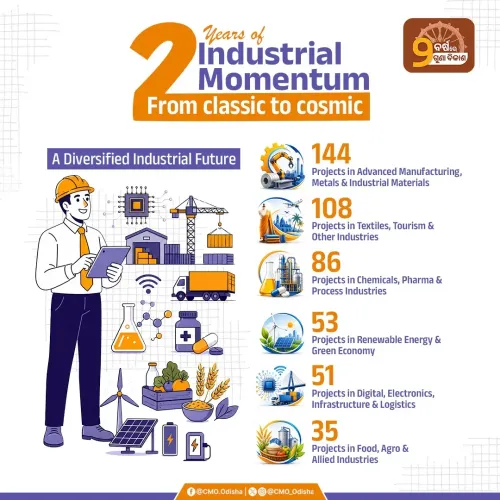
His government is promoting mineral-based industries through a new industrial policy and a revamped Single Window System .
The Single Window mechanism aims to enable project groundbreakings within two-and-a-half to three months of approval.
The shift from raw ore exports to finished-product manufacturing is central to the BJP government's economic pitch for Odisha .
Actual rollout speed and investment figures in coming quarters will be the key test of these commitments.
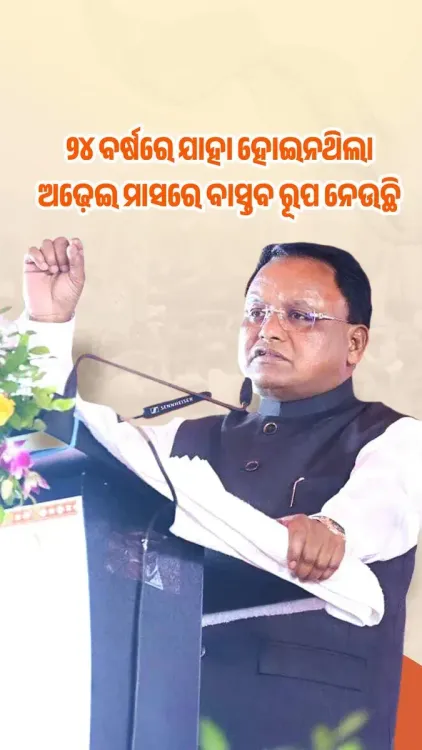
For a quarter-century, Odisha sat on one of India's richest mineral reserves — iron ore, bauxite, coal — and largely shipped them out raw while downstream jobs and factories went to other states. Odisha Chief Minister Mohan Charan Majhi made that charge explicit on Wednesday, 14 October 2026, posting a sharp indictment of the state's pre-BJP industrial record alongside a direct claim: his government is finally converting those reserves into factories, not just files.
Twenty-four years of raw exports and unbuilt MoUs
Majhi's post, written in Odia and English, goes straight for the jugular of the previous administration's industrial legacy. 'ଶିଳ୍ପାୟନ କେବଳ MoU ଓ ପ୍ରଚାରରେ ସୀମିତ ରହିଗଲା' — 'Industrialisation remained limited to MoUs and publicity' — is the line that will sting most. Between 2000 and 2024, successive Odisha governments signed a long chain of investment memoranda at summits and showcases. Critics had argued for years that the gap between MoU signing and actual groundbreaking was, in most cases, a chasm.
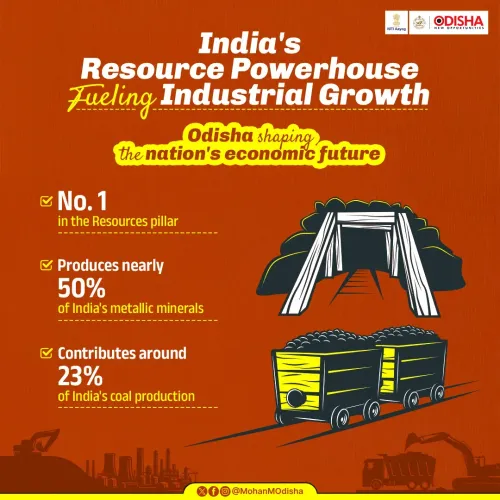
The mineral story is stark on its own terms. Odisha accounts for a large share of India's iron ore and bauxite output, yet the bulk of value addition — steel rolling, aluminium smelting, finished alloys — has historically happened in other states or abroad. The ore left; the factories did not arrive.
The 'Lokanka Sarkar' pivot: policy and speed over paperwork
Majhi frames his government — he calls it 'ଲୋକଙ୍କ ସରକାର' ('Lokanka Sarkar', the people's government) — as engineering a structural course correction. Two tools are front and centre: a new industrial policy and a revamped Single Window System for project clearances. The CM claims the combined effect is dramatic: project approvals that once dragged on indefinitely can now enable a groundbreaking within two-and-a-half to three months of application.
That is a specific, testable claim. The Single Window System concept — routing all regulatory clearances through one portal rather than a maze of departments — has been attempted in several Indian states with mixed results. The Odisha version's actual throughput will be the real measure of whether this time is different from the MoU years.
Why the raw-versus-processed minerals debate matters now
Majhi's framing taps into a live national debate. Mineral-rich states across India have long wrestled with a fundamental trade-off: earn quick royalties from raw ore exports or accept slower returns while building processing infrastructure that generates lasting employment and tax revenue. Global commodity cycles make raw exports volatile; downstream industries create stickier local economies.
With India targeting expanded steel and aluminium output for its infrastructure push, the window for states like Odisha to position themselves as processing hubs — not just mining sites — is arguably as wide as it has ever been. Whether the new industrial policy translates that opportunity into plant commissionings and payroll numbers is the question investors, workers, and opposition benches will now watch closely.
The Chief Minister has drawn the line clearly. The next quarters will show whether groundbreakings follow — or whether Odisha risks adding a new chapter to an old story of promises that outlasted the paperwork.
Point of View
Which means it is also unusually exposed to falsification. For the BJP in Odisha, converting the state's mineral advantage into visible factory floors is both an economic imperative and the clearest possible proof of governance differentiation heading into future electoral cycles. The broader pattern — mineral-rich states moving from raw-export dependency toward value-added processing — mirrors debates in Jharkhand, Chhattisgarh, and Karnataka, making Odisha's experiment one worth tracking nationally.
NationPress
14 Oct 2026
Frequently Asked Questions
What did Odisha CM Mohan Majhi say about Odisha's mineral wealth?
CM Majhi said that for 24 years , Odisha's mineral wealth was primarily exported raw to other states and abroad, with insufficient focus on setting up local industries to produce finished goods — and that his government is now changing this through a new industrial policy.
What is the Single Window System Majhi is promoting for Odisha industries?
The Single Window System is a clearance mechanism designed to route all regulatory and project approvals through one system, aiming to enable groundbreakings within two-and-a-half to three months of application, replacing a previously fragmented multi-department process.
Was Odisha's industrialisation really limited to MoUs under the previous government?
CM Majhi's post directly states that industrialisation under prior administrations 'remained limited to MoUs and publicity.' Independent analyses have long noted a large gap between investment MoUs signed at Odisha summits and actual projects commissioned on the ground between 2000 and 2024 .
What minerals does Odisha have and why does processing them locally matter?
Odisha holds major deposits of iron ore, bauxite, and coal . Local processing — producing steel, aluminium, and other finished goods within the state — generates more jobs, higher tax revenues, and economic resilience compared to exporting raw ore, which leaves value addition to other regions.
What is 'Lokanka Sarkar' that Majhi refers to in the post?
'Lokanka Sarkar' is the Odia phrase meaning 'people's government,' which CM Mohan Charan Majhi uses to brand his BJP-led administration in Odisha, in office since June 2024 .