SBI Report: Informal jobs dominate all states, Punjab tops at 82%
Synopsis
A new SBI Research report reveals that informal employment dominates every Indian state, with Punjab topping the chart at 82 per cent. The findings spotlight a persistent gender gap, a rural concentration of informal workers, and the outsized role agriculture still plays — raising pointed questions about how far India's much-touted structural transformation has actually reached.
Key Takeaways
SBI Research report released on 8 May 2025 finds informal employment dominant across all Indian states.
Punjab leads with 82% informal workers; Uttar Pradesh and Bihar follow at 81% each.
Female workers are 4.8% more likely to be in informal employment than male workers.
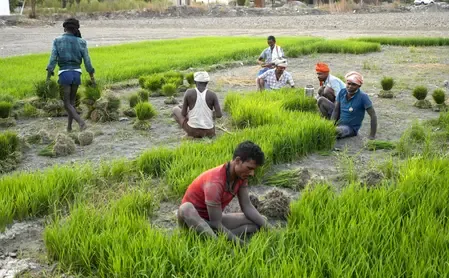
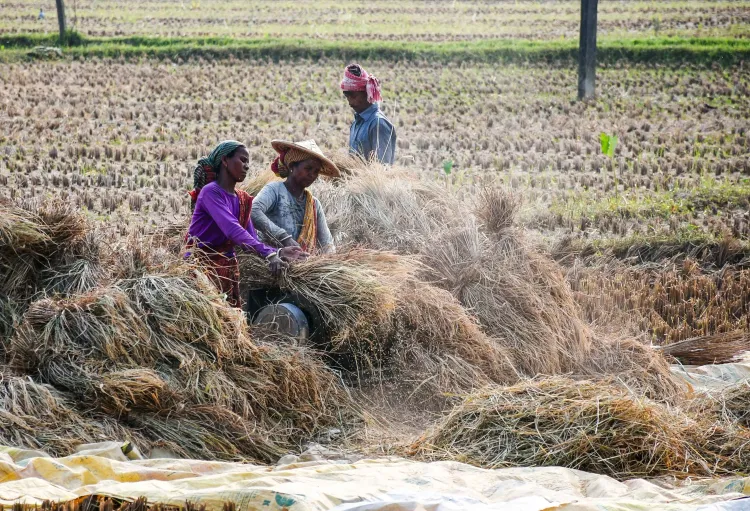
Agriculture accounts for nearly 42% of the informal workforce; rural areas hold 59% of all informal workers.
Large enterprises (more than 20 workers ) now employ 13.7% of the workforce, up from 10.8% in 2024.
Agriculture's share of the workforce has declined from 66% in 1987-88 to 43% in 2023-24 over 37 years .
An SBI Research report released on Friday, 8 May has found that informal employment remains the predominant form of work across every Indian state despite significant regional variation, underscoring the urgent need for greater workforce formalisation and expanded social security coverage. The report highlights persistent structural gaps in India's labour market, with rural areas and agriculture-dependent states bearing the heaviest burden of informality.
Key Findings on Informal Employment
Punjab records the highest share of informal workers at 82 per cent, followed by Uttar Pradesh and Bihar at 81 per cent each. Rajasthan, Chhattisgarh, Andhra Pradesh, and Madhya Pradesh also exhibit high levels of informal employment, with nearly 74 per cent of workers engaged in informal jobs.
According to the report, higher informality in several northern and central states is associated with the dominance of agriculture, casual labour, and low-productivity employment activities. In contrast, states with relatively diversified industrial and service-sector bases — including Haryana, Tamil Nadu, Telangana, and Karnataka — exhibit comparatively lower levels of informal employment.
Gender Gap and Sector-Wise Breakdown
Female workers are 4.8 per cent more likely to be informal workers compared to male workers, according to the report. Construction sector workers, meanwhile, are 4.5 per cent more likely to be engaged in informal employment relative to agricultural sector workers.
The report also highlights a positive role for government intervention in improving female self-employment outcomes.
Point of View
And the workers who have moved out have largely landed in equally informal construction and trade jobs — not in the formal manufacturing or services roles that drive durable income gains. The gender dimension is especially telling: female workers face a compounded disadvantage, being both more likely to be informal and more dependent on government training programmes to access self-employment. The fact that large enterprises now employ 13.7 per cent of the workforce — up from 10.8 per cent — is a marginal positive, but it does not offset the scale of the challenge. Without enforceable social security portability and a credible formalisation roadmap, these numbers will keep recurring in future reports.
NationPress
12 May 2026
Frequently Asked Questions
What did the SBI Research report on informal employment find?
The SBI Research report, released on 8 May 2025, found that informal employment remains the predominant form of work across all Indian states. Punjab recorded the highest share at 82 per cent, followed by Uttar Pradesh and Bihar at 81 per cent each.
Which states have the highest levels of informal employment in India?
Punjab leads at 82 per cent, followed by Uttar Pradesh and Bihar at 81 per cent each. Rajasthan, Chhattisgarh, Andhra Pradesh, and Madhya Pradesh also report high informality, with nearly 74 per cent of workers in informal jobs.
How does informal employment affect female workers in India?
According to the SBI Research report, female workers are 4.8 per cent more likely to be informal workers compared to male workers. However, government training programmes are associated with a 5.8 per cent rise in the probability of self-employment among women.
What sectors account for the most informal employment in India?
Agriculture is the largest source of informal employment, accounting for nearly 42 per cent of the informal workforce, followed by trade and hotels at 17 per cent and other service activities at 14 per cent.
How has India's labour force changed structurally over the decades?
Agriculture's share of the workforce has declined from 66 per cent in 1987-88 to 43 per cent in 2023-24 — a 23 percentage point fall over 37 years. Large enterprises now employ 13.7 per cent of the workforce, up from 10.8 per cent in 2024, reflecting a modest push from manufacturing growth.