India’s Economic Growth: Expanding Job Opportunities Across All Sectors

Synopsis
Discover how India's falling unemployment rate to 4.9% is reshaping the job market, creating opportunities in diverse sectors. From urban centers to rural areas, the growth is widespread and promising.
Key Takeaways
Unemployment Rate: Decreased to 4.9% in February.
Diverse Job Growth: Opportunities are expanding across various sectors.
Government Initiatives: Capital expenditure and PLI schemes are driving job creation.
Youth Employment: Positive trends in technology and digital sectors.
Women's Participation: Increasing number of women joining the workforce.
New Delhi, March 18 (NationPress) The drop in India's unemployment rate to 4.9 percent in February signifies a positive transformation in hiring patterns. Job creation is no longer confined to a few urban centers or specific sectors.
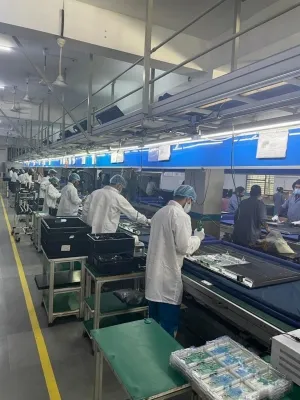
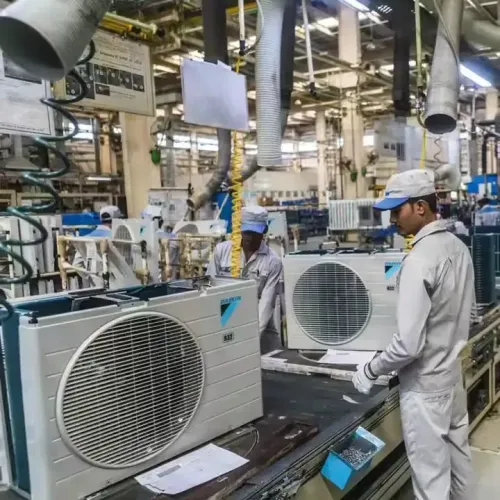
The job gains in February spanned across manufacturing, construction, retail, logistics, and agriculture, indicating a broad-based recovery that encompasses both rural and urban regions, as reported by India Narrative.
Government spending on large infrastructure projects, coupled with a resurgence in business confidence, seems to be leading to real job opportunities.
The push for manufacturing under the "Make in India" and "Atmanirbhar Bharat" initiatives appears to be yielding positive results. The implementation of Production-Linked Incentive (PLI) schemes is drawing global investments in industries like electronics, automobiles, and renewable energy. These sectors not only generate factory jobs but also create additional employment in logistics, component manufacturing, and various services.
The trend of multinational corporations selecting India as their production hub has fortified job creation against seasonal downturns, according to the report.
Moreover, youth employment, often viewed as one of India's significant hurdles, is beginning to show signs of improvement. The technology and digital services sectors continue to flourish, providing millions of jobs in software, data analytics, and cloud computing.
Recently, India's dynamic startup ecosystem — spanning fintech, e-commerce, and green energy — has become a beacon for young talent. The government's ongoing commitment to skill development through initiatives like PM Kaushal Vikas Yojana ensures that the youth are better equipped for the evolving job market.
The uptick in rural employment suggests that the advantages of economic growth are reaching smaller towns and villages. This growth stabilizes household incomes and boosts rural demand, thereby fostering a positive cycle of economic activity, as further noted in the article.
While the recent improvements are largely attributed to cyclical recovery, significant structural changes are also underway. India's labor force participation rate, especially among women, is beginning to rise after years of stagnation. An increasing number of women entering the workforce in sectors like healthcare, education, micro-entrepreneurship, and digital services signifies a slow yet meaningful shift in India's employment landscape.
As digital connectivity expands, new flexible work models, including remote and part-time opportunities, are unlocking economic potential for millions who were previously marginalized, the article added.
Point of View
It is evident that India's recent economic trends signify a hopeful shift in employment opportunities. The broad-based recovery is a positive development, particularly for the youth and rural populations, showcasing a transformative phase in the country's labor market.
NationPress
27 Sept 2026
Frequently Asked Questions
What is India's current unemployment rate?
India's unemployment rate has decreased to 4.9 percent as of February.
Which sectors are contributing to job growth in India?
Job growth is occurring in manufacturing, construction, retail, logistics, and agriculture.
How is the government influencing job creation?
The government is boosting job creation through capital expenditure on infrastructure and initiatives like Make in India.
Is youth employment improving in India?
Yes, youth employment is seeing positive trends, particularly in technology and digital services.
What role do women play in India's workforce?
More women are entering the workforce, especially in sectors such as healthcare and education, indicating a shift in employment dynamics.