ISI's Kashmir reset: Teen OWGs, pistol drops and jungle warfare tactics
Synopsis
After Operation Sindoor gutted its old network, the ISI has quietly rebuilt its Kashmir apparatus with teenage couriers, pistols instead of AK-47s, and Chinese military-grade radios that bypass Indian telecom entirely. The new model is designed for targeted killings and near-zero traceability — a sharper, more elusive threat than the one India dismantled.
Key Takeaways
The ISI has fully restructured its overground worker (OWG) network in Jammu and Kashmir following Operation Sindoor .
New recruits are primarily teenagers aged 15–16 , including girls, with no prior police records — replacing an older, identifiable network.
OWGs are assigned single tasks — typically delivering one or two pistols — and then stand down, making tracking extremely difficult.
Weapon consignments reportedly change hands three to five times before reaching the attacker, deliberately breaking the surveillance chain.
Terrorists sheltering in Kashmir's dense forests are using Chinese-made Ultra Sets — encrypted radio devices that communicate off-grid via cross-border relay stations linked to servers in Pakistan .
Officials assess the ISI's current strategy targets selective killings rather than large-scale strikes, consistent with two recent attacks that killed a head constable and two migrants.
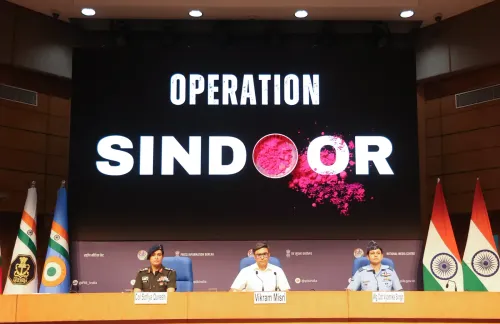
Pakistan's Inter-Services Intelligence (ISI) has overhauled its entire overground worker (OWG) network in Jammu and Kashmir, according to Indian security officials, following the severe setback the country suffered after Operation Sindoor — the Indian armed forces' retaliatory strike against terror infrastructure in Pakistan and Pakistan-occupied Kashmir (PoK) in response to the Pahalgam terror attack. The restructuring, officials say, is more sophisticated and harder to detect than anything seen before.
Dismantling the Old Guard
The first move in ISI's overhaul was to systematically dismantle its existing OWG network. The old guard, officials explained, had been recruited along organisational lines — Jaish-e-Mohammed (JeM), Lashkar-e-Taiba (LeT), and Hizbul Mujahideen each maintained separate, non-overlapping OWG cells. These individuals carried ideological ties to their respective outfits and possessed detailed knowledge of leadership structures and local handlers.
Critically, nearly all of them had police records — making them relatively easy for Indian security agencies to identify and monitor. That vulnerability, officials say, is precisely why the ISI moved to replace them entirely.
Teen Recruits and Single-Use Operatives
In place of the old network, the ISI has reportedly begun inducting teenagers aged 15 to 16, including girls, into its OWG ranks. Unlike their predecessors, these new recruits are assigned a single task and then disappear — a deliberate design to minimise their footprint and evade detection.
'The fact that they have no files on them and will not be used for another assignment makes tracking even harder,' an official said.
According to an Intelligence Bureau official, the new OWGs are primarily tasked with transporting small weapon consignments — typically one or two pistols — rather than larger firearms such as AK-47s. Once handed a weapon, an OWG is given only the delivery location. A separate operative waits at that point to receive it and pass it further down the chain.
Weapons Changing Hands Up to Five Times
Officials say that in some cases, a single weapon consignment changes hands three to five times before reaching the person assigned to carry out an attack. This layered handoff system is specifically designed to defeat surveillance and break any traceable chain of custody.
'This constant changing of hands has posed a big challenge for the security agencies. Keeping track of four to five hands becomes difficult,' an official noted. 'This strategy also helps the OWGs evade detection as they hardly leave any trail.'
The choice of pistols over assault rifles is itself telling. 'Pakistan is not aiming for a big hit in the Valley. The very fact that they are choosing pistols over the AK-47 suggests that the aim is to carry out targeted killings and not indulge in a major strike,' officials said. Two recent attacks in Kashmir — in which a head constable and two migrants were killed — are seen as consistent with this pattern of targeted, low-profile violence.
Jungle Warfare and Chinese Communication Devices
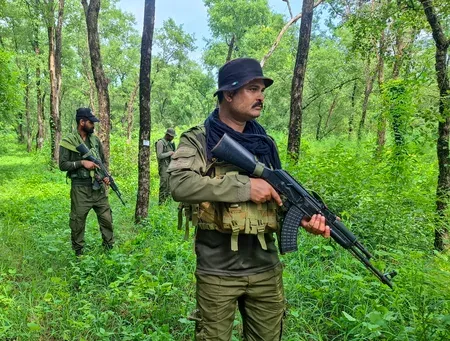
Alongside the OWG restructuring, officials suspect the ISI is simultaneously building a parallel jungle warfare capability. Several terrorists are believed to be sheltering in the dense forests of the Kashmir Valley, where thick vegetation and difficult terrain complicate security operations.
These operatives are reportedly using Chinese-made communication devices described as Ultra Sets — devices that combine smartphone functionality with military-grade radio technology. According to officials, these units transmit short encrypted data bursts via radio waves to cross-border relay stations, bypassing local telecom networks and SIM card infrastructure entirely.
'These devices do not talk to each other directly, but send short encrypted data bursts via radio waves to cross-border relay stations and Chinese military communications, which are linked to master servers in Pakistan,' an official said. This off-grid communication architecture, officials warn, significantly reduces the window for interception.
What Security Agencies Are Watching
The combination of single-use teenage couriers, multi-hand weapon transfers, and encrypted off-grid communications represents a qualitative shift in ISI's operational doctrine in Kashmir, according to officials. The overhaul appears designed to exploit gaps in conventional surveillance rather than mount spectacular attacks. With jungle hideouts providing cover and Chinese technology enabling covert communication, security agencies face a more diffuse and harder-to-predict threat landscape in the months ahead.
Point of View
Single-use couriers is a direct lesson learned from Operation Sindoor — the old network was too identifiable, too ideologically legible, and too easy to roll up. What India now faces is a deliberately granular threat: small weapons, anonymous carriers, layered handoffs, and off-grid Chinese comms that defeat standard intercept protocols. The jungle warfare dimension is particularly underreported — dense forest terrain has historically been India's most difficult operational environment, and encrypted radio devices that skip domestic telecom entirely close the last reliable surveillance window. The shift from AK-47s to pistols should not be read as de-escalation; it signals a strategic preference for sustained, deniable attrition over headline-grabbing mass-casualty events.
NationPress
13 Aug 2026
Frequently Asked Questions
What is the ISI's new OWG network in Kashmir?
The ISI has rebuilt its overground worker (OWG) network in Jammu and Kashmir using teenage recruits aged 15 to 16, including girls, who are assigned a single task — typically delivering one or two pistols — and then stand down. The restructuring followed the dismantling of the older network after Operation Sindoor.
Why did the ISI dismantle its old overground worker network?
Nearly all members of the old OWG network had police records, making them easy for Indian security agencies to identify and track. The ISI replaced them with recruits who have no prior files and are used only once, sharply reducing traceability.
What are the Chinese Ultra Sets being used by terrorists in Kashmir?
Ultra Sets are Chinese-made devices that combine smartphone functionality with military-grade radio technology. According to officials, they transmit short encrypted data bursts via radio waves to cross-border relay stations linked to servers in Pakistan, allowing terrorists to communicate entirely off the local telecom grid without SIM cards.
Why is the ISI using pistols instead of AK-47s in Kashmir?
Officials assess that the ISI's current strategy is focused on targeted killings rather than large-scale strikes. The choice of pistols over assault rifles reflects a preference for low-profile, deniable attacks — a pattern consistent with two recent incidents in which a head constable and two migrants were killed.
What is the jungle warfare threat in Kashmir?
Several terrorists are believed to be hiding in Kashmir's dense forests, where thick vegetation and difficult terrain hinder security operations. Officials say these operatives are using encrypted Chinese radio devices to communicate off-grid, further complicating detection and interception efforts.