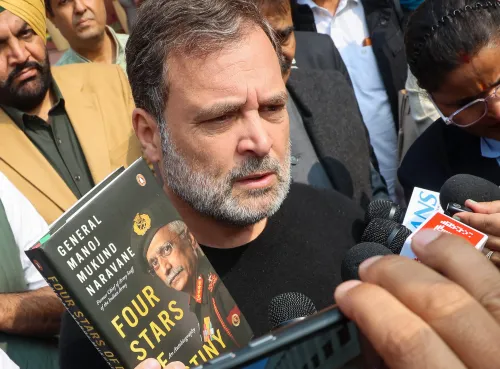
Manoj Tiwari Calls Rahul Gandhi 'Agent of China' After Ex-Army Chief Naravane's Memoir Row
Synopsis
BJP MP Manoj Tiwari branded Rahul Gandhi an 'agent of China' after ex-Army Chief General Naravane clarified his memoir's reference to Defence Minister Rajnath Singh's 'do what you deem fit' remark during the India-China border standoff — escalating a political firestorm just weeks before Lok Sabha results.
Key Takeaways
BJP MP Manoj Tiwari called Rahul Gandhi an "agent of China" and "enemy of India" on Friday, April 25 , in Ahmedabad .
The remarks follow controversy over former Army Chief General Naravane's unpublished memoir referencing Defence Minister Rajnath Singh's phrase "do whatever you deem appropriate" during the India-China border standoff .
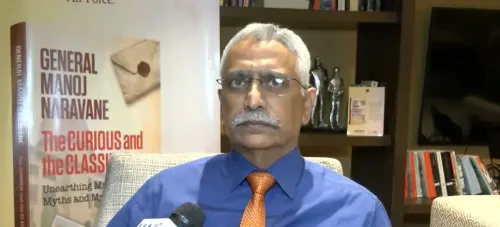
General Naravane clarified the phrase reflected the government's "total faith" in the armed forces and urged against politicisation of military matters.
Tiwari also attacked West Bengal CM Mamata Banerjee over her emotional statement, accusing her government of "gunda raj" and governance failures, including the RG Kar Medical College case .
Tiwari cited nearly 92 per cent voter turnout as proof of BJP's surge in West Bengal , predicting strong results on May 4 .
The Naravane memoir row is set to intensify as the book nears publication, with potential implications for debates on India's China policy and civil-military relations.
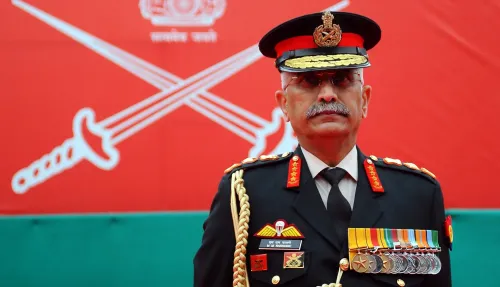
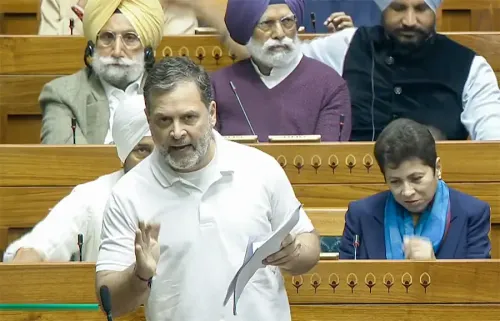
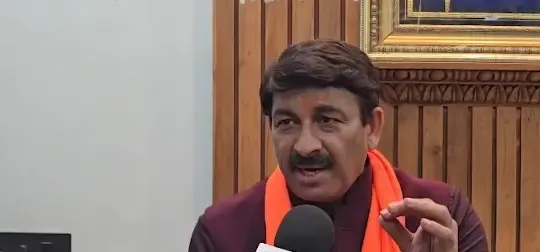
Ahmedabad, April 25: BJP MP Manoj Tiwari launched a fierce broadside against Leader of the Opposition Rahul Gandhi on Friday, April 25, branding him "an agent of China" and "an enemy of India" — remarks triggered by the growing controversy surrounding former Army Chief General Manoj Mukund Naravane's unpublished memoir and its references to critical decisions made during the India-China border standoff.
Naravane Memoir Row: What Sparked the Political Firestorm
The controversy erupted after excerpts from General Naravane's yet-to-be-published memoir surfaced, specifically referencing a pivotal moment during the India-China border tensions along the Line of Actual Control (LAC). The memoir reportedly cited the phrase "jo uchit samjho, woh karo" — meaning "do whatever you deem appropriate" — which was attributed to Defence Minister Rajnath Singh.
General Naravane subsequently clarified that the statement was a reflection of the government's "total faith" in the armed forces and urged political leaders across party lines not to weaponise sensitive military matters for electoral gains.
"It basically shows the great confidence the government had in the army, its hierarchy, and the service chiefs. They knew that whatever decision was taken would be made while keeping all factors in mind," Naravane elaborated in his clarification, signalling that the memoir's intent was to honour, not undermine, civil-military trust.
Tiwari's Escalating Attack on Rahul Gandhi
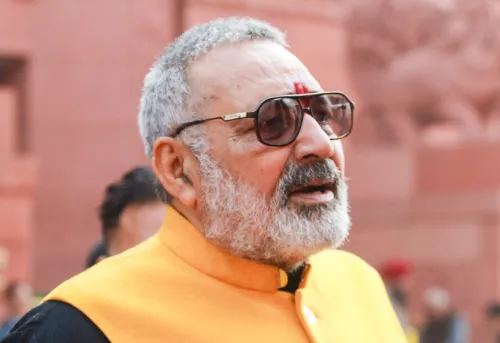
Reacting sharply to the political debate that followed, Manoj Tiwari told IANS: "Rahul Gandhi is an agent of China. You can believe this completely. Rahul Gandhi is an enemy of India." The BJP MP did not stop there — he accused Gandhi of being "not a friend of the country" and of repeatedly insulting Prime Minister Narendra Modi.
"They have abused PM Modi in every possible way. There is nothing left unsaid, even calling him a terrorist. This is about a person before whom generations of terrorists have been afraid, and yet such statements are made," Tiwari said, adding that the nation would respond appropriately to such remarks.
This is not the first time Rahul Gandhi has been accused of being soft on China by BJP leaders. The ruling party has consistently used Gandhi's overseas speeches and his questions on the Galwan Valley clash of June 2020 — which claimed the lives of 20 Indian soldiers — as political ammunition, arguing that his narrative aligned with Beijing's talking points.
Tiwari Takes Aim at Mamata Banerjee Over Bengal Statement
Tiwari also turned his attention to West Bengal Chief Minister Mamata Banerjee, questioning her recent emotionally charged statement: "I was born in Bengal, and I shall breathe my last in this very Bengal."
"Why is she talking about dying? Elections are about winning or losing. What does dying have to do with it?" Tiwari asked, accusing Banerjee of deploying emotional rhetoric to sway voters rather than addressing governance failures in the state.
He pointed to the RG Kar Medical College rape and murder case as evidence of deteriorating law and order under the Trinamool Congress (TMC) government, alleging that the Calcutta High Court had to intervene to ensure proper legal proceedings — a claim that underscores the broader narrative of institutional breakdown critics associate with Bengal's current administration.
BJP's West Bengal Ambitions and the 92% Voter Turnout Claim
Tiwari cited a voter turnout figure of nearly 92 per cent as evidence of BJP's deepening penetration in West Bengal, crediting the leadership of Prime Minister Modi and Home Minister Amit Shah for mobilising voters.
"Wait for May 4 — you will see the results," he declared, urging Chief Minister Banerjee to focus on governance rather than emotional appeals. He alleged that "gunda raj" — rule by muscle power — prevailed in Bengal, preventing voters from freely supporting opposition parties.
Notably, West Bengal has been a fiercely contested battleground since the 2021 Assembly elections, where TMC returned to power with a decisive mandate despite BJP's aggressive campaign. The 2024 Lok Sabha elections represent another critical test of whether BJP can convert its organisational strength in the state into seats.
Broader Political Context and What Comes Next
The Naravane memoir controversy arrives at a politically sensitive moment — with India still navigating a fragile disengagement process along the LAC following the 2020 Galwan clash and subsequent standoffs at Depsang and Demchok. Opposition parties, led by Congress, have repeatedly questioned the government's transparency on the border situation, while the ruling BJP has framed any such questioning as anti-national.
The politicisation of military memoirs and border security narratives is likely to intensify as India approaches the final phases of the 2024 General Elections. With May 4 results potentially reshaping Bengal's political landscape, both BJP and TMC are locked in a high-stakes battle where every statement — emotional or otherwise — carries electoral weight.
As the Naravane memoir moves closer to publication, further disclosures could reignite debates around civil-military relations, political accountability, and India's strategic posture on its northern borders — issues that will define the post-election foreign and defence policy agenda regardless of which coalition governs from New Delhi.
Point of View
Yet both sides have done precisely that. The deeper irony: the government that claims unquestionable military credibility is now allowing a retired Army Chief's unpublished memoir to become a campaign flashpoint — suggesting that civil-military boundaries remain as contested as the LAC itself. Voters deserve a debate on India's China policy grounded in facts, not slogans.
NationPress
19 Sept 2026
Frequently Asked Questions
Why did Manoj Tiwari call Rahul Gandhi an agent of China?
BJP MP Manoj Tiwari made the remark in response to the political controversy surrounding former Army Chief General Naravane's unpublished memoir, which referenced decisions made during the India-China border standoff. Tiwari accused Rahul Gandhi of repeatedly undermining PM Modi and aligning with narratives that BJP claims benefit China.
What did General Naravane say about his memoir controversy?
General Manoj Mukund Naravane clarified that the phrase 'jo uchit samjho, woh karo' attributed to Defence Minister Rajnath Singh reflected the government's total faith in the armed forces. He urged political parties not to politicise sensitive military matters for electoral purposes.
What is the India-China border standoff that Naravane's memoir references?
The memoir references the 2020 India-China border crisis, which peaked with the Galwan Valley clash in June 2020 where 20 Indian soldiers were killed. The standoff led to prolonged military deployments and diplomatic negotiations over disengagement at multiple friction points along the Line of Actual Control.
What did Manoj Tiwari say about Mamata Banerjee?
Tiwari questioned Mamata Banerjee's statement 'I was born in Bengal and shall breathe my last here,' calling it emotional rhetoric designed to influence voters. He accused her government of governance failures, citing the RG Kar case and alleged 'gunda raj' that prevents free voting in West Bengal.
What are BJP's prospects in West Bengal according to Tiwari?
Tiwari claimed a voter turnout of nearly 92 percent as evidence of BJP's strong ground presence in West Bengal, crediting PM Modi and Home Minister Amit Shah. He asked voters to wait for May 4 results, predicting significant BJP gains in the state.