TMC urges Bengal DGP to act after 66-year-old held as Bangladeshi for 75 days

Synopsis
A 66-year-old man from North Dinajpur has spent over 75 days in custody — moved through two holding centres and a correctional home — after police branded him an illegal Bangladeshi national despite his family producing citizenship documents. The TMC is now demanding the West Bengal DGP personally intervene, citing a disturbing pattern of wrongful detentions that echoes the earlier Birbhum deportation case.
Key Takeaways
Jalil Akhtar , 66 , a resident of Bagroi village, North Dinajpur , has been in custody for over 75 days on suspicion of being an illegal Bangladeshi national.
He was detained on 16 June by Dalkhola police station and produced before an Islampur court on 22 July under Section 14 of the Foreigners Act .
His family alleges citizenship documents were presented to police but were disregarded; the case is currently sub judice.
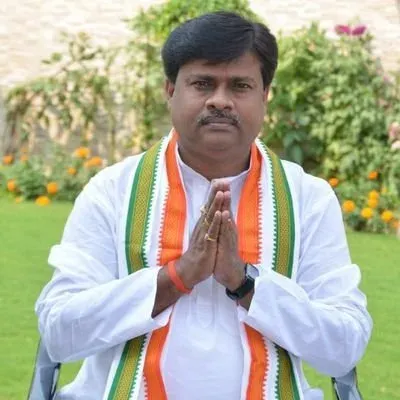
TMC Rajya Sabha MP Samirul Islam raised the issue on X and demanded DGP Siddh Nath Gupta personally review Akhtar's documents.
Islam cited the earlier case of Sunali Khatun from Birbhum , who was allegedly deported to Bangladesh despite holding Indian citizenship documents.
BJP spokesperson Shatorupa defended the state's anti-infiltration stance but acknowledged that mistaken detentions would be subject to inquiry.
The All India Trinamool Congress (TMC) has demanded that West Bengal Director General of Police Siddh Nath Gupta personally intervene in the case of Jalil Akhtar, a 66-year-old resident of North Dinajpur district, who has been held in judicial custody for over 75 days on suspicion of being an illegal Bangladeshi national. The demand was raised on Wednesday, 2 September, as family members and opposition leaders alleged that Akhtar's Indian citizenship documents were ignored by authorities.
How the Detention Unfolded
According to family members, Akhtar — a resident of Bagroi village under Bazargaon 2 panchayat in Dalkhola, North Dinajpur — was picked up from his home on 16 June by a team from Dalkhola police station. His daughter, Kulsum Khatun, told reporters that the family promptly approached the police station with documents they say establish her father's Indian citizenship, but their efforts were allegedly unsuccessful.
Akhtar was subsequently moved through two holding centres before being produced before a court in Islampur, North Dinajpur, on 22 July, where police described him as an illegal Bangladeshi national. He was arrested under Section 14 of the Foreigners Act. A senior police officer confirmed he remains in judicial custody and that the matter is sub judice.
TMC's Demand and What It Cited
TMC Rajya Sabha MP Samirul Islam raised the issue in a post on X, alleging a pattern of harassment against poor Indian citizens on suspicion of being Bangladeshi nationals. Islam drew a parallel with an earlier case involving Sunali Khatun, a woman from Birbhum who was allegedly deported to Bangladesh despite holding Indian citizenship documents, and was brought back only after public and political pressure.
Islam said, 'At this stage, it is imperative that the Director General of Police, West Bengal, personally looks into the matter, ensures that Jalil's citizenship documents are properly examined, and takes appropriate steps to protect him if he is found to be an Indian citizen. The person was a voter in the 2026 electoral roll and has land documents dating back many years.'
He added, 'If the allegations of unlawful detention, harassment or fabrication of a case are found to be true, appropriate action should also be taken against those responsible. We are with the family to provide legal support to them. We will see an end to such atrocities on poor people.'
BJP's Counter and the Political Backdrop
Bharatiya Janata Party (BJP) spokesperson Shatorupa responded by asserting there was no place for Bangladeshi infiltrators in West Bengal. She alleged that during the tenure of the previous Trinamool Congress government under Chief Minister Mamata Banerjee, infiltrators had been invited into the state and provided with documents and certificates — a charge the TMC has denied.
Shatorupa said, 'The new BJP government will not do any such thing. There is no sympathy for any infiltrator. Having said that, if anyone is mistakenly detained, then there will be an inquiry. Sometimes, it takes time to complete the inquiry. It is a matter for the administration. But no illegal citizen will be allowed to live in Bengal.'
A Recurring Pattern Under Scrutiny
This is not an isolated incident. The Birbhum deportation case had already drawn national attention to the risk of wrongful identification of Indian Muslims as illegal migrants — a concern that civil liberties groups and opposition parties have raised repeatedly. Notably, the Foreigners Act places the burden of proof on the detained individual to establish citizenship, a provision critics argue is structurally weighted against those with limited documentation access.
With the matter now sub judice and the DGP yet to formally respond, the case is likely to intensify political scrutiny over how West Bengal's law enforcement is handling citizenship verification in border-adjacent districts.
Point of View
Where the burden of proof falls on the detained individual and documentation gaps are common among the rural poor. The parallel with the Birbhum deportation case suggests this is not an aberration but a pattern, and the political noise from both the TMC and BJP risks drowning out the due-process question at the centre: why were documents reportedly submitted by the family not examined before 75 days of detention? The DGP's response — or silence — will be the real indicator of institutional accountability here.
NationPress
17 Oct 2026
Frequently Asked Questions
Who is Jalil Akhtar and why was he detained?
Jalil Akhtar is a 66-year-old resident of Bagroi village in North Dinajpur district, West Bengal, who was detained on 16 June by Dalkhola police on suspicion of being an illegal Bangladeshi national. He has since been held at two holding centres and a correctional home for over 75 days, and was produced before a court in Islampur on 22 July under Section 14 of the Foreigners Act.
What is the TMC demanding in this case?
The Trinamool Congress has demanded that West Bengal DGP Siddh Nath Gupta personally intervene to ensure Jalil Akhtar's citizenship documents are properly examined and that he is protected if found to be an Indian citizen. TMC Rajya Sabha MP Samirul Islam also called for action against officials if allegations of unlawful detention or fabrication are proven.
What documents does Akhtar's family say they have?
According to family members and TMC MP Samirul Islam, Akhtar appears in the 2026 electoral roll and holds land documents dating back many years, which the family says establish his Indian citizenship. They allege these documents were presented to police but were not accepted.
Has something similar happened before in West Bengal?
Yes. The TMC cited the earlier case of Sunali Khatun, a woman from Birbhum who was allegedly deported to Bangladesh despite possessing Indian citizenship documents. She and others were brought back to India only after political pressure mounted, making it a precedent that critics are now invoking in Akhtar's case.
What is the BJP's position on the detention?
BJP spokesperson Shatorupa defended the state government's zero-tolerance stance on Bangladeshi infiltrators but acknowledged that if anyone is mistakenly detained, an inquiry would follow. She alleged that the previous TMC government had facilitated infiltrators with documents — a charge the TMC denies.