Tamil Nadu names district in-charge ministers to fast-track welfare, disaster response

Synopsis
Tamil Nadu is layering political oversight onto its district administration. Chief Minister C. Joseph Vijay has assigned cabinet ministers to each revenue district to accelerate welfare delivery and lead disaster response — a structural shift that places ministers alongside IAS Monitoring Officers and district collectors in the day-to-day implementation chain.
Key Takeaways
Joseph Vijay has appointed ministers as in-charge of each district.
Order issued by the Revenue and Disaster Management Department on 2 June , made public on 3 June .
Ministers will monitor development works, welfare delivery, and emergency response during floods, cyclones, and epidemics.
The framework builds on earlier deployment of senior IAS officers as district Monitoring Officers.
Portfolios covered include Revenue, Municipal Administration, Public Works, Higher Education, Industries, Agriculture, Health, and Transport .
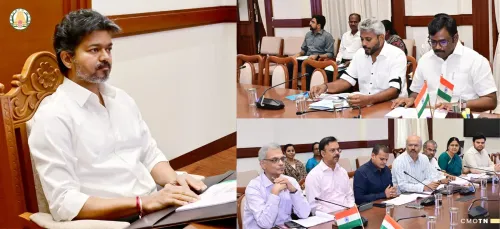
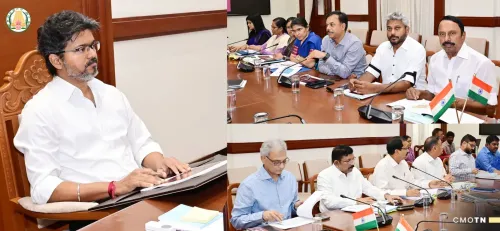
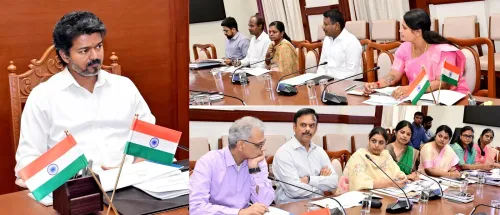
The Tamil Nadu government, led by Chief Minister C. Joseph Vijay, has appointed cabinet ministers as in-charge of each revenue district to monitor development works, accelerate welfare delivery, and coordinate emergency response during natural disasters and public health crises. The decision, formalised through a government order issued by the Revenue and Disaster Management Department on 2 June, was made public on 3 June from Chennai.
Key Developments
Under the new arrangement, designated ministers will oversee development programmes, ensure timely disbursal of welfare benefits, identify implementation bottlenecks, and trigger corrective action where required. They will also lead coordination during floods, cyclones, disease outbreaks, and other unforeseen emergencies.
According to the official release, senior ministers holding portfolios including Revenue, Municipal Administration, Public Works, Higher Education, Industries, Agriculture, Health, and Transport have been allocated one or more districts to supervise.
How the Monitoring Framework Is Being Expanded
The state had earlier deputed senior Indian Administrative Service (IAS) officers as Monitoring Officers for every district, tasked with reviewing scheme implementation, assessing ground-level progress, and coordinating emergency responses. The latest order layers political oversight on top of this bureaucratic structure by bringing ministers directly into the monitoring loop.
The government said the move is intended to sharpen coordination between departments, local administrations, and elected representatives. District in-charge ministers are expected to work closely with district collectors, IAS Monitoring Officers, and local authorities to ensure programmes are executed without delay and public grievances are addressed promptly.
Why It Matters
Tamil Nadu, a coastal state recurrently exposed to cyclones, north-east monsoon flooding, and periodic disease outbreaks, has long relied on district collectors as the primary coordination node during emergencies. Inserting a minister-level layer is intended to compress decision-making timelines when relief and rehabilitation cannot wait for inter-departmental clearances.
The government noted that proactive steps have been taken to ensure welfare schemes and development initiatives reach the public quickly across all sectors, and that closer supervision is required during disasters and epidemics.
What Happens Next
Ministers are expected to begin district-level reviews in the coming weeks, working in tandem with collectors and Monitoring Officers. The administrative test will lie in how quickly the new structure delivers measurable outcomes on welfare disbursal and disaster response.
Point of View
When coordination failures historically surface. Done well, this could shorten relief timelines; done poorly, it adds a political filter to bureaucratic decisions that need speed, not signature chains.
NationPress
17 Oct 2026
Frequently Asked Questions
What has the Tamil Nadu government announced about district in-charge ministers?
The Tamil Nadu government, led by Chief Minister C. Joseph Vijay, has appointed cabinet ministers to oversee each revenue district. They will monitor development programmes, welfare delivery, and coordinate emergency response during disasters and public health crises.
When was the order issued and by which department?
The order was issued by the Revenue and Disaster Management Department on 2 June, with the official release made public on 3 June. It assigns specific ministers to each of Tamil Nadu's revenue districts.
How does this change the existing monitoring system?
The state had earlier appointed senior IAS officers as Monitoring Officers for every district. The new order adds a political layer above this bureaucratic framework, with ministers working alongside district collectors and Monitoring Officers.
Which portfolios are covered under the district in-charge arrangement?
Ministers holding portfolios including Revenue, Municipal Administration, Public Works, Higher Education, Industries, Agriculture, Health, and Transport have been allocated one or more districts. Each will review development works and lead emergency coordination in their assigned districts.
Why has the government brought ministers into district-level monitoring?
The government has said closer supervision and faster implementation are required during natural disasters, epidemics, and emergencies. The move is intended to strengthen coordination between state departments, district administrations, and elected representatives.