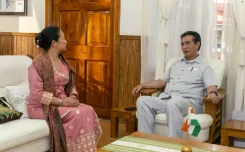
TN CM Vijay writes to PM Modi on BVSc admissions
Synopsis
Tamil Nadu Chief Minister C. Joseph Vijay has written to Prime Minister Narendra Modi demanding that BVSc & AH degree admissions be conducted on the basis of Higher Secondary marks or state-determined criteria — extending the state's long-standing opposition to centralised entrance tests into veterinary education.
Key Takeaways
Joseph Vijay wrote to PM Narendra Modi on 7 August 2026 on BVSc & AH admissions.
The letter urges admissions be based solely on Higher Secondary examination marks or state-set criteria.
Tamil Nadu passed legislation in 2021–2022 seeking exemption from centralised entrance tests for medical admissions.
The demand extends the state's established position against national entrance tests to veterinary science .
The Veterinary Council of India and the Union Ministry of Fisheries, Animal Husbandry and Dairying oversee national BVSc admission norms.
A response from the Centre or discussion at an education ministers' meeting will determine the next step.
Tamil Nadu has thrown its weight behind state-controlled admissions once again — this time for veterinary science. Chief Minister C. Joseph Vijay has written to Prime Minister Narendra Modi urging that admissions to the Bachelor of Veterinary Science and Animal Husbandry (BVSc & AH) degree course be conducted solely on the basis of Higher Secondary examination marks, or as per criteria determined by individual state governments.
What the letter demands — and why it matters
The letter, shared by the Chief Minister's Office of Tamil Nadu on 7 August 2026, insists that no centralised national entrance test should govern BVSc & AH admissions. The CM's position is direct: state board marks or state-defined criteria must be the sole yardstick. The demand mirrors the long-running argument Tamil Nadu has made against national entrance examinations for medicine and dentistry — that uniform all-India tests disadvantage state board students and entrench a coaching-industry ecosystem that the affluent can navigate and others cannot.
Tamil Nadu's decade-long fight against centralised entrance tests
This letter does not arrive in a vacuum. Tamil Nadu has been among the most vocal opponents of centralised entrance examinations for professional courses. The state legislature passed legislation in 2021–2022 seeking an exemption from the National Eligibility cum Entrance Test (NEET) for medical admissions, arguing that board-exam-based selection better reflects local curricula and is fairer to rural and first-generation students. Several other southern states have backed similar positions, making this a recurring fault line in India's federal education architecture.
Extending that logic to veterinary science is a natural progression. The Veterinary Council of India and the Union Ministry of Fisheries, Animal Husbandry and Dairying currently oversee norms for BVSc & AH admissions nationally — and any shift in those norms would require central agreement.
Who stands to gain — and what comes next
For the tens of thousands of students who appear for state board examinations each year with aspirations of a veterinary career, the stakes are concrete: a board-mark-based system removes the need for expensive entrance coaching and opens seats to a wider socioeconomic pool. State education departments, too, retain greater autonomy over seat allocation and reservation implementation when admissions stay within their jurisdiction.
The critical next move lies in New Delhi. A response from the Union Ministry or the Veterinary Council of India — or a discussion at the next education ministers' meeting — will signal whether this letter shifts policy or joins a growing pile of state-centre correspondence on the same theme.
Tamil Nadu has made this argument before, and it has made it loudly. The question is whether veterinary science becomes the ground on which the centre finally concedes some room — or digs in further.
Point of View
Not national entrance tests, should govern admissions. By bringing veterinary science into this frame, CM Vijay signals that the state's resistance is structural, not limited to NEET and medicine. The Centre faces a familiar bind: conceding on BVSc could invite similar demands across other allied health and agricultural science programmes, while refusing risks deepening state-centre friction in an already politically sensitive education domain. The timing — and the public letter format — suggests Vijay is as interested in the political signal as in the policy outcome.
NationPress
22 Sept 2026
Frequently Asked Questions
What has Tamil Nadu CM Vijay demanded regarding BVSc admissions?
CM C. Joseph Vijay has written to PM Modi urging that admissions to the BVSc & AH degree course be conducted solely on the basis of Higher Secondary examination marks or criteria set by individual state governments, with no centralised national entrance test.
What is BVSc & AH and who regulates its admissions in India?
BVSc & AH stands for Bachelor of Veterinary Science and Animal Husbandry. Admission norms for this degree are overseen nationally by the Veterinary Council of India and the Union Ministry of Fisheries, Animal Husbandry and Dairying.
Has Tamil Nadu opposed national entrance tests before?
Yes. Tamil Nadu has consistently opposed centralised entrance tests such as NEET for medical admissions and passed state legislation in 2021–2022 seeking an exemption, arguing that board-exam-based admissions are fairer to state board students.
Why do southern states prefer board-mark-based admissions for professional courses?
Southern states argue that state board marks better reflect local curricula, reduce dependence on expensive coaching institutes, and give rural and first-generation students a more equitable shot at professional course seats.
What happens next after CM Vijay's letter to PM Modi?
The key development to watch is a response from the Union Ministry of Fisheries, Animal Husbandry and Dairying or the Veterinary Council of India, and whether the matter is taken up at an education ministers' meeting between the Centre and states.