TN CM Office congratulates two new Madras HC additional judges
Synopsis
The Chief Minister's Office of Tamil Nadu publicly congratulated Dharmalingam Lingeswaran and Baladandayutham Karthikeyan on their appointment as additional judges to the Madras High Court on 14 October 2026, calling on them to uphold the Constitution's values.
Key Takeaways
Dharmalingam Lingeswaran and Baladandayutham Karthikeyan have been appointed as additional judges to the Madras High Court .
The announcement was acknowledged publicly by the Chief Minister's Office of Tamil Nadu on 14 October 2026 .
Additional judges to high courts are appointed by the President of India under Articles 217 and 224 of the Constitution on the collegium's recommendation.
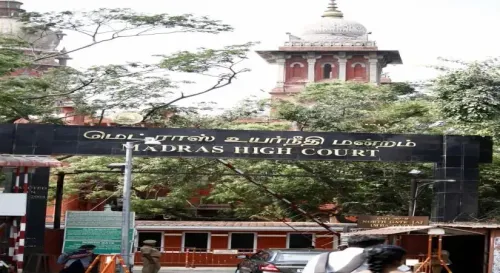
The Madras High Court , founded in 1862 , exercises jurisdiction over Tamil Nadu and Puducherry .
The CMO's message invoked the court's 160-year tradition and called on the new judges to protect the 'dignity of justice and values of the Constitution.'
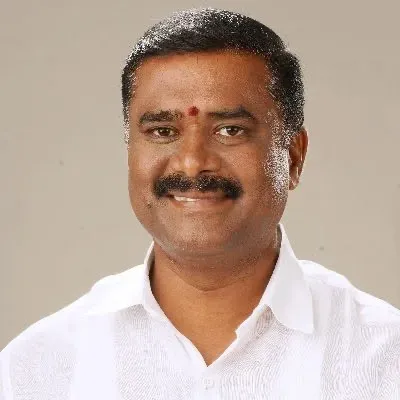
Two new names joined the distinguished bench of the Madras High Court this week — and the Chief Minister's Office of Tamil Nadu was among the first to publicly welcome them. On Wednesday, 14 October 2026, the CMO extended warm congratulations to Mr Dharmalingam Lingeswaran and Mr Baladandayutham Karthikeyan, freshly appointed as additional judges to one of India's oldest and most respected constitutional courts.
The post, shared in Tamil, expressed heartfelt wishes: 'மனமார்ந்த வாழ்த்துகள்!' ('my wholehearted congratulations!') — calling on both judges to uphold 'the dignity of justice and the values of the Constitution' as they take their place in an institution whose traditions run more than 160 years deep.
Chennai's bench and its constitutional weight
The Madras High Court, established in 1862 under the Indian High Courts Act, serves as the apex court for Tamil Nadu and Puducherry. Its bench has long been regarded as one of the most active and intellectually rigorous in the country, handling a sprawling docket that spans constitutional matters, commercial disputes, and public-interest litigation.
Additional judges are appointed under Articles 217 and 224 of the Constitution of India — the President of India acts on the recommendation of the Supreme Court collegium. The collegium system, which governs judicial appointments at the high court and Supreme Court level, places the selection of judges firmly within the judiciary's own domain, insulating the process from direct executive influence.
Why a CMO congratulatory post matters beyond the courtesy
At first glance, a congratulatory message is a routine gesture. Look closer, and it signals something more deliberate. When an elected government publicly acknowledges a judiciary-driven appointment, it implicitly affirms the separation of powers — the executive celebrating, without having chosen, the new arrivals to the bench. Chief Minister Joseph Vijay's office has tagged the post with #CMJosephVijay, linking the goodwill to the administration's public identity.
Indian state governments routinely issue such statements after high court appointments, but the specific phrasing here — invoking the 'tradition' and 'dignity' of the Madras High Court — reads as a deliberate salute to judicial independence rather than a perfunctory acknowledgement.
The next milestone for both judges: their swearing-in ceremony and the eventual allocation of their court rosters, which will determine which cases they preside over during their tenure as additional judges.
Point of View
Such gestures — however ceremonial — carry quiet symbolic weight. The tag '#CMJosephVijay' also reflects a modern branding instinct: anchoring goodwill to a personal political identity even in apolitical moments.
NationPress
14 Oct 2026
Frequently Asked Questions
Who are the new additional judges appointed to the Madras High Court in October 2026?
Dharmalingam Lingeswaran and Baladandayutham Karthikeyan have been appointed as additional judges to the Madras High Court, as acknowledged by the Tamil Nadu CMO on 14 October 2026.
How are additional judges appointed to Indian High Courts?
Additional judges to High Courts are appointed by the President of India under Articles 217 and 224 of the Constitution , based on the recommendation of the Supreme Court collegium.
What is the jurisdiction of the Madras High Court?
The Madras High Court , established in 1862 , serves as the highest court for the state of Tamil Nadu and the Union Territory of Puducherry .
What did the Tamil Nadu CMO say about the new Madras High Court judges?
The CMO extended 'wholehearted congratulations' and expressed hope that both judges would uphold 'the dignity of justice and the values of the Constitution' in the course of their service.
What is the difference between a permanent judge and an additional judge in a High Court?
An additional judge is appointed for a term not exceeding two years under Article 224 , usually to address a temporary increase in the court's workload, whereas a permanent judge holds office until the age of 62 .