CM Vijay calls on Madras HC Chief Justice Dharmadikari
Synopsis
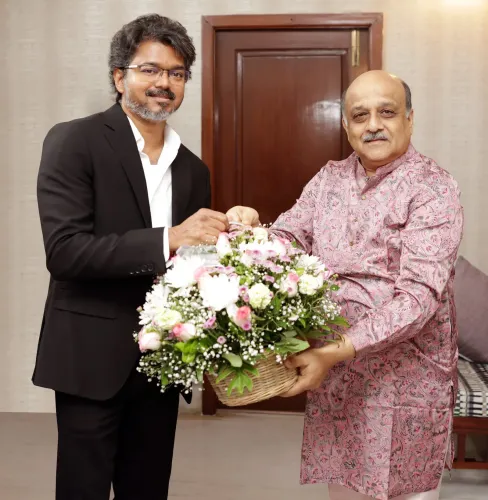
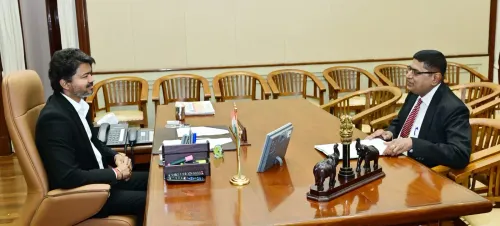
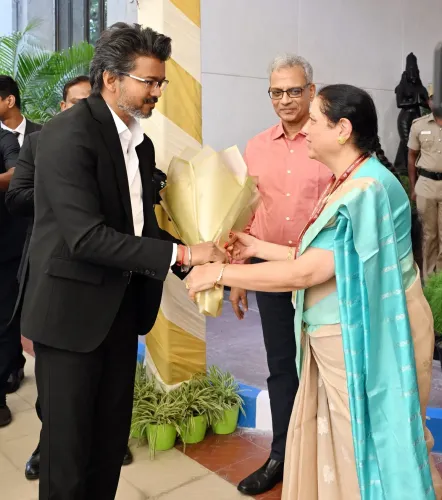
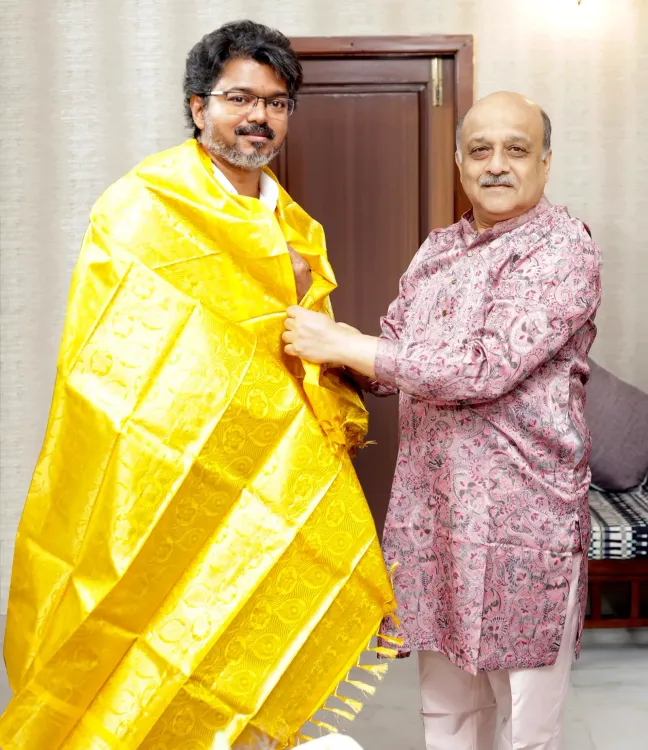
Tamil Nadu Chief Minister Joseph Vijay paid a courtesy visit to Madras High Court Chief Justice Sushruth Arvind Dharmadikari at his residence on 17 June 2026. The Chief Justice welcomed CM Vijay by draping a traditional ponnādai, in keeping with long-standing protocol between the state executive and the judiciary.
Key Takeaways
CM Joseph Vijay visited the residence of Madras High Court Chief Justice Sushruth Arvind Dharmadikari on 17 June 2026 .
Chief Justice Dharmadikari honoured CM Vijay with a ponnādai , a traditional Tamil gesture of respect.
The Madras High Court, established in 1862 , is one of India's three original high courts and has jurisdiction over Tamil Nadu and Puducherry .
Such courtesy visits between Tamil Nadu chief ministers and Madras HC chief justices have been routine practice across multiple administrations since the 1990s .
The interaction falls within the constitutional framework of executive-judiciary coordination on matters such as court infrastructure and judicial appointments.
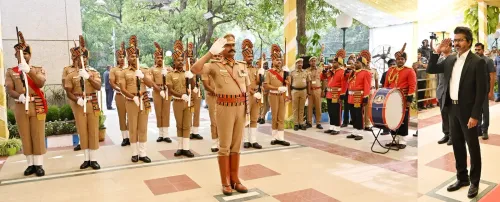
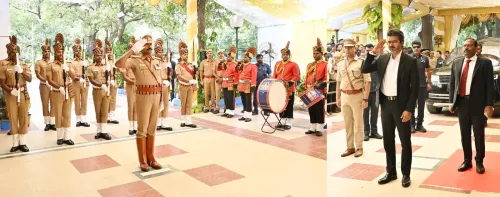
The Chief Minister's Office of Tamil Nadu announced on Wednesday, 17 June 2026 that Chief Minister Joseph Vijay paid a courtesy visit to the residence of Madras High Court Chief Justice Sushruth Arvind Dharmadikari, who welcomed the Chief Minister by draping a ponnādai (silk shawl of honour) around him.
Context
The CMO posted on X that Chief Justice Dharmadikari received CM Vijay at his residence and honoured him with a ponnādai — a traditional Tamil gesture of respect extended to distinguished guests. The visit took place on the evening of 17 June 2026 in Chennai.
The Madras High Court, one of India's three original high courts established in 1862, exercises jurisdiction over Tamil Nadu and Puducherry. Its principal seat is in Chennai, placing it at the centre of the state's judicial administration.
Policy Backdrop
Courtesy calls between Tamil Nadu chief ministers and successive chief justices of the Madras High Court have been a feature of institutional relations across multiple administrations since at least the 1990s. These meetings typically cover subjects such as judicial vacancies, court infrastructure funding, and e-governance initiatives in the justice-delivery system.
Under India's constitutional framework, the executive and the judiciary maintain formal channels of coordination without compromising the separation of powers. Such visits are regarded as established protocol and do not signal any departure from normal institutional relations.
Stakeholders and Impact
The state government and the judiciary are the primary stakeholders in this interaction. For the Tamil Nadu government, maintaining a working relationship with the Madras High Court is relevant to pending proposals for new district courts, filling judicial vacancies, and the pace of case disposal across the state.
Citizens with cases before the Madras High Court and its subordinate courts stand to benefit indirectly if the visit facilitates faster resolution of infrastructure or staffing bottlenecks that affect judicial timelines.
What's Next
Observers will watch for follow-up statements from either the state government or the Madras High Court on specific proposals — such as the creation of additional court benches or the appointment of new judges — that may have been discussed during the meeting. Any subsequent references in Madras High Court orders concerning state litigation could also signal the outcomes of such institutional engagement.
Point of View
Still in the early phase of his tenure, the call on Chief Justice Dharmadikari signals an intent to keep institutional channels open — particularly relevant given the volume of state-related litigation before the Madras High Court. The choice to publicise the visit through the official CMO account suggests the administration views visible judicial outreach as part of its governance optics. The broader policy arc to watch is whether this meeting accelerates any pending decisions on district court expansion or judicial vacancy filling in Tamil Nadu.
NationPress
16 Sept 2026
Frequently Asked Questions
Why did CM Joseph Vijay visit Madras High Court Chief Justice Dharmadikari?
CM Joseph Vijay paid a courtesy visit to Chief Justice Sushruth Arvind Dharmadikari at his residence on 17 June 2026, as part of the established protocol of institutional engagement between the Tamil Nadu state government and the Madras High Court.
What is a ponnādai and why was it given to CM Vijay?
A ponnādai is a silk shawl traditionally presented as a mark of respect and honour in Tamil culture. Chief Justice Dharmadikari draped one on CM Vijay to formally welcome him during the visit.
What is the Madras High Court's jurisdiction?
The Madras High Court, established in 1862 and one of India's three original high courts, exercises jurisdiction over Tamil Nadu and Puducherry, with its principal seat in Chennai.
Is it normal for Tamil Nadu chief ministers to meet the Madras High Court Chief Justice?
Yes. Courtesy calls between Tamil Nadu chief ministers and successive Madras High Court chief justices have been routine across multiple administrations since at least the 1990s, covering topics such as judicial vacancies and court infrastructure.
What could be discussed at a meeting between the Tamil Nadu CM and the Madras HC Chief Justice?
Such meetings typically address judicial administration matters including filling vacant judge positions, funding for court infrastructure, new district court proposals, and e-governance initiatives in the justice-delivery system.