Tamil Nadu first state to add infertility care to family welfare plan
Synopsis
Tamil Nadu has become the first Indian state to formally embed infertility care into its family welfare programme — a historic pivot from a system designed exclusively to limit births. With registered births falling by 1.37 lakh in five years and a total fertility rate of just 1.3, the state faces the demographic cost of its own population-control success.
Key Takeaways
Tamil Nadu is the first Indian state to integrate infertility care into its family welfare programme.
Registered births fell from 9.39 lakh in 2020 to 8.02 lakh in 2025 .
The state's total fertility rate has dropped to 1.3 , against a replacement level of 2.1 .
Residents aged 60 and above make up 16% of the population, projected to reach 20% by 2036 .
Intrauterine insemination will be offered at district headquarters hospitals; preconception counselling through primary health centres.
The policy targets only couples facing conception difficulties — it does not encourage larger families or additional births.
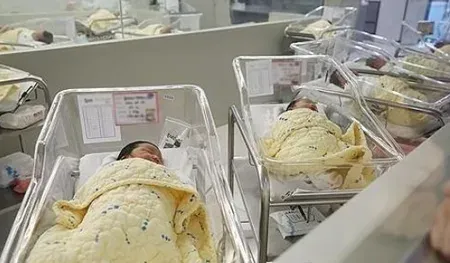
Tamil Nadu has become the first state in India to integrate infertility care into its official family welfare programme, marking a significant policy pivot driven by a sharply declining birth rate and a rapidly ageing population. The move signals a fundamental shift in how the state — long celebrated for its success in population control — now views reproductive health.
Why Tamil Nadu is Acting Now
Official data reveal that registered births in Tamil Nadu fell from 9.39 lakh in 2020 to 8.02 lakh in 2025 — a drop of nearly 1.37 lakh in just five years. The state's total fertility rate (TFR) has declined to 1.3, well below the population replacement level of 2.1. At the same time, residents aged 60 and above already account for 16% of the state's population, a share projected to approach 20% by 2036 — meaning nearly one in every five Tamilians will be a senior citizen within a decade.
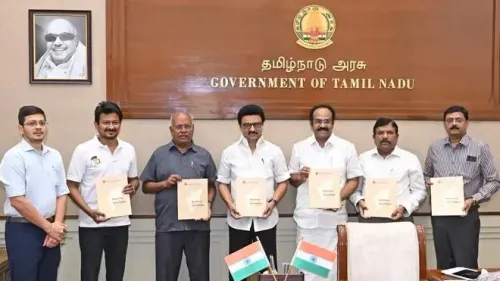
The Health and Family Welfare Department's policy note, recently tabled in the state Assembly, cautioned that a prolonged fertility decline, combined with population ageing, could eventually shrink the workforce and trigger an absolute fall in the state's total population.
What the New Programme Will Offer
Under the expanded initiative, intrauterine insemination (IUI) treatment will be made available at government hospitals, including district headquarters hospitals in districts that do not have government medical college hospitals. Preconception counselling will be offered through primary health centres and health and wellness centres across the state.
Crucially, village health nurses will play a frontline role, identifying and counselling childless couples in their jurisdictions and directing those requiring further examination or specialised treatment to the nearest tertiary healthcare facility.
What the Policy Does Not Do
Officials have been careful to clarify what this shift does not mean. The government will not compel couples to have children, nor will it encourage larger families. Contraceptive choices, pregnancy spacing services, and safe abortion care will continue to be offered as before.
A recent departmental audit found that nearly 25 to 30% of maternal deaths in the state occurred during higher-order births — a fact that has made policymakers wary of nudging couples who already have children toward additional pregnancies. The expanded programme is specifically targeted at couples experiencing difficulties in conceiving.
Broader Significance
This is a landmark departure from the decades-old framework of India's family welfare architecture, which was built almost entirely around limiting births. Tamil Nadu pioneered population stabilisation in the south and was among the first states to reach replacement fertility — now it faces the consequences of that success. No other Indian state has formally embedded infertility treatment into its public health family welfare system, making this a potential national template as fertility rates continue to fall across southern and western India.
How effectively the state can build specialist capacity and outreach infrastructure will determine whether this policy translates into meaningful demographic relief or remains a well-intentioned signal.
Point of View
And the warning signs — a shrinking workforce, rising dependency ratios, absolute population decline — are no longer distant projections. What mainstream coverage underplays is the supply-side challenge: building specialist infertility infrastructure across district hospitals, not just medical colleges, is logistically far harder than distributing contraceptives. If the rollout stalls at the policy-note stage, the state will have the optics of reform without the outcomes. Other southern states facing similar fertility curves — Karnataka, Andhra Pradesh, Kerala — will be watching closely.
NationPress
15 Sept 2026
Frequently Asked Questions
Why is Tamil Nadu adding infertility care to its family welfare programme?
Tamil Nadu is acting because registered births have fallen sharply — from 9.39 lakh in 2020 to 8.02 lakh in 2025 — and the state's total fertility rate has dropped to 1.3, well below the 2.1 replacement level. With 16% of the population already aged 60 or above, officials warn of a shrinking workforce and eventual population decline if fertility does not stabilise.
What infertility services will Tamil Nadu provide under the new programme?
The programme will offer intrauterine insemination (IUI) at government district headquarters hospitals, including in districts without medical colleges. Preconception counselling will be available through primary health centres and health and wellness centres, with village health nurses identifying and directing eligible couples to appropriate facilities.
Will Tamil Nadu encourage couples to have more children?
No. Officials have clarified that the policy will not compel couples to have children or encourage larger families. Contraceptive services, pregnancy spacing, and safe abortion care will continue unchanged. The programme is specifically for couples experiencing difficulty conceiving their first or intended child.
Which is the first Indian state to integrate infertility care into a family welfare programme?
Tamil Nadu is the first Indian state to formally integrate infertility treatment and preconception counselling into the public family welfare system, according to the state Health and Family Welfare Department's policy note tabled in the Assembly.
What demographic risk is Tamil Nadu trying to address?
The state faces a dual demographic pressure: a steeply declining birth rate and a rapidly ageing population. The policy note tabled in the Assembly warns that prolonged fertility decline, combined with population ageing, could result in a shrinking workforce and an absolute fall in the state's population over the coming decades.