TN, Kerala polls reflect strength of Indian democracy: LeaderTank
Synopsis
Political analyst Shadanand Chaudhary of LeaderTank argues that the multi-state Assembly results — from Tamil Nadu's new leadership to Kerala's informed anti-incumbency — are proof that Indian democracy is working exactly as it should. His sharpest line: the BJP's big Assam win 'doesn't have any message.'
Key Takeaways
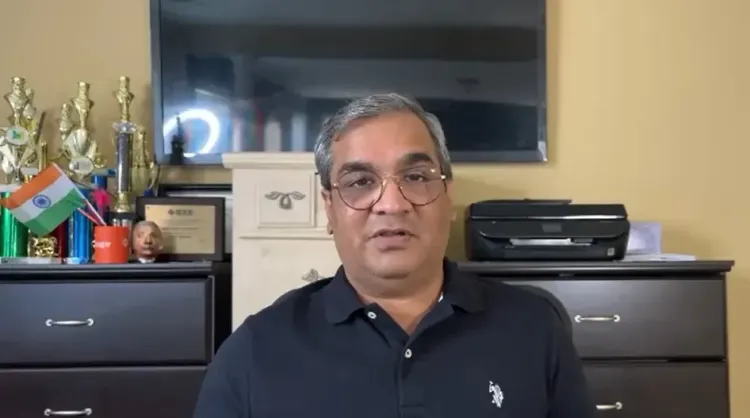
Shadanand Chaudhary , founder of LeaderTank , called the Assembly election outcomes a "strength of democracy" on 5 May .
He said Tamil Nadu's result signals a new leader entering the political arena, reflecting healthy democratic churn.
On West Bengal , he argued Mamata Banerjee's exit after three terms was overdue, while raising concerns about election conduct.
Kerala's government change was cited as an example of mature, literacy-driven voter behaviour.
The BJP's gains in Assam were acknowledged but described as carrying "no message" beyond the state.
Political analyst Shadanand Chaudhary, founder of think tank LeaderTank, on Tuesday, 5 May described the outcomes of the recently concluded Assembly elections as a demonstration of democracy's resilience, asserting that the results across states confirm that people — not parties — hold ultimate power.
Tamil Nadu: A New Leader Enters the Arena
Chaudhary pointed to Tamil Nadu's electoral outcome as a sign of healthy democratic churn. "Tamil Nadu shows now a new leader has come into the arena, and it shows the strength of Indian democracy," he said. The result, he argued, reflects voters' willingness to back fresh political alternatives when they feel the time for change has come.
Bengal: Change Was Overdue, But Conduct Raises Questions
On West Bengal, Chaudhary said political transition was widely anticipated given the extended tenure of the incumbent. "Obviously, Mamata Banerjee should go because there was no point for her to keep continuing, she already served three terms, she already showed the public what she can do. Now another party should get the chance to develop Bengal and show the people what they can deliver," he said. He nonetheless raised concerns about the conduct of the election in the state, without elaborating further.
Kerala: High Literacy, High Democratic Maturity
Chaudhary cited Kerala as a model of informed voter behaviour. "If you see the results from Kerala, that again shows why Kerala is so developed, high in literacy. Even though all people refer to the Kerala government as a good model of development because of its high literacy rate and development. However, people have changed the government to give another person an opportunity to show what they can do. That's the way ideally democracy should work," he said. He added that democratic accountability does not always require replacing a government — but voters must demand something new. "I don't say that every time the government should change, sometimes you need to appreciate if someone has done good work. But if you feel that they are not promising something new to deliver, then change that government and give another person a chance to show them what they can do," he said.
Assam: BJP Gains, But No Broader Message
Turning to Assam, Chaudhary was measured in his assessment of the Bharatiya Janata Party's (BJP) performance. "Other than these three states, the other elections were usual. Obviously, in Assam, the BJP has a big gain, but it doesn't have any message," he said. The remark suggests that while the BJP consolidated its position in Assam, the analyst does not view the result as carrying significant national political signalling. As India continues to process the implications of these multi-state verdicts, analysts like Chaudhary are urging parties across the spectrum to treat electoral outcomes as mandates for delivery — not just for power.
Point of View
But his most pointed observation is the one he underplays: that the BJP's Assam gains carry 'no message.' That is a significant analytical claim — it implies regional consolidation without national momentum, which matters as parties position for the next general election cycle. His concern about Bengal's election conduct, raised and then left unelaborated, is the thread mainstream coverage should pull harder on. Democratic outcomes mean little if the process that produces them is compromised.
NationPress
5 Oct 2026
Frequently Asked Questions
What did Shadanand Chaudhary say about the Assembly election results?
Shadanand Chaudhary, founder of political think tank LeaderTank, described the Assembly election outcomes as a 'strength of democracy', saying the results across Tamil Nadu, Kerala, West Bengal, and Assam show that voters hold real power. He made the remarks on 5 May.
Why did Chaudhary say Mamata Banerjee should have lost in West Bengal?
Chaudhary argued that Mamata Banerjee had already served three terms and demonstrated what she could deliver, making it appropriate for voters to give another party the opportunity to govern. He also raised unspecified concerns about the conduct of the Bengal election.
What did Chaudhary say about Kerala's election result?
He cited Kerala's result as an example of democratic maturity driven by high literacy, noting that voters chose to change a government widely regarded as a good development model in order to give another leader a chance — which he called the ideal way democracy should function.
How did Chaudhary assess the BJP's performance in Assam?
He acknowledged that the BJP made significant gains in Assam but said the result 'doesn't have any message', suggesting it reflects regional consolidation rather than a broader political signal.