BJP wins just 1 of 27 seats in Tamil Nadu as TVK surge reshapes 2026 verdict
Synopsis
BJP's much-hyped Tamil Nadu push collapsed to a single seat out of 27 contested — and the bigger story is who did the damage. Vijay's TVK, barely a year old as a political force, disrupted traditional vote banks and eroded BJP's urban youth support, while senior leaders including L. Murugan and Tamilisai Soundararajan fell. The 2026 verdict may force a fundamental rethink of BJP's southern strategy before 2029.
Key Takeaways
BJP won just 1 seat out of 27 contested in Tamil Nadu's 2026 Assembly elections .
The sole victory came from Udhagamandalam , won by Bhojarajan .
Senior leaders Nainar Nagenthran , L.
Murugan , Tamilisai Soundararajan , and Vanathi Srinivasan were all defeated.
Tamil Maanila Congress (Moopanar) , led by G.K.
Vasan , lost all 5 seats it contested under the NDA alliance.
Actor-politician Vijay's TVK disrupted traditional voting patterns, particularly among urban and youth voters.
The defeat is expected to reshape BJP's approach to the 2027 local body elections and 2029 Lok Sabha polls .
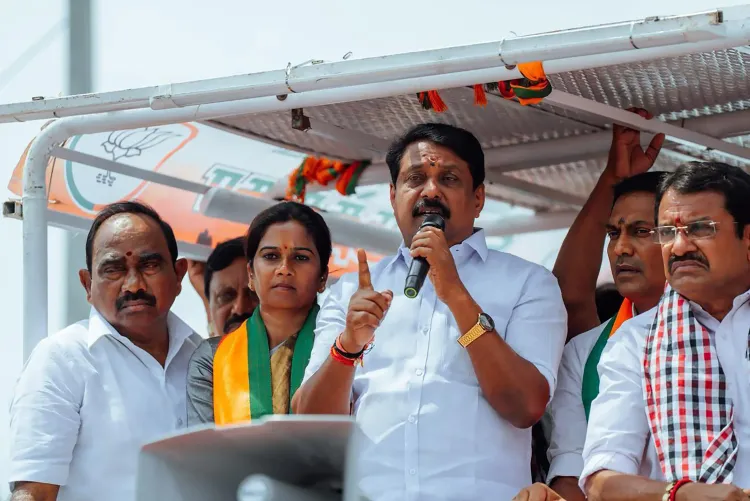
The Bharatiya Janata Party (BJP) has suffered a decisive electoral setback in Tamil Nadu's 2026 Assembly elections, winning just one seat despite contesting 27 constituencies under the AIADMK-led National Democratic Alliance (NDA). The sole victory came from Udhagamandalam, where Bhojarajan prevailed, leaving the party's much-anticipated southern expansion in tatters.
How the BJP Entered the 2026 Race
The BJP had realigned with the AIADMK in April 2025, securing a higher seat share than it had contested in 2021. The party entered the elections buoyed by its improved showing in the 2024 Lok Sabha elections and deployed senior leaders across key constituencies in an aggressive organisational push. Party strategists had hoped that a combination of central leadership visibility, alliance arithmetic, and improved ground presence would translate into meaningful seat gains.
That calculation did not hold. The strategy failed to deliver on the ground, and the scale of the defeat has triggered an internal review across the state unit.
Senior Leaders Defeated
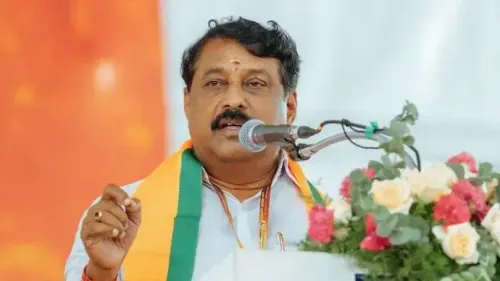
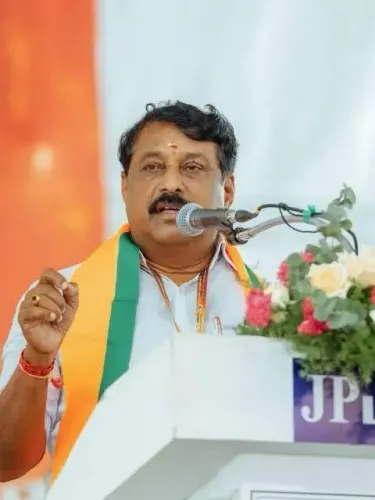
The outcome was compounded by the high-profile defeats of several prominent BJP figures. Nainar Nagenthran, L. Murugan, Tamilisai Soundararajan, and Vanathi Srinivasan — all senior leaders fielded in constituencies the party had targeted — lost their respective contests. Their defeats have intensified scrutiny of the party's leadership strategy and campaign execution in the state.
The losses have sparked discussions within party circles about possible organisational changes, including a reshuffle in the Tamil Nadu state unit and a reassessment of the party's representation at the Centre.
Alliance Fails to Transfer Votes
The BJP's coalition partners fared no better. The Tamil Maanila Congress (Moopanar), led by G.K. Vasan, lost all five seats it contested under the alliance arrangement. Other smaller NDA allies were similarly unable to convert their presence into victories, exposing a fundamental breakdown in the coalition's vote transfer mechanism. The broader failure of the alliance suggests that the AIADMK-BJP realignment did not produce the electoral synergies either party had anticipated.
Notably, concerns have surfaced within BJP circles that the renewed alliance with the AIADMK may have weakened the party's independent growth trajectory in the state — a tension that is likely to shape internal debates going forward.
TVK's Rise Disrupts the Political Landscape
A significant factor in the BJP's underperformance was the emergence of actor-politician Vijay's Tamilaga Vettri Kazhagam (TVK), which disrupted traditional voting patterns across multiple constituencies. TVK's strong appeal among urban voters and youth appears to have eroded the BJP's support base in several seats the party had targeted. This is a pattern that mirrors broader trends across southern states, where new political formations have repeatedly outflanked established national parties by anchoring identity and aspiration politics at the local level.
What Comes Next for BJP in Tamil Nadu
Facing its most significant electoral setback in the state in recent memory, the BJP is now preparing for a structural reset in Tamil Nadu. The scale of the defeat is expected to influence party strategy ahead of the 2027 local body elections and the 2029 Lok Sabha polls. Rebuilding a credible base in a politically evolving state — one now shaped by TVK's arrival, a perceived disconnect with younger voters, and a weakened alliance framework — will be the central challenge for the party's state and central leadership in the months ahead.
Point of View
Built on alliance arithmetic and central leader deployment, has now failed across two successive assembly cycles, and TVK's arrival has made the path forward considerably harder. The deeper problem is that the AIADMK realignment, rather than expanding the BJP's independent base, may have further subordinated it within a coalition that itself lost. With L. Murugan and Tamilisai Soundararajan — both nationally prominent faces — losing on home turf, the credibility cost extends well beyond Tamil Nadu. The party must now decide whether to double down on alliance dependency or invest in the decade-long work of building grassroots identity in a state that has historically resisted national party dominance.
NationPress
25 Sept 2026
Frequently Asked Questions
How many seats did BJP win in Tamil Nadu's 2026 Assembly elections?
The BJP won just one seat out of the 27 constituencies it contested as part of the AIADMK-led NDA alliance. The sole victory came from Udhagamandalam, won by Bhojarajan.
Which senior BJP leaders lost in the 2026 Tamil Nadu elections?
Prominent BJP leaders including Nainar Nagenthran, L. Murugan, Tamilisai Soundararajan, and Vanathi Srinivasan were all defeated in their respective constituencies. Their losses have triggered internal review and discussions about organisational changes.
What role did Vijay's TVK play in BJP's defeat?
Tamilaga Vettri Kazhagam (TVK), the party led by actor-politician Vijay, disrupted traditional voting patterns and eroded BJP's support base, particularly among urban and youth voters. Its rise is considered a significant factor in BJP's underperformance across multiple constituencies.
How did BJP's NDA alliance partners perform in Tamil Nadu 2026?
Alliance partners also failed to win any seats. Tamil Maanila Congress (Moopanar), led by G.K. Vasan, lost all five seats it contested, and other smaller NDA allies were similarly unable to secure victories, reflecting a broad failure of the coalition's vote transfer mechanism.
What is BJP's next political focus in Tamil Nadu after the 2026 defeat?
The BJP is preparing for a structural reset in Tamil Nadu, with the 2026 defeat expected to shape its strategy for the 2027 local body elections and the 2029 Lok Sabha polls. Internal discussions on organisational changes and leadership reshuffles are reportedly underway.