Mamallan reservoir in Chengalpattu built 30% without fisheries NOC
Synopsis
Tamil Nadu's Mamallan reservoir is already 30% built — but the mandatory fisheries clearance was never obtained before construction began. With 5,000 fishing families potentially affected and the Fisheries Department still awaiting documents from the WRD, the project's coastal location has turned a procedural lapse into a full-blown inter-departmental standoff.
Key Takeaways
The Mamallan reservoir in Chengalpattu is approximately 30 per cent complete without a mandatory NOC from the Fisheries Department .
The project spans 5,161 acres in the Kovalam sub-basin with an annual storage capacity of 2.25 thousand million cubic feet .
Stalin laid the foundation stone in January ; the WRD sought the NOC only on 21 July — nearly six months later.
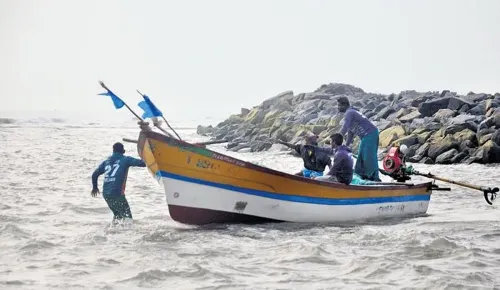
Around 5,000 fishing families could be affected by the coastal project, according to officials.
The Fisheries Department says it has not received adequate information from the WRD to assess environmental and livelihood impact.
Construction continues while the NOC remains pending, raising the prospect of mandatory design modifications or additional safeguards.
A significant inter-departmental dispute has surfaced in Tamil Nadu over the Mamallan reservoir project in Chengalpattu, after the Water Resources Department (WRD) allowed construction to advance to nearly 30 per cent completion without securing a mandatory No Objection Certificate (NOC) from the Fisheries Department. The project, designed to augment Chennai's drinking water supply, now faces regulatory uncertainty with the clearance still pending.
Project Background and Scale
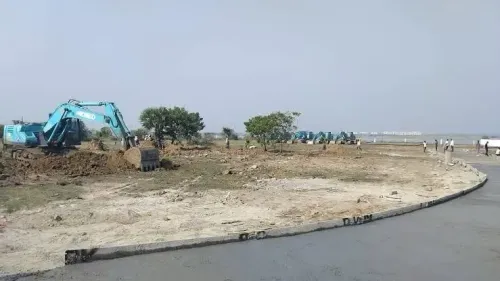
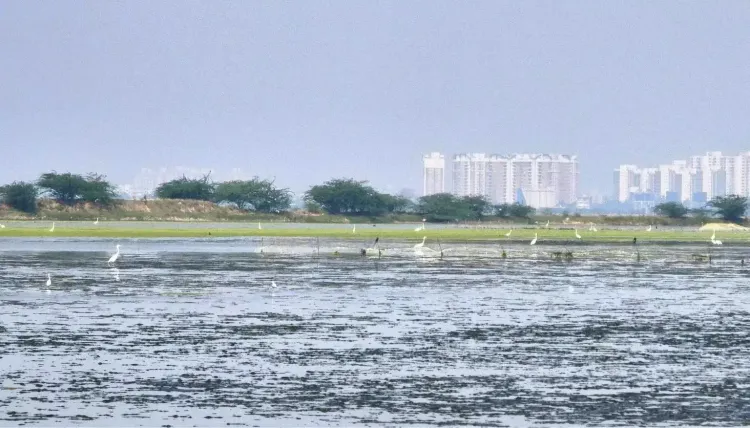
The reservoir is being developed in the Kovalam sub-basin, situated between the East Coast Road and Old Mahabalipuram Road, spanning approximately 5,161 acres. It is designed to hold an annual storage capacity of 2.25 thousand million cubic feet of water. Former Chief Minister M.K. Stalin laid the foundation stone in January, marking the project's formal launch.
The NOC Gap: Six Months of Unchecked Construction
Construction reportedly continued for nearly six months after the foundation stone was laid before the WRD formally approached the Additional Director of Fisheries and Fishermen Welfare on 21 July to seek the NOC. The timing has raised concerns within the government, given the project's coastal proximity and its potential impact on the livelihoods of around 5,000 fishing families.
A senior government official said the WRD should have obtained the Fisheries Department's approval before breaking ground. 'When a major project is located close to the coast and has implications for fishermen's livelihoods, prior approval and a proper NOC are essential. Allowing construction to begin without obtaining the necessary clearance was a mistake,' the official said. The official also questioned why the WRD waited until July to file its request when a substantial portion of the work was already done.
Fisheries Department Seeks More Information
According to the Fisheries Department, further details are required to assess the reservoir's likely environmental and livelihood implications. Officials indicated that repeated requests for information have not yet received a satisfactory response from the WRD. The department has stated it will decide on the clearance — and any conditions to be imposed — only after the required documents are examined.
What Happens Next
With construction continuing while the NOC remains pending, uncertainty persists over whether the WRD may be required to modify the project design or introduce safeguards for affected fishing communities. This comes amid broader scrutiny of inter-departmental coordination in major infrastructure projects across the state. The outcome of the clearance process could set a precedent for how Tamil Nadu manages large-scale projects near ecologically sensitive and livelihood-critical coastal zones.
Point of View
000 fishing families in the balance and the Fisheries Department still waiting on basic project documents, the risk is not just procedural: it is that any eventual conditions imposed could force costly redesigns on a project already a third complete. The broader question is whether Tamil Nadu's infrastructure pipeline has an institutional mechanism to enforce sequential clearances, or whether political inauguration timelines routinely outrun regulatory ones.
NationPress
23 Aug 2026
Frequently Asked Questions
What is the Mamallan reservoir project in Chengalpattu?
The Mamallan reservoir is a proposed drinking water project in Chengalpattu, Tamil Nadu, located in the Kovalam sub-basin between East Coast Road and Old Mahabalipuram Road. Spanning approximately 5,161 acres, it is designed to store 2.25 thousand million cubic feet of water annually to augment Chennai's drinking water supply.
Why is there a dispute over the Mamallan reservoir?
The Water Resources Department began construction without obtaining a mandatory No Objection Certificate from the Fisheries Department, despite the project's proximity to the coast and its potential impact on around 5,000 fishing families. The NOC was sought only in July — nearly six months after the foundation stone was laid — by which time roughly 30 per cent of construction was already complete.
What is the current status of the fisheries NOC?
The Fisheries Department has not yet issued the NOC. It has sought additional information from the WRD to assess the project's environmental and livelihood implications, but officials say repeated requests have not received a satisfactory response. The department will decide on clearance only after examining the required documents.
Who could be affected by the Mamallan reservoir project?
Approximately 5,000 fishing families in the coastal area near the Kovalam sub-basin could be affected, according to officials. The project's location close to the coast raises concerns about disruption to fishing livelihoods and the local marine environment.
What happens if the NOC is denied or conditions are imposed?
If the Fisheries Department imposes conditions or withholds the NOC, the WRD may be required to modify the project design or introduce safeguards for affected fishing communities. Since construction is already about 30 per cent complete, any mandatory changes could significantly affect the project's cost and timeline.