TN POCSO Court Awards Double Death Penalty in Thoothukudi Student Murder

Synopsis
A POCSO special court in Thoothukudi has sentenced convict Dharma Muneeswaran to double death penalty for the rape and murder of a Class 12 student from Vilathikulam. The Tamil Nadu CMO welcomed the verdict, noting justice was delivered within three months of the March 2026 crime after examining 71 witnesses.
Key Takeaways
The Thoothukudi POCSO special court awarded a double death sentence to convict Dharma Muneeswaran on 25 May 2026 .
The victim was a Class 12 student from Vilathikulam, Thoothukudi district , who was sexually assaulted and murdered in March 2026 .
The trial examined 71 witnesses and concluded within three months of the crime.
The sentence covers both the sexual offence and murder charges under the POCSO Act.
The Tamil Nadu CMO welcomed the verdict as consistent with the state's commitment to women's and children's safety.
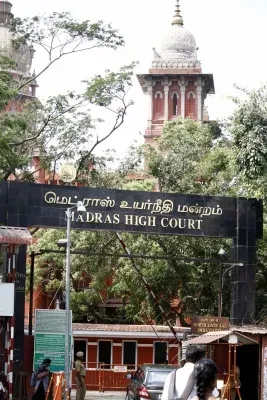
The conviction is subject to mandatory confirmation by the Madras High Court before the sentence can be carried out.
The Chief Minister's Office of Tamil Nadu announced on Monday, 25 May 2026 that a POCSO special court in Thoothukudi district has awarded double death penalty to convict Dharma Muneeswaран for the rape and murder of a Class 12 student from Vilathikulam, with the verdict delivered within three months of the crime.
Context
The incident took place in March 2026 in Vilathikulam, Thoothukudi district, when the minor student was sexually assaulted and killed. The case drew significant public attention given the victim's age and the brutal nature of the crime. The Tamil Nadu government fast-tracked the prosecution under provisions of the Protection of Children from Sexual Offences (POCSO) Act.
The CMO's post stated: 'இக்கொடூர சம்பவம் நடைபெற்ற மூன்று மாதங்களுக்குள் மிகத் துரிதமாக நீதி வழங்கப்பட்டுள்ளது' ('Justice has been delivered very swiftly, within three months of this heinous incident occurring').
Policy Backdrop
The POCSO Act, enacted in 2012, established a dedicated legal framework with stringent penalties for sexual offences against children, including provisions for special courts to ensure time-bound trials. Indian states have progressively set up exclusive POCSO courts to reduce case pendency and deliver faster verdicts in child sexual abuse matters.
Tamil Nadu has consistently highlighted speedy disposal of POCSO cases as part of its public messaging on women's and children's safety. The Thoothukudi POCSO court's verdict — reached after examining 71 witnesses — is among the faster resolutions recorded under the Act.
Stakeholders and Impact
The CMO welcomed the verdict, describing it as 'praiseworthy' and a reinforcement of the government's commitment to ensuring the safety of women and children. The double death sentence covers both the sexual offence and the murder charge against Dharma Muneeswaран.
Victim-rights advocates and child-safety organisations have long argued that swift convictions in high-profile POCSO cases serve as a deterrent and restore public confidence in the justice system. The verdict is expected to be closely watched by legal observers ahead of any potential appeal before the Madras High Court.
What's Next
Under Indian law, a death sentence awarded by a sessions or special court must be confirmed by the respective High Court before it can be carried out. The convict retains the right to appeal before the Madras High Court, which will conduct an independent review of the evidence and sentence. Further appeals to the Supreme Court of India and a mercy petition to the Governor remain available legal avenues.
The case is also likely to prompt a broader review of POCSO court performance metrics across Tamil Nadu, with the state government keen to project this verdict as a benchmark for expedited justice in crimes against children.
Point of View
Particularly under Chief Minister Joseph Vijay's administration. By publicly amplifying the verdict through the CMO's official account, the state is positioning fast-track POCSO courts as a governance achievement. The mandatory High Court confirmation means the legal process is far from concluded, but the optics of speed are already doing political work. This pattern of highlighting expedited POCSO verdicts is consistent with a broader trend among Indian states competing to demonstrate judicial responsiveness on gender-based violence.
NationPress
21 Sept 2026
Frequently Asked Questions
What sentence did the Thoothukudi POCSO court give in the Vilathikulam student murder case?
The Thoothukudi POCSO special court awarded a double death penalty to convict Dharma Muneeswaran for the rape and murder of a Class 12 student from Vilathikulam, covering both the sexual offence and murder charges.
How quickly was the verdict delivered in the Thoothukudi student rape-murder case?
The verdict was delivered within three months of the crime, which occurred in March 2026. The trial examined 71 witnesses before reaching the judgment on 25 May 2026.
What is the POCSO Act and how does it apply to this case?
The Protection of Children from Sexual Offences (POCSO) Act, enacted in 2012, provides a dedicated legal framework with stringent penalties for sexual offences against minors. The Thoothukudi case was tried before a designated POCSO special court under this law.
Will the death sentence in the Thoothukudi POCSO case be automatically carried out?
No. Under Indian law, a death sentence awarded by a special court must be confirmed by the Madras High Court. The convict also retains the right to appeal to the Supreme Court of India and file a mercy petition.
What did the Tamil Nadu Chief Minister's Office say about the verdict?
The Tamil Nadu CMO welcomed the verdict as praiseworthy, noting that justice was delivered swiftly within three months of the heinous incident and that the judgment reinforces the government's commitment to ensuring the safety of women and children.