Tamil Nadu won't implement new Waqf Act, says Minister Shahjahan
Synopsis
Tamil Nadu has drawn a clear line: it will not implement the amended Waqf Act's key provisions — including the non-Muslim board member clause — and will not meet the Centre's UMEED portal deadline. With formal resolutions expected soon, the state is turning its administrative resistance into a legislative stand, adding to the growing list of Opposition-governed states challenging the Union law.
Key Takeaways
Minority Welfare Minister S.M.
Nasar Shahjahan declared on 8 June that Tamil Nadu will not enforce key provisions of the amended Waqf Act.
The state will not meet the Centre's deadline for uploading Waqf property records to the UMEED portal and plans to seek an extension.
Tamil Nadu specifically refuses to implement the provision allowing a non-Muslim member on the Waqf Board.
Resolutions formally opposing the Act's provisions are expected to be passed by the state in the coming days.
The first batch of 417 Hajj pilgrims from Tamil Nadu returned from Medina ; a total of 6,295 pilgrims from the state performed Hajj this year.
A new Hajj House near Chennai airport, estimated at ₹40 crore , is expected to be operational by 2027 .
Tamil Nadu has firmly reiterated its refusal to implement the amended Waqf Act, with Minority Welfare Minister S.M. Nasar Shahjahan declaring on Monday, 8 June that the state government will neither enforce key provisions of the legislation nor meet the Centre's deadline for uploading Waqf property records to the Unified Waqf Management, Empowerment, Efficiency and Development (UMEED) portal. The announcement was made in Chennai, underscoring the Dravidian Munnetra Kazhagam (DMK)-led government's consistent opposition to the Union law.
What the Minister Said
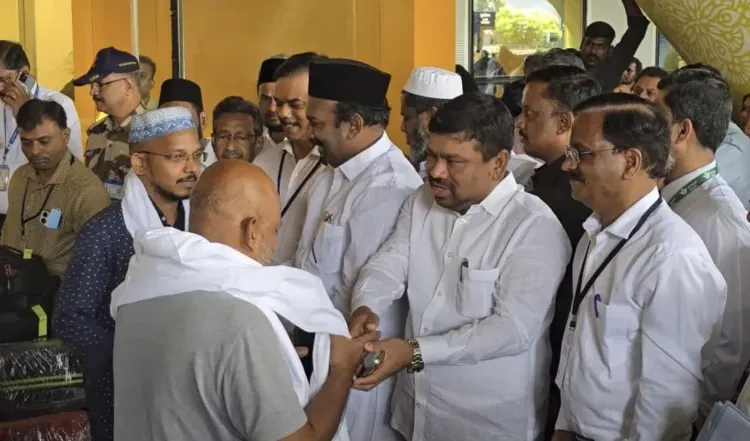
Shahjahan made the remarks while receiving the first batch of Hajj pilgrims returning from Saudi Arabia at Chennai International Airport. Addressing reporters, he said the state has encountered significant practical and administrative difficulties in uploading Waqf property details to the centralised digital platform. Tamil Nadu, he added, plans to formally write to the Union government seeking additional time to complete the process.
The minister also confirmed that resolutions opposing certain provisions of the amended Act and related implementation measures are expected to be passed by the state in the coming days — a move that would formalise Tamil Nadu's legislative resistance to the law.
The Non-Muslim Member Provision
Shahjahan particularly objected to the provision in the amended Waqf Act that permits the appointment of a non-Muslim member to the Waqf Board. He stated categorically that Tamil Nadu has not implemented this provision and has no intention of doing so. He noted that the previous state government also did not act on the new Waqf Act, and the present administration would continue that position — signalling a cross-government consensus within Tamil Nadu on the issue.
Broader Context
Tamil Nadu's stance is part of a wider pattern of state-level pushback against the revised Waqf legislation. Several states, particularly those governed by Opposition parties, have raised objections to the Centre's amendments and the digitisation mandate under the UMEED portal. Critics argue that certain provisions — including the non-Muslim board member clause — intrude upon the religious autonomy of the Muslim community. The Centre, meanwhile, has maintained that the reforms are aimed at improving transparency and accountability in the management of Waqf properties across India.
Hajj Pilgrims and Hajj House Update
The occasion for Shahjahan's remarks was the arrival of a special Saudi Arabian Airlines flight carrying 417 Hajj pilgrims from Medina — the first batch from Tamil Nadu to return after completing this year's pilgrimage. A total of 6,295 pilgrims from Tamil Nadu undertook the Hajj this year, according to the minister.
Shahjahan also reviewed progress on the construction of a new Hajj House near Chennai airport. The facility is estimated to cost ₹40 crore and is expected to become operational by 2027. He said the government is taking steps to accelerate the project to provide improved infrastructure for future pilgrims from the state.
What Comes Next
Tamil Nadu is expected to formally communicate its request for an extension to the Centre and may move resolutions in the state assembly opposing the Waqf Act provisions. How the Union government responds to such a formal challenge — particularly on the UMEED portal deadline — will be closely watched by other Opposition-ruled states navigating the same legislation.
Point of View
And the planned assembly resolutions would elevate that signal into a formal constitutional challenge. What is underreported is that the non-Muslim board member provision is not the only friction point; the UMEED portal deadline reveals a deeper tension over whether the Centre can mandate digitisation timelines on state-administered religious endowments. If other Opposition states follow suit with similar resolutions, the Centre's Waqf reform agenda faces a coordinated legal and legislative obstacle that goes well beyond Tamil Nadu.
NationPress
26 Oct 2026
Frequently Asked Questions
Why is Tamil Nadu refusing to implement the new Waqf Act?
Tamil Nadu objects to several provisions of the amended Waqf Act, particularly the clause allowing a non-Muslim member to be appointed to the Waqf Board. The state government also cites practical difficulties in meeting the Centre's deadline to upload Waqf property records to the UMEED portal, and argues the changes intrude upon the religious autonomy of the Muslim community.
What is the UMEED portal and why does it matter?
The UMEED (Unified Waqf Management, Empowerment, Efficiency and Development) portal is the Centre's centralised digital platform for recording and managing Waqf properties across India. Tamil Nadu has declined to meet the Centre's deadline for uploading property details to the portal, citing administrative challenges, and plans to seek an extension.
What action is Tamil Nadu likely to take next?
The state plans to formally approach the Union government for additional time on the UMEED portal deadline. It is also expected to pass resolutions in the coming days formally opposing certain provisions of the Waqf Act — a step that would convert administrative resistance into a legislative stand.
Who is Minister S.M. Nasar Shahjahan?
S.M. Nasar Shahjahan is Tamil Nadu's Minority Welfare Minister in the DMK-led state government. He made the announcement on 8 June while receiving Hajj pilgrims at Chennai International Airport.
What is the status of the new Hajj House near Chennai airport?
A new Hajj House is under construction near Chennai International Airport at an estimated cost of ₹40 crore. It is expected to become operational by 2027, and the state government says it is taking steps to accelerate construction.