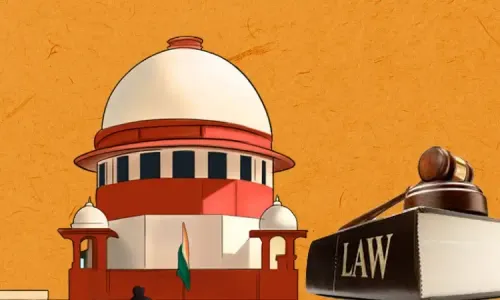
Is Stalin Right to Celebrate the Supreme Court's Stay on Waqf Act Amendments?

Synopsis
M.K. Stalin celebrates the Supreme Court's decision to stay crucial amendments to the Waqf Act, viewing it as a victory for constitutional rights. This ruling reinforces the importance of judicial oversight in protecting religious freedoms and minority rights in India.
Key Takeaways
The Supreme Court has stayed key provisions of the Waqf Act amendments.
This decision is a victory for minority rights and constitutional protections.
Stalin emphasizes the importance of judicial oversight in democracy.
Legal experts view this as a safeguard for religious freedoms.
The DMK's opposition to the amendments reinforces its commitment to minority rights.
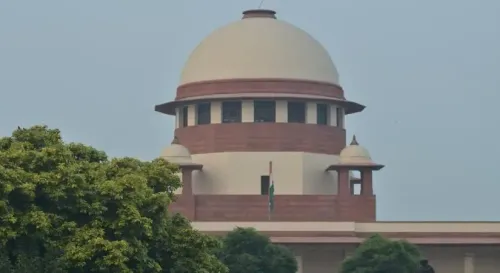
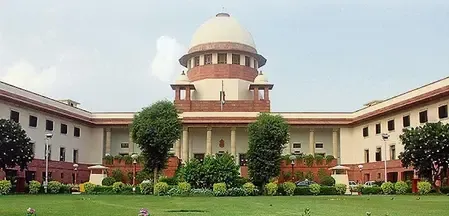
Chennai, Sep 15 (NationPress) Tamil Nadu Chief Minister and DMK President M.K. Stalin on Monday praised the Supreme Court's interim decision to suspend significant provisions of the Union government's revised Waqf Act.
In a message shared on X, Stalin stated that the ruling was "a remarkable endorsement that constitutional rights and religious liberties cannot be undermined by arbitrary legislation."
The apex court's judgment was issued in response to petitions lodged by the DMK and other organizations contesting the amendments introduced by the BJP-led Union government.
In his statement, Stalin remarked: "The Supreme Court has halted the unconstitutional Waqf Act amendments enforced by the Union BJP government. This marks a monumental victory for the DMK’s relentless struggle, for the people's cause, and for the constitutional rights of minorities. Our trust in the judicial safeguarding of democracy and secularism has been rejuvenated."
The Supreme Court has suspended four crucial provisions in the Waqf Amendment Act, including the requirement for an individual to have adhered to Islam for five years before contributing property as waqf and the authority to confiscate waqf property solely based on an allegation of state ownership, pending an adequate investigation.
Moreover, it has also put a hold on the power granted to District Collectors to revoke the “waqf user” designation of properties traditionally utilized for religious purposes.
The apex court additionally suspended the provision allowing more than four non-Muslims on the Central Waqf Board and more than three in state Waqf Boards, ensuring that Muslim representation remains predominant.
The DMK has opposed these amendments since their inception in Parliament and passed a resolution in the Tamil Nadu Assembly advocating for their retraction.
Stalin reiterated that the BJP’s actions were an overreach of authority and inconsistent with the Constitution. He asserted that the judgment "bolsters public confidence that the Supreme Court will always serve as a protector of democracy, secularism, and the fundamental rights of citizens."
Legal experts acknowledged that the Supreme Court’s intervention safeguarded minority rights and upheld the independence of waqf institutions.
Point of View
The Supreme Court's intervention in halting the amendments to the Waqf Act reflects the judiciary's vital role in upholding constitutional rights. It is imperative to ensure that legislative actions do not infringe upon the rights of minority communities, maintaining a balance between governance and individual liberties. This judgment serves as a reminder of the importance of safeguarding democratic principles.
NationPress
22 Sept 2026
Frequently Asked Questions
What is the Waqf Act?
The Waqf Act governs the administration of waqf properties in India, which are charitable endowments for Islamic religious purposes.
Why were the amendments to the Waqf Act controversial?
The amendments were seen as unconstitutional and an attempt to undermine the rights of minorities by imposing arbitrary restrictions on waqf properties.
What did the Supreme Court's ruling entail?
The Supreme Court suspended several key provisions of the Waqf Amendment Act, safeguarding minority rights and maintaining Muslim representation on Waqf Boards.
How did M.K. Stalin respond to the ruling?
Stalin celebrated the ruling as a significant victory for constitutional rights and emphasized the importance of judicial protection of democracy.
What implications does this ruling have for minority rights in India?
The ruling strengthens the legal framework protecting minority rights, ensuring that future legislative changes respect the autonomy and rights of all communities.