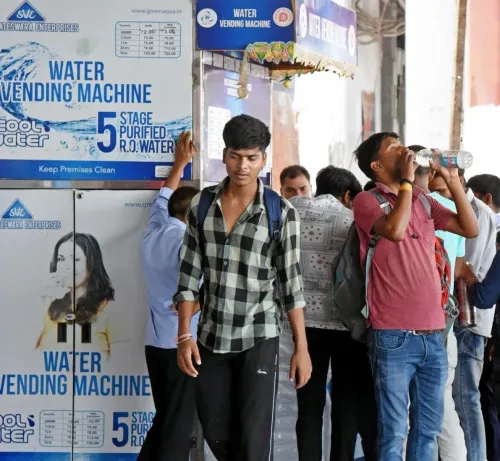
Tamil Nadu Thunippai Scheme: Cloth bag vending machines at 105 sites
Synopsis
Tamil Nadu's cloth bag vending machine campaign survives a change of government — rebranded from 'Meendum Manjappai' to 'Thunippai Scheme'. The Tamil Nadu Pollution Control Board is now inviting tenders to install machines and supply bags at 105 public sites, marking the first concrete administrative step under the new name.
Key Takeaways
Tamil Nadu's cloth bag campaign will continue as the Thunippai Scheme , replacing the DMK-era 'Meendum Manjappai' branding.
The Tamil Nadu Pollution Control Board (TNPCB) has initiated tenders for vending machines and cloth bags across 105 locations in the first phase.
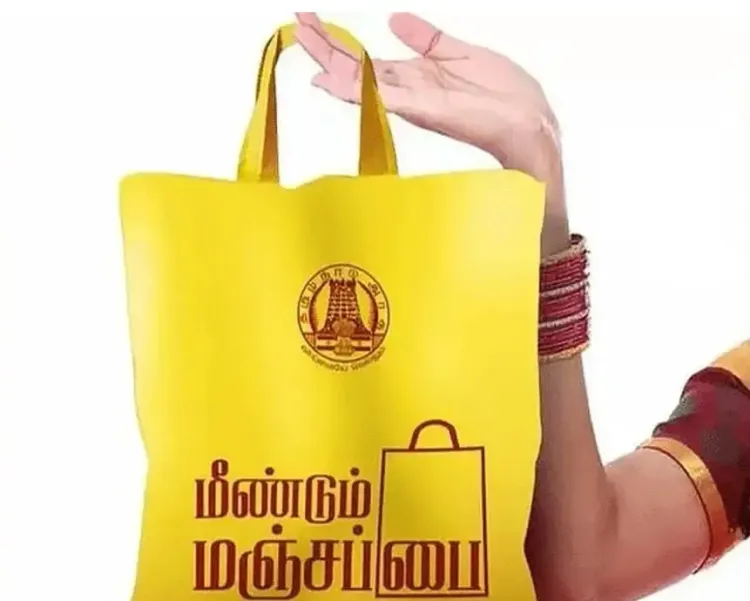
The original campaign launched in December 2021 , offering yellow cloth bags at ₹10 each through public vending machines.
Tamil Nadu's single-use plastic ban, which includes plastic carry bags, dates to 2019 under the AIADMK government.
Machine installation will follow after the procurement process is completed; location details and timelines have not yet been specified.
Tamil Nadu's reusable cloth bag initiative is set to press ahead under a new identity — the Thunippai Scheme — as the Tamil Nadu Pollution Control Board (TNPCB) initiates the tender process for vending machines and cloth bags across 105 locations in the programme's first phase. The move confirms that the state's push against single-use plastic bags will survive the change of government, even as the original branding is retired.
From Meendum Manjappai to Thunippai
The predecessor campaign, 'Meendum Manjappai' — Tamil for 'Return to the Yellow Bag' — was launched in December 2021 by the then Dravida Munnetra Kazhagam (DMK) government. Yellow cloth bags were made available through vending machines installed at public locations, initially priced at ₹10 each. The scheme was designed to give shoppers and vendors a practical, affordable alternative to disposable plastic bags.
With a subsequent change in government, questions arose over whether the campaign would retain its funding and operational momentum. The decision to proceed — under the renamed Thunippai Scheme — signals administrative continuity, even if the 'Manjappai' identity has been set aside.
What the Tender Covers
The TNPCB has begun inviting bids for the installation of vending machines and the supply of cloth bags needed to stock them across the 105 identified sites. The tender covers both the physical infrastructure and the bag supply required to operationalise the machines. Specific details on the precise locations, the volume of bags to be procured, and the installation timeline were not available in information released so far.
Once the procurement process concludes, machine installation will follow. The first phase is intended to test how the renamed scheme performs on the ground before any wider rollout is considered.
The Plastic-Free Policy Backdrop
The cloth bag scheme sits within a broader regulatory framework. In 2019, the then All India Anna Dravida Munnetra Kazhagam (AIADMK) government banned several single-use plastic products in Tamil Nadu, including plastic carry bags. Making a reusable cloth bag readily accessible through public vending machines was conceived as a practical complement to that ban — bridging the gap between regulation and everyday consumer behaviour.
Notably, the policy continuity across two rival governments — AIADMK and DMK — on the underlying plastic restriction, and now the continuation of the vending machine model under a third administrative phase, reflects a rare cross-party consensus on environmental enforcement in the state.
What Determines the Scheme's Success
The reach and impact of the Thunippai Scheme will ultimately depend on factors beyond the tender: where the machines are placed, how consistently they are kept stocked, and whether the bags remain affordable and convenient for daily shoppers. Critics of earlier iterations of such schemes have pointed out that vending machine uptime and restocking discipline are frequent weak points in public distribution of this kind.
The central goal — reducing Tamil Nadu's reliance on single-use plastic bags — remains unchanged. The planned tender represents the next administrative milestone; how effectively the scheme is executed will determine whether it delivers on that goal at scale.
Point of View
Yet single-use bags remain commonplace, suggesting that supply-side interventions like vending machines have not yet achieved the behavioural shift they promised. The real test for Thunippai is not the tender count but machine uptime and restocking discipline — the unglamorous logistics that determined whether Meendum Manjappai actually reached everyday shoppers. A scheme that survives a change of government deserves credit for continuity; whether it earns credit for impact is a different question entirely.
NationPress
29 Sept 2026
Frequently Asked Questions
What is the Thunippai Scheme in Tamil Nadu?
The Thunippai Scheme is the renamed version of Tamil Nadu's cloth bag vending machine programme, previously known as 'Meendum Manjappai'. It aims to make reusable cloth bags available at public locations as an alternative to single-use plastic bags, and is being administered by the Tamil Nadu Pollution Control Board.
What was Meendum Manjappai and why has it been renamed?
'Meendum Manjappai', meaning 'Return to the Yellow Bag', was launched in December 2021 by the DMK government to encourage shoppers to use reusable bags. Following a change of government, the programme's future came under scrutiny; it has now been retained but rebranded as the Thunippai Scheme, with the original name no longer in use.
How many locations will get cloth bag vending machines under the new scheme?
The first phase of the Thunippai Scheme covers 105 locations. The Tamil Nadu Pollution Control Board has begun inviting tenders for both the vending machines and the cloth bags needed to stock them at these sites.
How does the Thunippai Scheme connect to Tamil Nadu's plastic ban?
Tamil Nadu banned several single-use plastic products, including carry bags, in 2019 under the then AIADMK government. The cloth bag vending machine scheme was designed to complement that ban by giving shoppers a readily accessible, affordable reusable alternative at public locations.
When will the vending machines be installed under the Thunippai Scheme?
Machine installation will take place after the tender and procurement process is completed. Specific timelines, site details, and the volume of bags to be supplied had not been announced at the time of reporting.