Tamil Nadu to adopt Anna Sahayata AI grievance platform, seeks district-tier addition

Synopsis
Tamil Nadu is ready to join the Centre's AI-powered Anna Sahayata grievance platform for PDS beneficiaries — but on one condition: it wants District Revenue Officers included in the redressal chain, a tier the Centre's current framework does not provide for. The outcome of this negotiation could set a precedent for how states with mature welfare infrastructure engage with centralised digital platforms.
Key Takeaways
Tamil Nadu is preparing to sign an MoU with the Centre to adopt the Anna Sahayata AI-enabled grievance platform for PDS beneficiaries.
The state has proposed including District Revenue Officers (DROs) in the complaint resolution process — a tier not currently in the Centre's framework, which covers only taluk and state levels.
Anna Sahayata supports grievance registration via a WhatsApp chatbot (9868200445) and IVRS (14457), and operates in 12 regional languages .
Once the MoU is signed, Tamil Nadu will migrate from its existing TNPDS portal to the national grievance portal under Anna Sahayata.
The platform is designed to create a continuous feedback loop to identify systemic PDS delivery issues, according to the Union Department of Food and Public Distribution's Annual Report 2025–26 .
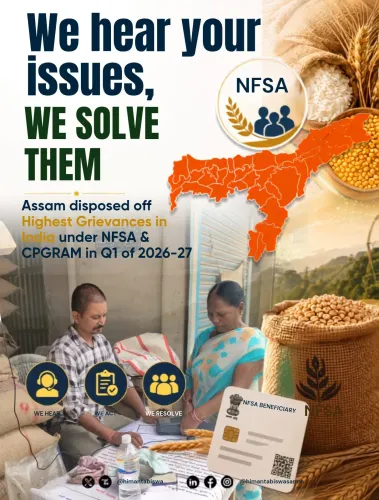
The Tamil Nadu government is preparing to sign a memorandum of understanding (MoU) with the Centre to adopt Anna Sahayata, an artificial intelligence-enabled grievance redressal platform for beneficiaries of the Public Distribution System (PDS), particularly those covered under the National Food Security Act (NFSA), officials said on Saturday, 25 July.
Tamil Nadu's Key Condition Before Signing
Before formalising the agreement, the state has proposed a significant modification to the framework. Tamil Nadu wants District Revenue Officers (DROs) to be formally included in the complaint resolution chain, arguing that district-level intervention would enable faster and more effective disposal of grievances.
The grievance mechanism currently envisaged by the Centre provides for complaints to be addressed only at the taluk and state levels. Tamil Nadu believes adding the district tier would resolve a significant share of complaints locally, reducing delays and strengthening accountability across the system.
Tamil Nadu's Existing PDS Grievance Infrastructure
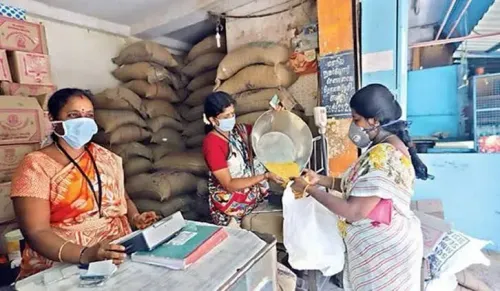
The state already operates a well-established technology-driven grievance system for PDS beneficiaries through the Tamil Nadu Public Distribution System (TNPDS) portal. Once the MoU is signed, Tamil Nadu will migrate its complaint registration process to the national grievance portal under the Anna Sahayata framework.
Currently, beneficiaries can register complaints through dedicated toll-free helplines — 1967 and 1800-425-5901 — as well as via SMS to Closed User Group (CUG) mobile numbers and through designated email addresses maintained at the taluk level.
How Anna Sahayata Works
The Anna Sahayata platform leverages AI-powered conversational technology to make grievance registration more accessible. Beneficiaries can lodge complaints through a WhatsApp chatbot on 9868200445 or via the Interactive Voice Response System (IVRS) on 14457.
The platform currently supports 12 regional languages, enabling wider access to beneficiaries across the country. According to the Union Department of Food and Public Distribution's Annual Report for 2025–26, the multilingual platform has been designed to ensure inclusive access while improving grievance resolution outcomes.
Broader Impact on PDS Delivery
Beyond addressing individual complaints, Anna Sahayata is designed to create a continuous feedback mechanism that helps authorities identify systemic issues and strengthen overall service delivery under the PDS. This comes amid a broader push by the Centre to digitise and streamline welfare delivery across states. Tamil Nadu's insistence on a district-level tier reflects the state's established practice of localised grievance resolution — a model it argues has delivered results under its existing TNPDS framework.
Whether the Centre accommodates the proposed modification before the MoU is finalised will be closely watched by other states with similarly robust state-level PDS infrastructure.
Point of View
Locally embedded welfare systems have consistently found that centralised platforms flatten accountability rather than sharpen it. The Centre's two-tier model works in states where PDS infrastructure is weak; in Tamil Nadu, it risks creating a bottleneck at the taluk level that the state's own DRO mechanism was built to avoid. If the Centre concedes the district tier, it may open the door for other states to negotiate bespoke modifications — which could complicate the platform's promise of national standardisation. That tension between federal flexibility and platform uniformity is the real story here.
NationPress
25 Oct 2026
Frequently Asked Questions
What is Anna Sahayata and how does it work?
Anna Sahayata is an AI-enabled grievance redressal platform developed by the Centre for beneficiaries of the Public Distribution System, particularly those covered under the National Food Security Act. Beneficiaries can register complaints via a WhatsApp chatbot on 9868200445 or through the IVRS helpline 14457, and the platform currently supports 12 regional languages.
Why is Tamil Nadu negotiating before signing the MoU?
Tamil Nadu wants District Revenue Officers (DROs) to be included in the grievance resolution chain, arguing that district-level intervention enables faster and more effective disposal of complaints. The Centre's current framework only provides for redressal at the taluk and state levels.
What happens to Tamil Nadu's existing TNPDS grievance system after the MoU?
Once the MoU is signed, Tamil Nadu will migrate its complaint registration process from the existing TNPDS portal to the national grievance portal under the Anna Sahayata framework. The state currently also offers toll-free helplines 1967 and 1800-425-5901, SMS, and email channels for beneficiaries.
Who benefits from the Anna Sahayata platform?
The platform is designed for PDS beneficiaries, especially those covered under the National Food Security Act. Its multilingual support across 12 regional languages aims to ensure inclusive access for beneficiaries across different states and linguistic backgrounds.
What broader purpose does Anna Sahayata serve beyond grievance resolution?
Beyond addressing individual complaints, Anna Sahayata is designed to create a continuous feedback mechanism that helps authorities identify systemic issues in PDS delivery. According to the Union Department of Food and Public Distribution's Annual Report for 2025–26, this feedback loop is intended to strengthen overall service delivery outcomes.