Tourist Police scheme active in 15 states, UTs: Shekhawat in Rajya Sabha
Synopsis
Fifteen states and UTs — including Goa, Kerala, and Rajasthan — have deployed dedicated Tourist Police, Union Tourism Minister Shekhawat confirmed in the Rajya Sabha. But with zero central funding attached, the scheme's reach beyond willing states hinges entirely on state initiative, raising a quiet question about how far the safety net actually extends.
Key Takeaways
15 states and UTs have deployed Tourist Police as of 24 July , Union Tourism Minister Gajendra Singh Shekhawat told the Rajya Sabha.
States include Telangana, Andhra Pradesh, Delhi, Goa, Karnataka, Kerala, Maharashtra, Himachal Pradesh, Jammu and Kashmir, Madhya Pradesh, Odisha, Punjab, Rajasthan, Sikkim , and Uttar Pradesh .
The Union Ministry of Tourism has provided no special financial assistance to states for setting up Tourist Police units.
BPR&D formulated a comprehensive framework report for uniform implementation of the scheme across all states and UTs.
A training module by IITTM covering safety, fraud prevention, and foreign language skills was circulated to Chief Secretaries of all states and UTs via the Ministry of Home Affairs .
A National Conference of DGs and IGs of Police was held in New Delhi to align states on best practices.
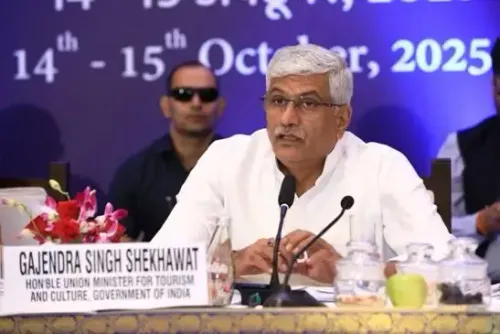
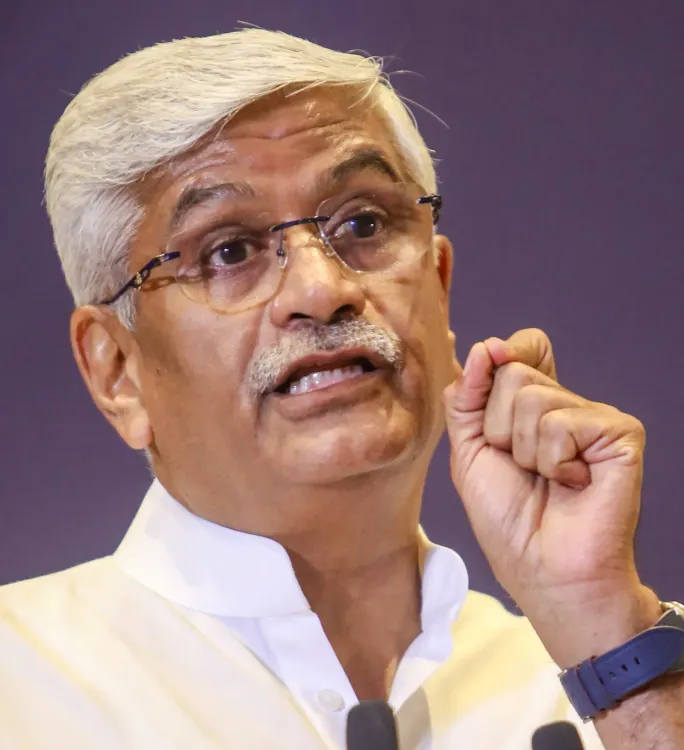
Union Tourism Minister Gajendra Singh Shekhawat on Friday, 24 July informed the Rajya Sabha that 15 states and Union Territories have deployed dedicated Tourist Police units to build a safer environment for domestic and international visitors across major destinations.
States and UTs with Tourist Police
According to Shekhawat, the states and UTs that have operationalised Tourist Police include Telangana, Andhra Pradesh, Delhi, Goa, Karnataka, Kerala, Maharashtra, Himachal Pradesh, Jammu and Kashmir, Madhya Pradesh, Odisha, Punjab, Rajasthan, Sikkim, and Uttar Pradesh. The minister was responding to a query raised by Rajya Sabha member Chandrakant Handore, who had sought an update on the scheme's implementation status across major tourist destinations.
Framework and Research Behind the Scheme
The Bureau of Police Research and Development (BPR&D) commissioned a dedicated study on the Tourist Police Scheme and produced a comprehensive report to guide uniform implementation across all states and UTs. Separately, the Ministry of Tourism through the Indian Institute of Tourism and Travel Management (IITTM) conducted a study titled 'Functioning of Tourist Police in States/UTs and Documentation of Best Practices', which was subsequently circulated to all state and UT governments.
A training module developed by IITTM — covering safety protocols, fraud prevention, and foreign language proficiency — was forwarded to the Ministry of Home Affairs, which further circulated it to the Chief Secretaries of all state governments and UT administrations.
No Central Funding Provided
Shekhawat clarified that the Union Ministry of Tourism has not extended any special financial packages or assistance to states and UTs for establishing dedicated Tourist Police units. The scheme's deployment has thus been driven entirely by state-level initiative, without a central fiscal incentive mechanism in place.
National Conference and Coordination
To strengthen coordination, the Ministry of Tourism, in collaboration with the Ministry of Home Affairs and BPR&D, organised a National Conference on Tourist Police Scheme for Director Generals (DGs) and Inspector Generals (IGs) of Police Departments from all states and UTs in New Delhi. The conference aimed to align on best practices and accelerate adoption of the scheme in states yet to deploy Tourist Police.
With India's tourism sector expanding rapidly, the push to standardise tourist safety infrastructure across all states signals a broader policy intent — even as the absence of central funding raises questions about pace and uniformity of rollout in the remaining states and UTs.
Point of View
Unfunded structure means adoption tracks state enthusiasm, not tourist footfall or safety need. Some of India's highest-footfall destinations remain outside the 15 already on board, and without a central funding trigger or a compliance deadline, that gap may persist. The BPR&D framework and IITTM training module exist on paper; the real test is whether the Ministry of Home Affairs follows up with states that have not acted, or whether this remains a scheme that rewards the already-committed.
NationPress
22 Oct 2026
Frequently Asked Questions
Which states and UTs have deployed Tourist Police in India?
As of 24 July, 15 states and UTs have deployed Tourist Police: Telangana, Andhra Pradesh, Delhi, Goa, Karnataka, Kerala, Maharashtra, Himachal Pradesh, Jammu and Kashmir, Madhya Pradesh, Odisha, Punjab, Rajasthan, Sikkim, and Uttar Pradesh. The information was confirmed by Union Tourism Minister Gajendra Singh Shekhawat in the Rajya Sabha.
Is the Centre providing funds to states for Tourist Police units?
No. Union Tourism Minister Shekhawat clarified that the Union Ministry of Tourism has not provided any special financial packages or assistance to states and UTs for establishing dedicated Tourist Police units. Deployment has been driven by state-level initiative.
What training is provided to Tourist Police personnel?
A training module developed by the Indian Institute of Tourism and Travel Management (IITTM) covers safety protocols, fraud prevention, and foreign language proficiency. It was forwarded to the Ministry of Home Affairs, which circulated it to Chief Secretaries of all state governments and UT administrations.
What is the BPR&D's role in the Tourist Police Scheme?
The Bureau of Police Research and Development (BPR&D) commissioned a study on the Tourist Police Scheme and formulated a comprehensive report to guide a uniform implementation framework across all states and UTs. BPR&D also co-organised a National Conference of DGs and IGs of Police in New Delhi on the scheme.
Why was the Tourist Police Scheme introduced?
The scheme was introduced to create a safer ecosystem for domestic and international tourists at major destinations across India. It aims to provide dedicated, trained police personnel who can address tourist-specific concerns including safety, fraud, and language barriers.