Tribal languages conclave: Durgadas Uikey opens 3-day meet in Mysuru
Synopsis
India's tribal languages carry centuries of ecological, medicinal, and cultural knowledge — and many are disappearing. The Ministry of Tribal Affairs' three-day Mysuru conclave, opened by MoS Durgadas Uikey, is the most structured attempt yet to build a national roadmap for their survival, alongside a push to turn 11 sanctioned Tribal Freedom Fighter Museums into living heritage institutions.
Key Takeaways
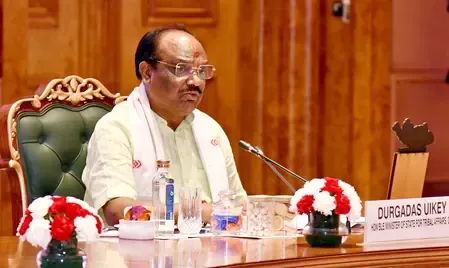
Durgadas Uikey , Minister of State for Tribal Affairs, opened the National Conclave on Tribal Languages and Museums in Mysuru on 24 August .
The conclave runs from 24 to 26 August and brings together policymakers, linguists, researchers, technologists, and tribal community representatives.
The Ministry has sanctioned 11 Tribal Freedom Fighter Museums across 10 states ; four have been inaugurated so far.
The initiative is framed under PM Modi's Viksit Bharat @2047 vision, with tribal language revival as a key pillar.
The Ministry has engaged Tribal Research Institutes (TRIs) and State Tribal Welfare Departments in preservation efforts.
The conclave is expected to produce a national roadmap for tribal language documentation and museum curation standards.
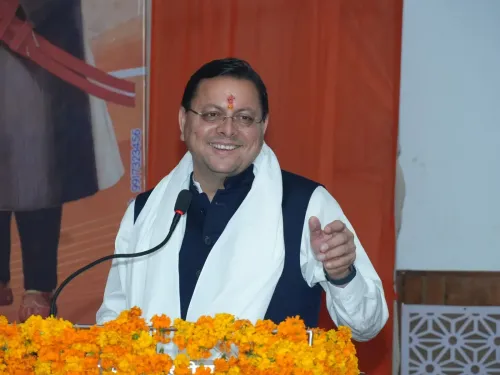
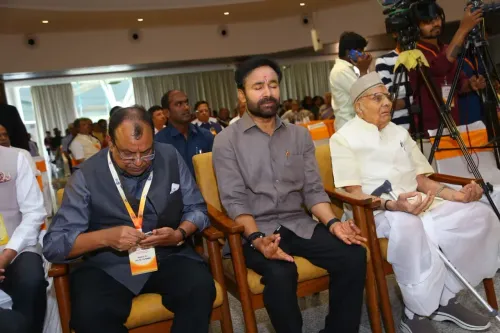
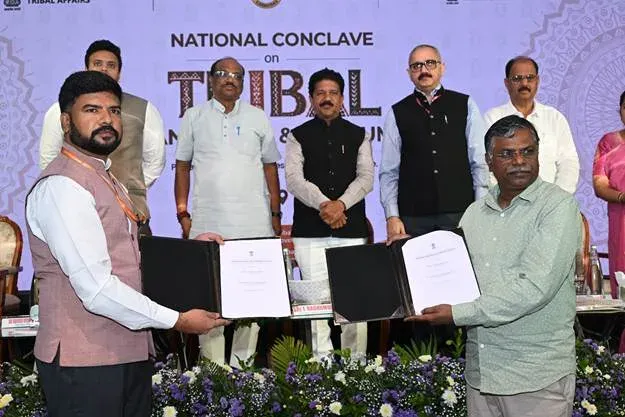
Minister of State for Tribal Affairs Durgadas Uikey on Monday, 24 August inaugurated a national dialogue on the documentation and revitalisation of tribal languages and the strengthening of Tribal Freedom Fighter Museums (TFFMs) at a three-day National Conclave on Tribal Languages and Museums in Mysuru. The conclave, running from 24 to 26 August, is being organised by the Ministry of Tribal Affairs and brings together policymakers, linguists, researchers, technologists, and tribal community representatives on a single platform.
What the Conclave Aims to Achieve
The three-day gathering seeks to produce a national roadmap for tribal language documentation, preservation, and revitalisation, while placing community priorities at the centre of the agenda. A parallel track focuses on strengthening Tribal Museums and TFFMs as institutions of contemporary curation, storytelling, and community-rooted heritage representation.
According to the Ministry, the conclave advances Prime Minister Narendra Modi's vision for a Viksit Bharat @2047, under which reviving traditional knowledge systems and ensuring no community is left behind are described as key pillars of inclusive national development.
The Museum Mandate
The Ministry has sanctioned 11 Tribal Freedom Fighter Museums across 10 states, of which four have already been inaugurated. The conclave is expected to deliberate on a common vision for these museums as vibrant, living institutions rather than static archives. This initiative carries forward a commitment first articulated by the Prime Minister in his 2016 Independence Day address, when he formally recognised the contribution of tribal communities to India's freedom struggle.
Why Tribal Languages Are at Risk
The Ministry has acknowledged that the loss of a tribal language carries with it an entire body of ecological, medicinal, agricultural, and cultural knowledge. To counter this, the Ministry has engaged its network of Tribal Research Institutes (TRIs) and State Tribal Welfare Departments in preservation efforts. The conclave is positioned as a convergence point for these dispersed institutional efforts.
Notably, India is home to hundreds of tribal languages, many of which are spoken by small communities and are at varying stages of endangerment. The Ministry's recognition that language is 'a living repository of a community's culture, heritage and traditional knowledge' signals a shift toward treating linguistic preservation as a development imperative, not merely a cultural one.
What Comes Next
Deliberations over the three days are expected to produce concrete recommendations on documentation methodology, museum curation standards, and inter-institutional coordination between TRIs and state departments. The outcomes of the Mysuru conclave are likely to inform policy and budgetary decisions for tribal language programmes in the coming year.
Point of View
And a three-day conclave — however well-intentioned — will be judged by what it produces beyond a communique. The Ministry's own framing is telling: it acknowledges that a lost tribal language takes with it ecological, medicinal, and agricultural knowledge, yet the institutional infrastructure — TRIs, state welfare departments — has historically been underfunded and fragmented. The museum track is similarly uneven: four of eleven sanctioned TFFMs inaugurated is a modest record nearly a decade after the 2016 Independence Day commitment. The Mysuru conclave's real test is whether it generates a time-bound, funded roadmap with accountability metrics, or becomes another well-attended dialogue that does not move the needle for endangered language communities.
NationPress
9 Oct 2026
Frequently Asked Questions
What is the National Conclave on Tribal Languages and Museums?
It is a three-day national gathering organised by the Ministry of Tribal Affairs in Mysuru from 24 to 26 August, aimed at building a national roadmap for the documentation, preservation, and revitalisation of tribal languages and for strengthening Tribal Museums and Tribal Freedom Fighter Museums across India. The conclave brings together policymakers, linguists, researchers, technologists, and tribal community representatives.
Who is leading the conclave and why?
Minister of State for Tribal Affairs Durgadas Uikey is leading the conclave on behalf of the Ministry. The event is positioned as part of PM Modi's Viksit Bharat @2047 vision, which identifies revival of traditional knowledge systems and inclusive development as central goals.
How many Tribal Freedom Fighter Museums have been sanctioned and opened?
The Ministry has sanctioned 11 Tribal Freedom Fighter Museums across 10 states. Of these, four have been inaugurated so far. The conclave is expected to deliberate on a common vision for all such museums as vibrant, community-rooted heritage institutions.
Why is tribal language preservation considered urgent?
The Ministry has stated that the loss of a tribal language carries with it an entire body of ecological, medicinal, agricultural, and cultural knowledge. Many tribal languages in India are spoken by small communities and are at varying stages of endangerment, making documentation and revitalisation a development priority, not just a cultural one.
What outcomes are expected from the Mysuru conclave?
The conclave is expected to produce concrete recommendations on documentation methodology, museum curation standards, and inter-institutional coordination between Tribal Research Institutes and state departments. These outcomes are likely to inform policy and budgetary decisions for tribal language programmes in the coming year.