Ministry Sets Ambitious Target for Recognition of One Lakh Tribal Healers
Synopsis
The Ministry of Tribal Affairs aims to recognize one lakh tribal healers as key community partners in health outreach, enhancing healthcare delivery in tribal regions. This initiative, discussed in the Lok Sabha, emphasizes the collaboration between various ministries and state governments.
Key Takeaways
One lakh tribal healers to be recognized.
Collaboration with Ministry of Health and AYUSH .
Training on preventive care and awareness generation.
State governments manage the recognition process.
Ethical considerations included in the SOP.
New Delhi, April 2 (NationPress) The Ministry of Tribal Affairs has set a significant national goal to acknowledge one lakh tribal healers, aiming to involve them as essential community partners in enhancing health outreach in tribal regions, as informed to the Lok Sabha on Thursday.
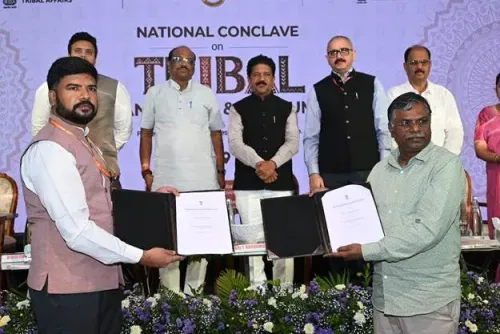
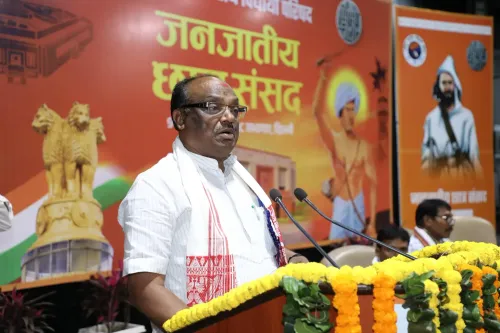
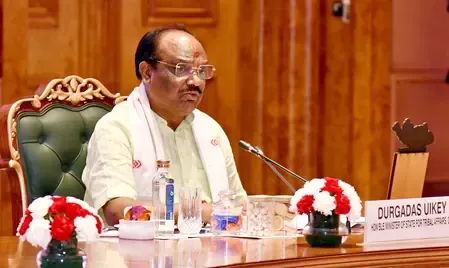
Union Minister of State for Tribal Affairs, Durgadas Uikey, mentioned that the Ministry had previously organized a national capacity-building initiative for Tribal Healers in Hyderabad, Telangana, on January 16.
This initiative's goal was to involve tribal healers as crucial partners at the community level, working alongside the Ministry of Health & Family Welfare (MoHFW), ICMR-RMRC BB, and the Ministry of AYUSH.
Uikey stated that the Ministry has defined a national target for the recognition of one lakh tribal healers. However, the processes for identifying, enumerating, and setting criteria for this recognition are managed at the state level through health system frameworks under the MoHFW and the Ministry of AYUSH.
During the capacity-building program held in January, state governments submitted a list of 500 tribal healers for participation, with approximately 50 tribal healers from Maharashtra attending the event, according to the MoS.
He further indicated that the Ministry of Tribal Affairs, in collaboration with the Indian Council of Medical Research - Regional Medical Research Centre in Bhubaneshwar, Odisha, is actively developing structured capacity-building and awareness programs for tribal healers, which include training on preventive healthcare, awareness generation, early identification, and referral linkages.
The preservation of indigenous tribal medical knowledge and the prevention of its misuse primarily fall under the jurisdiction of state governments, which manage documentation processes and protect community intellectual rights.
The Ministry of Tribal Affairs has established a Standard Operating Procedure (SOP) for capacity-building programs that incorporates ethical considerations, such as prior informed consent and respect for traditional knowledge systems, as stated in an official announcement.
Point of View
Promoting a holistic approach to healthcare in tribal regions. It reflects a collaborative effort between various ministries to enhance health outreach and ensure the recognition of indigenous medical practices.
NationPress
17 Oct 2026
Frequently Asked Questions
What is the target set by the Ministry of Tribal Affairs?
The Ministry has set a national target to recognize one lakh tribal healers.
Where was the capacity-building program for tribal healers held?
The capacity-building program was organized in Hyderabad, Telangana.
Who is involved in the initiative to recognize tribal healers?
The initiative involves collaboration between the Ministry of Tribal Affairs, MoHFW, ICMR-RMRC BB, and the Ministry of AYUSH.
How many tribal healers attended the program from Maharashtra?
Approximately 50 tribal healers from Maharashtra attended the capacity-building program.
What is the role of state governments in this initiative?
State governments are responsible for identifying, enumerating, and recognizing tribal healers within their frameworks.