CM Revanth Reddy: Tribal MLAs Submit Demands at Secretariat
Synopsis
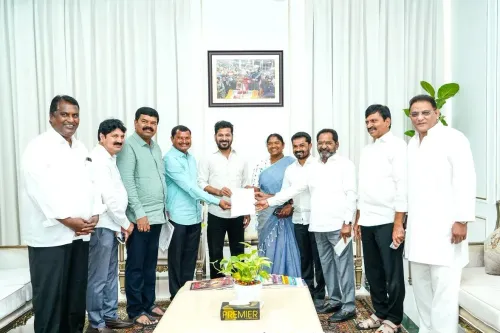
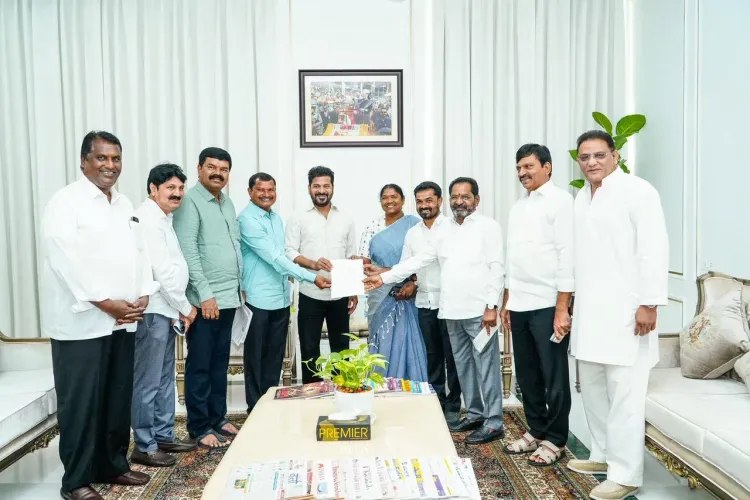
Adivasi and tribal legislators met Telangana Tribal Welfare Minister Seethakka at the Secretariat on 2 July 2026, submitting a petition demanding 2,000 additional Indiramma houses in Agency areas, podu land pattas, the Indira Giri Jala Vikasam scheme, Ashram school upgrades to intermediate level, and stronger ITDAs.
Key Takeaways
Tribal MLAs submitted a formal petition at the Telangana Secretariat on 2 July 2026 under Minister Seethakka's leadership.
The petition demands an additional 2,000 Indiramma Indlu houses specifically in Agency area constituencies .
Issuance of podu land pattas — title deeds for forest-fringe cultivation plots — is a central demand.
MLAs called for implementation of the Indira Giri Jala Vikasam water conservation scheme in hill regions.
Upgrading tribal Ashram schools to intermediate (Class 12) level and strengthening ITDAs are also included in the petition.
The demands align with commitments made in the Congress government's Praja Palana manifesto of November 2023.
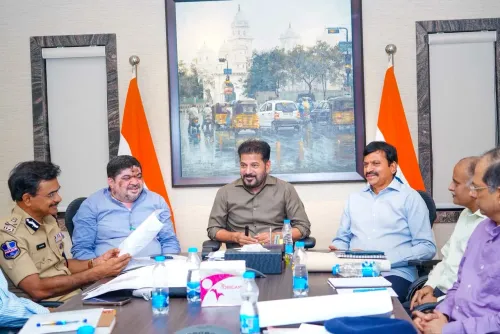
Adivasi and tribal legislators met at the Telangana Secretariat on 2 July 2026 under the leadership of Tribal Welfare Minister Seethakka, submitting a formal petition to the Telangana government covering housing, land rights, irrigation, education and institutional strengthening in Agency areas. The meeting, convened under Chief Minister A. Revanth Reddy's Praja Palana framework, signals renewed pressure from elected tribal representatives ahead of the state's budget cycle.
Context
The petition submitted by tribal MLAs covers five distinct demands: allocation of an additional 2,000 Indiramma Indlu houses in Agency area constituencies, issuance of land title deeds for podu lands (forest-fringe cultivation plots), implementation of the Indira Giri Jala Vikasam scheme for water conservation in hill regions, upgrading of tribal Ashram schools to intermediate level, and further strengthening of Integrated Tribal Development Agencies (ITDAs). The demands span welfare delivery, land rights and institutional capacity — recurring themes in Telangana's scheduled area governance.
Policy Backdrop
The Congress government's Praja Palana manifesto, released in November 2023, explicitly committed to tribal housing expansion, podu land title resolution and Ashram school upgrades. The 2024-25 state budget speech had separately announced ITDA strengthening and a framework for addressing podu land claims in scheduled areas. The Indiramma Indlu scheme, a flagship housing programme targeting economically weaker households, has seen periodic expansions in scheduled zones since the Congress government assumed office in December 2023.
Podu land pattas have been a politically sensitive issue across successive Telangana governments. Forest-fringe cultivators in Agency tracts — predominantly Adivasi communities — have long sought formal title deeds to land they farm, a demand that intersects with forest rights legislation and state revenue records. ITDAs, established as post-2014 institutions to channel development funds into Telangana's tribal sub-plan, have faced persistent criticism over staffing gaps and fund utilisation.
Stakeholders and Impact
The immediate stakeholders are Adivasi communities across Telangana's Agency constituencies — the hill and forest tracts in districts such as Bhadradri Kothagudem, Mulugu, Jayashankar Bhupalpally and Adilabad. An additional 2,000 Indiramma houses in these constituencies would directly benefit landless and economically weaker tribal households. Podu patta regularisation, if implemented, could secure cultivation rights for tens of thousands of families who have farmed forest-fringe land for generations.
Upgrading tribal Ashram schools to intermediate level addresses a structural gap: students completing secondary education in remote Agency areas currently face long commutes or relocation to access Class 11 and 12 schooling, contributing to dropout rates. The Indira Giri Jala Vikasam scheme, if operationalised, targets irrigation and water conservation in hilly terrain where conventional canal infrastructure is impractical.
What's Next
The petition is likely to feed into deliberations around the 2026-27 state budget, with tribal MLAs using the formal submission to build a legislative record for their constituencies. Any cabinet note on additional Indiramma allocations or revised ITDA staffing norms would be a near-term indicator of the government's response. A possible assembly discussion on podu land legislation remains on the broader policy horizon. Minister Seethakka's role as the nodal point for these demands positions the Tribal Welfare department as the primary accountability node in the months ahead.
Point of View
The tribal MLAs are working within the Congress government's welfare-delivery architecture, reinforcing Praja Palana's institutional channels. The convergence of housing, land, water and education demands in a single petition reflects the cumulative governance deficit in Agency areas that no Telangana administration has fully resolved. How the government responds — particularly on the politically fraught podu patta question — will test whether the 2023 manifesto commitments translate into ground-level action before the next electoral cycle.
NationPress
1 Oct 2026
Frequently Asked Questions
What is the Indiramma Indlu scheme in Telangana?
Indiramma Indlu is a Telangana state housing programme that provides pucca (permanent) houses to economically weaker households, including tribal families in Agency areas. The scheme has seen periodic expansions in scheduled zones under the current Congress government.
What are podu lands and why are pattas important?
Podu lands are forest-fringe plots cultivated by Adivasi communities in Telangana's Agency areas. Pattas are official land title deeds; without them, cultivators lack legal ownership, making them vulnerable to eviction and unable to access institutional credit or government benefits tied to land records.
What is the Indira Giri Jala Vikasam scheme?
Indira Giri Jala Vikasam is a proposed irrigation and water conservation initiative targeted at the hilly Girijan regions of Telangana, designed to address water access challenges in terrain where conventional canal infrastructure is not feasible.
What are ITDAs and what is their role in Telangana?
Integrated Tribal Development Agencies (ITDAs) are government bodies established to plan and execute development programmes in Telangana's scheduled tribal tracts. They channel funds under the tribal sub-plan for infrastructure, housing, education and livelihood schemes in Agency areas.
Who is Minister Seethakka in Telangana?
Seethakka is the Telangana Cabinet Minister holding the Tribal Welfare portfolio in the Congress government led by Chief Minister A. Revanth Reddy. She is the primary government interface for Adivasi welfare schemes and Agency area development.