Telangana Cabinet Approves 2.5 Lakh Indiramma Houses in Phase 2
Synopsis
The Telangana cabinet chaired by CM Revanth Reddy approved 2.5 lakh Indiramma Illu houses in phase two, allocating 2,000 units per constituency. The meeting also cleared Rs 1,000 crore for Godavari Pushkaralu 2027, Rs 587 crore for Palamuru-Rangareddy irrigation, a Life Sciences Policy targeting $25 billion investment, and a midday meal scheme for junior colleges.
Key Takeaways
The Telangana cabinet approved 2.5 lakh Indiramma Illu houses under phase two, with 2,000 units per assembly constituency .
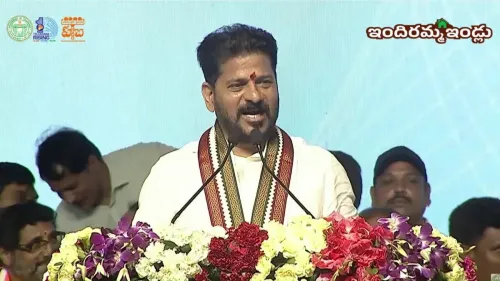
CM Revanth Reddy will formally launch the second-phase sanctions on 1 June 2026 at Sirpur Kaghaznagar, Asifabad district .
1 lakh houses will be built within Hyderabad's CURE zone across 24 constituencies, with on-site land identification for existing residents.
15,000 families living in thatched huts will receive Indiramma house sanction letters.
The cabinet allocated Rs 1,000 crore for 2027 Godavari Pushkaralu works and Rs 587 crore for the Palamuru-Rangareddy Lift Irrigation Scheme .
The Next-Gen Life Sciences Policy 2026-30 targets $25 billion in investment and 5 lakh jobs , aiming for a top-five global life sciences hub ranking by 2030.
The Chief Minister's Office of Telangana announced on Saturday, 23 May 2026 that the state cabinet, chaired by Chief Minister Revanth Reddy, has approved the sanction of 2.5 lakh Indiramma Illu houses under the second phase of the flagship housing scheme, with 2,000 units allocated per assembly constituency.
Context
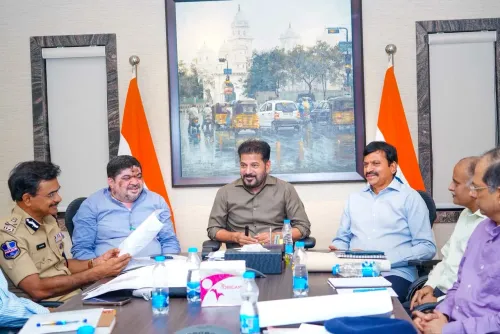
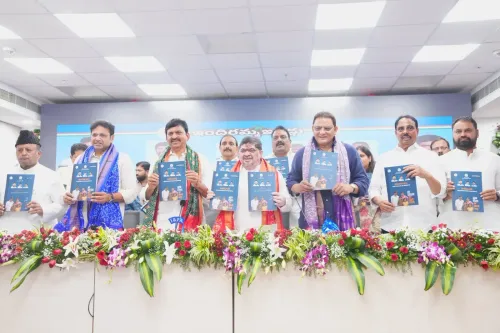
The cabinet resolution, passed at a meeting held at the Dr B.R. Ambedkar State Secretariat in Hyderabad, marks a significant expansion of the Indiramma Illu programme that the Revanth Reddy-led Congress government launched in its first year in office. The formal launch of the second-phase house sanctions will take place on 1 June 2026 at Sirpur Kaghaznagar in Kumuram Bheem Asifabad district, where the Chief Minister will preside over the event. Ministers Ponguleti Srinivas Reddy, Adluri Laxman Kumar, and Vakiti Srihari disclosed the cabinet decisions at a press conference.
Policy Backdrop
The Indiramma Illu scheme is the current government's answer to the housing deficit among the rural and urban poor, building on the earlier 2BHK housing programme rolled out between 2015 and 2023 under the previous administration. A notable feature of the second phase is the inclusion of 1 lakh houses within Hyderabad's Core Urban Area (CURE), covering 24 assembly constituencies. Because land ownership is sparse in these dense urban pockets, the cabinet resolved to identify plots in the areas where beneficiary families already reside and construct houses on-site for poor and middle-class households. Separately, the cabinet directed that sanction letters for Indiramma houses be issued to the 15,000 families currently living in thatched huts, as revealed by multiple state surveys.
The cabinet also approved Rs 1,000 crore for infrastructure works ahead of the 2027 Godavari Pushkaralu, the prestigious 12-yearly river festival that draws millions of pilgrims. A precedent for such preparatory spending exists from the 2015 Pushkaralu, when the state made comparable investments in ghats, roads, and civic amenities. For irrigation, Rs 587 crore was allocated for land acquisition, rehabilitation, and infrastructure under the Palamuru-Rangareddy Lift Irrigation Scheme, a multi-stage project aimed at drought-proofing southern Telangana.
Stakeholders and Impact
Rural poor families and urban low-income households stand to be the primary beneficiaries of the housing push. The cabinet's decision to extend the scheme into Hyderabad's CURE zone is particularly significant as urban housing shortages have long been overlooked in large-scale state welfare programmes. Junior college students across Telangana will benefit from a separate cabinet nod to introduce a midday meal scheme in junior colleges from the next academic year.
On the industrial side, the cabinet formally approved the Next-Gen Life Sciences Policy 2026-30, which targets positioning Telangana among the world's top five life sciences hubs by 2030. The policy, first announced by Chief Minister Revanth Reddy during his visit to Davos, sets goals of attracting $25 billion in investment and creating 5 lakh jobs over five years across pharma, biotech, and medical innovation sectors. A key shift embedded in the policy is the formal recognition of innovation and R&D units as industries, moving beyond the earlier manufacturing-centric approach. The cabinet also approved Telangana DISCOMs' proposals to join the central government's Revamped Distribution Sector Scheme (RDSS) for power infrastructure modernisation.
In administrative restructuring, the cabinet resolved to merge all District Cooperative Marketing Societies (DCMS) into Markfed and to merge the Rural Infrastructure Corporation into HACA, consolidating the cooperative and rural infrastructure architecture of the state.
What's Next
The immediate milestone is the 1 June 2026 launch event at Sirpur Kaghaznagar, which will formally begin the second-phase sanction process. Beneficiary list finalisation for both rural constituencies and the urban CURE zone will be closely watched, particularly given the novel on-site land identification mechanism for Hyderabad. Progress on the Life Sciences Policy's investment pipeline and the Pushkaralu infrastructure works will serve as key performance indicators for the Revanth Reddy administration heading into the second half of its term.
Point of View
As urban poor voters in the capital have historically been underserved by state welfare schemes. By scheduling the formal launch for 1 June 2026, the Revanth Reddy government creates a visible delivery milestone well before the electoral cycle intensifies. The simultaneous approval of the Life Sciences Policy and RDSS entry signals an effort to balance welfare optics with investor-facing governance credentials. The merger of cooperative and rural infrastructure bodies suggests a parallel drive to rationalise the state's sprawling public enterprise architecture, though the execution of these consolidations will test bureaucratic capacity.
NationPress
24 Sept 2026
Frequently Asked Questions
What is Indiramma Illu scheme in Telangana?
Indiramma Illu is the flagship housing scheme of the Telangana Congress government under CM Revanth Reddy, which provides pucca houses to eligible poor families across rural and urban areas of the state. The second phase covers 2.5 lakh units at 2,000 houses per assembly constituency.
When will Indiramma Illu phase 2 houses be sanctioned?
CM Revanth Reddy will formally launch the second-phase house sanctions on 1 June 2026 at Sirpur Kaghaznagar in Kumuram Bheem Asifabad district.
What is Telangana's Next-Gen Life Sciences Policy 2026-30?
It is a state industrial policy approved by the Telangana cabinet that aims to place Telangana among the world's top five life sciences hubs by 2030, targeting $25 billion in investment and 5 lakh jobs in pharma, biotech, and medical innovation. The policy also recognises R&D and innovation units as industries.
How much money has Telangana allocated for Godavari Pushkaralu 2027?
The Telangana cabinet has allocated Rs 1,000 crore for infrastructure and preparatory works for the Godavari Pushkaralu 2027, the major 12-yearly river festival.
What is RDSS and why is Telangana joining it?
RDSS stands for the Revamped Distribution Sector Scheme, a central government programme for modernising power distribution infrastructure. The Telangana cabinet approved DISCOMs' proposals to join the scheme to improve electricity distribution and infrastructure across the state.