CM Yogi's Office Pins Ram Rajya Verse From Ramcharitmanas
Synopsis
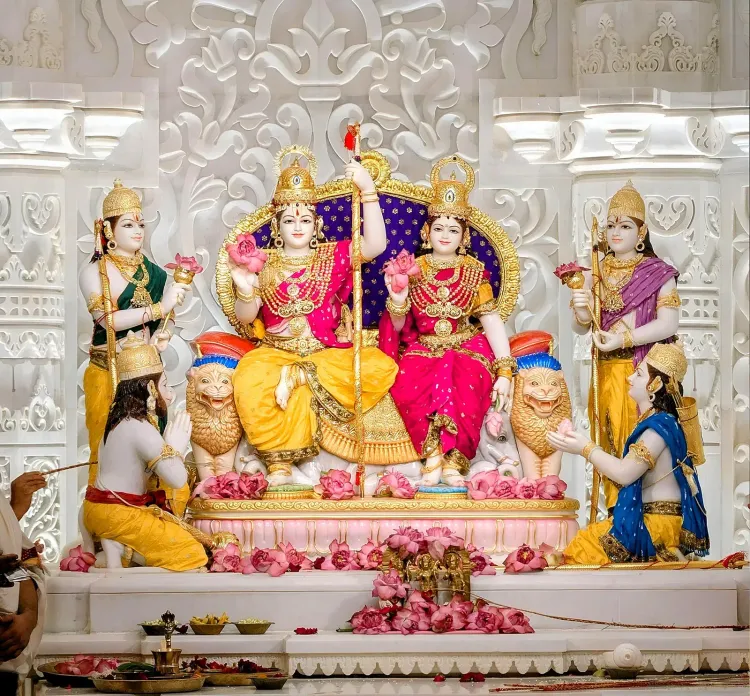
The Chief Minister's Office of Uttar Pradesh pinned a verse from Tulsidas's Ramcharitmanas on its official X account, invoking the ideal of Ram Rajya — the reign of Lord Ram — as the defining image on its public profile.
Key Takeaways
The Chief Minister's Office of Uttar Pradesh pinned a verse from the Ramcharitmanas on its official X account on November 8, 2026 .
The verse is authored by Tulsidas , the 16th-century poet-saint, and describes the establishment of Ram Rajya — a reign of perfect justice and joy.
The post closes with the salutation 'Siyavar Ramchandra ki Jai' , a traditional devotional expression widely used across the Hindi heartland.
Uttar Pradesh is home to Ayodhya , revered as the birthplace of Lord Ram, making this cultural framing especially resonant for the state government.
Pinning the post is a deliberate editorial act, making the Ram Rajya verse the first content visitors see on the official government profile.
A verse from the Ramcharitmanas now leads the official X profile of the Chief Minister's Office of Uttar Pradesh, pinned on Sunday, November 8, 2026 — a quiet but pointed act of cultural curation by one of India's most politically significant state governments.
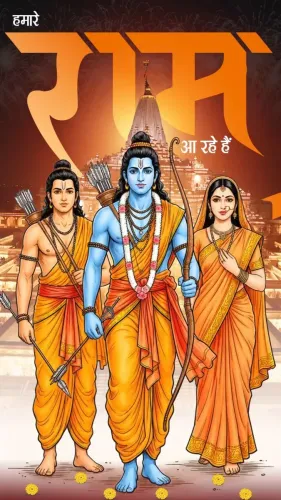
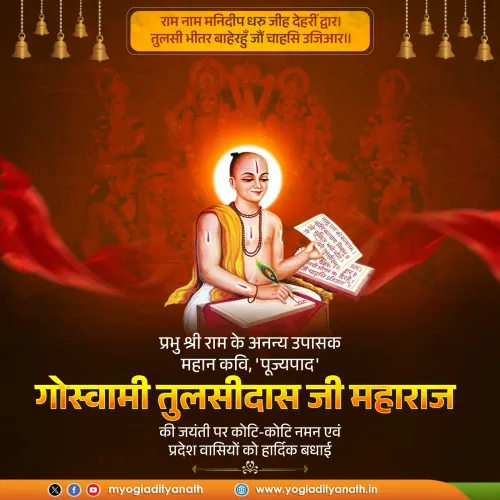
The verse, drawn from the 16th-century poet-saint Tulsidas's epic composition, reads: 'Ram Raj baithen trailoka. Harshit bhaye gaye sab soka.' — meaning, 'When Ram ascended to rule the three worlds, all were filled with joy and all sorrows vanished.' The closing line, 'Siyavar Ramchandra ki Jai!' — 'Victory to Lord Ramachandra, consort of Sita' — is a centuries-old devotional salutation that resonates deeply across the Hindi heartland.
The Verse, the Poet, and What Ram Rajya Means
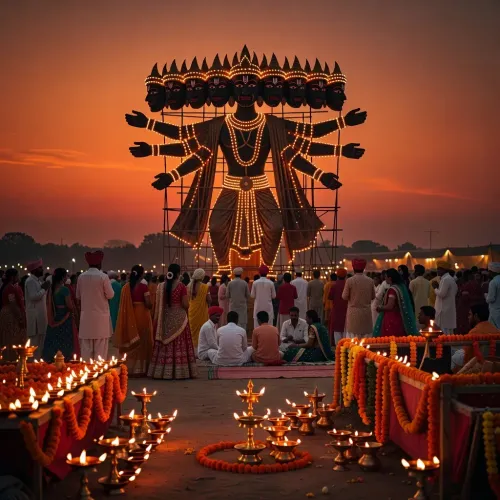
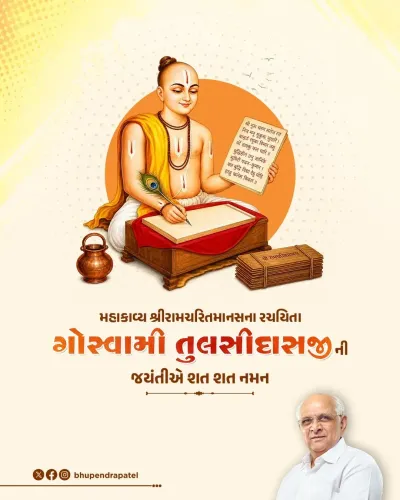
The lines originate in the Ramcharitmanas, Tulsidas's Awadhi-language retelling of the Ramayana composed in the late 16th century. The ideal of 'Ram Rajya' — literally, the reign of Lord Ram — describes a just, prosperous, and sorrow-free kingdom. The concept has carried enormous political and cultural weight in Indian public life, invoked across centuries as a shorthand for ideal governance rooted in dharma. Uttar Pradesh, home to Ayodhya — the city revered as Lord Ram's birthplace — sits at the heart of this tradition. The state government has consistently woven Ayodhya's religious heritage into its public communication and policy framing, from large-scale infrastructure development in the temple city to the annual celebrations of Ram Navami and Deepotsav.Why a Pinned Post Signals More Than Devotion
Pinning a post on an official government account is a deliberate editorial choice — it is the first message any visitor sees. By anchoring the CMO's profile to this particular verse, the office signals a cultural identity: that the governance of Uttar Pradesh sees itself in conversation with the Ram Rajya ideal. It is ceremonial communication, but it is also framing. This is consistent with a broader pattern in which Chief Ministers' offices across the Hindi belt use devotional verses and festival greetings as a form of soft-power public engagement — building affinity, reinforcing cultural continuity, and speaking directly to a majority-Hindu electorate in a register that is intimate rather than bureaucratic.Point of View
This is not incidental devotion but deliberate brand architecture. It signals to supporters and observers alike that governance in Uttar Pradesh is framed through a civilisational lens. Whether one reads this as authentic cultural expression or calculated political signalling, the effect is the same: the CMO's digital front door now opens with a verse about the ideal king.
NationPress
8 Nov 2026
Frequently Asked Questions
What is the Ram Rajya verse posted by the UP Chief Minister's Office?
The verse is from Tulsidas's Ramcharitmanas: 'Ram Raj baithen trailoka, Harshit bhaye gaye sab soka' — meaning 'When Ram ascended to rule the three worlds, all were filled with joy and all sorrows vanished.' The post concludes with 'Siyavar Ramchandra ki Jai.'
Who wrote the Ramcharitmanas?
The Ramcharitmanas was composed by the poet-saint Tulsidas in the 16th century, written in the Awadhi dialect of Hindi. It is one of the most widely read and recited religious texts across the Hindi heartland.
What does Ram Rajya mean?
Ram Rajya refers to the ideal kingdom of Lord Ram — a reign characterised by justice, prosperity, dharma, and the absence of suffering. It has been a powerful political and cultural symbol in India for centuries.
Why did the UP CMO pin this post on its official X account?
Pinning a post makes it the first content visible on a profile. The UP CMO's choice to pin a Ram Rajya verse signals a cultural and governance identity, consistent with the state's long emphasis on Ayodhya's religious heritage and the Ram Rajya ideal.
What is Uttar Pradesh's connection to Lord Ram and Ayodhya?
Uttar Pradesh is home to Ayodhya, the city revered in Hindu tradition as the birthplace of Lord Ram. The state government has invested significantly in Ayodhya's development and regularly marks festivals like Ram Navami and Deepotsav with official events.