Amit Shah Hits Out Over Naxal Bloodshed, Credits PM Modi
Synopsis
Union Home Minister Amit Shah, citing PM Modi, accused dynastic political leaders of shedding no tears when Bastar and India bled under Naxalite violence, sharpening BJP's political attack on Congress over Left Wing Extremism.
Key Takeaways
Union Home Minister Amit Shah posted on November 8, 2026 attacking 'naamdaar' dynastic leaders for indifference to Naxal violence in Bastar and across India.
The post invokes PM Narendra Modi as the leader who took Left Wing Extremism seriously, in contrast to previous dispensations.
Bastar, Chhattisgarh has been the core theatre of Naxalite insurgency for decades, with heavy casualties among security forces and civilians.
The SAMADHAN strategy , introduced in 2017 , is the Modi government's formal multi-pronged doctrine to eliminate Left Wing Extremism through security and development.
The BJP has consistently framed Congress-era governance as one that downplayed Naxalism; Shah's post continues that political narrative ahead of ongoing operations.
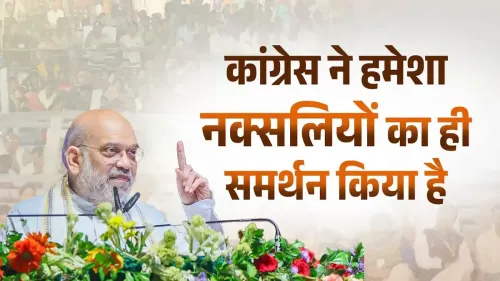
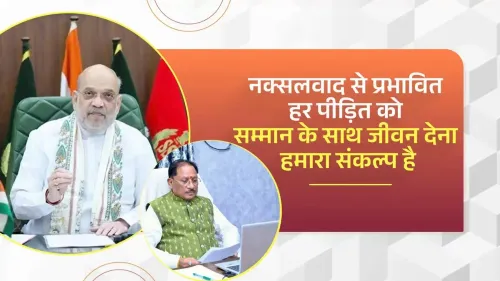
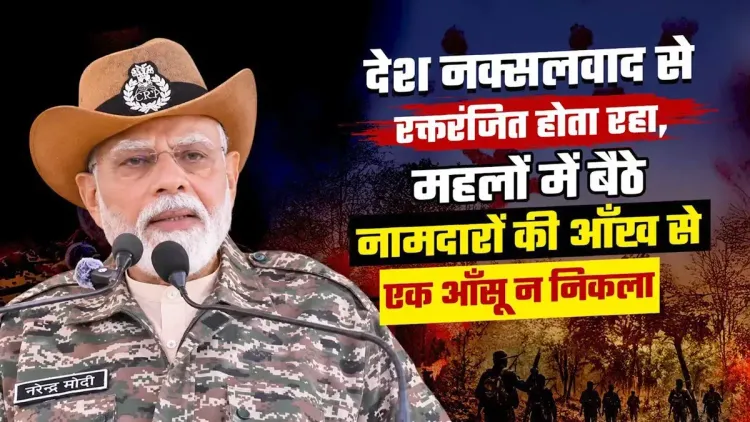
When Bastar and the rest of India bled under Naxalite violence, not a single tear fell from the eyes of those living in palaces — that is the sharp charge Union Home Minister Amit Shah levelled on Sunday, November 8, 2026, invoking Prime Minister Narendra Modi as the leader who finally took the insurgency seriously.
Shah's post, in Hindi, reads: 'जब बस्तर सहित पूरा देश नक्सलवाद से रक्तरंजित हो रहा था, तब महलों में रहने वाले किसी भी नामदार की आँखों से एक आँसू तक नहीं निकला' — 'When Bastar and the whole country were being drenched in blood by Naxalism, not a single tear came from the eyes of any 'naamdaar' (dynast) living in palaces.' The post is tagged to PM Modi's official handle, framing the contrast as a verdict on decades of governance.
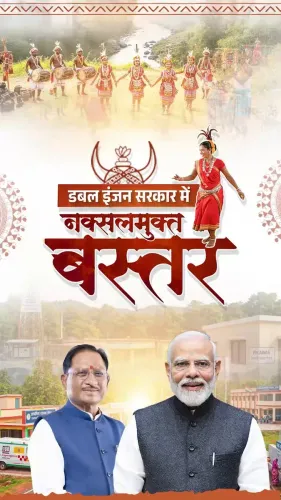
Bastar: Decades at the Epicentre
Bastar, the sprawling forested district of Chhattisgarh, has been a bleeding wound in India's internal-security map for the better part of four decades. Security forces, local administrators, and tribal civilians have all paid in lives. The region became shorthand for the state's most intractable conflict — one successive governments acknowledged but, critics argue, failed to decisively confront.
Shah's pointed use of the word 'naamdaar' (literally 'one with a name', a coded reference to dynastic political figures) signals the attack is aimed squarely at Congress leadership — a rhetorical device the BJP has deployed consistently to draw a line between inherited political privilege and what it presents as earned, results-driven governance.
The SAMADHAN Strategy and Modi Government's LWE Record
Since 2014, the Ministry of Home Affairs under the Modi dispensation has pressed a multi-pronged doctrine. In 2017, the government formalised the SAMADHAN strategy — an acronym covering Smart leadership, Aggressive strategy, Motivation and training, Actionable intelligence, Dashboard-based monitoring, Harnessing technology, Action plan for each theatre, and No access to financing. The framework brought security operations, development funding, and financial pressure on Naxal networks under a unified command logic.
The government has periodically cited a reduction in the number of districts classified as Left Wing Extremism-affected — a metric it uses to measure strategic progress. Tribal communities in Bastar, long caught between insurgent intimidation and security-force operations, have been the stated beneficiaries of road, school, and banking connectivity drives run in parallel with operations.
A Recurring Political Fault Line
Shah's post fits a durable BJP narrative: that the Congress era tolerated Naxalism as a law-and-order inconvenience rather than treating it as an existential threat to India's tribal heartland. The 'palaces' imagery — placing dynastic leaders in comfort while forests burned — is designed to land as moral indictment, not mere policy disagreement. It is combative framing, delivered with precision.
What keeps this more than a campaign soundbite is the genuine human cost behind it. Hundreds of security personnel and thousands of civilians have died in LWE-related violence over the decades. The political fight over who grieved, who acted, and who merely inherited power is a fight over that ledger of loss — and Shah is insisting, loudly, that only one side of the aisle has earned the right to stand over it.
With anti-Naxal operations in Chhattisgarh still active and the government's district-clearance targets in the frame, the numbers will eventually answer the politics.
Point of View
Documented suffering, it elevates what could be mere political sparring into a moral audit of governance. The 'naamdaar vs kaamdaar' (dynast vs doer) framing, now well-established in BJP rhetoric, gets its sharpest edge when paired with casualty counts and forested conflict zones rather than abstract policy debates. The timing, amid continuing anti-Naxal operations, signals the BJP intends to keep LWE elimination front and centre as both a security achievement and an electoral differentiator.
NationPress
8 Nov 2026
Frequently Asked Questions
What did Amit Shah say about Naxalism in Bastar?
Amit Shah posted on November 8, 2026, saying that when Bastar and the whole of India were drenched in blood by Naxalism, not a single tear came from dynastic leaders living in palaces, crediting PM Modi as the leader who took the threat seriously.
What is the SAMADHAN strategy for Left Wing Extremism?
SAMADHAN is a strategy introduced by the Ministry of Home Affairs in 2017 to address Left Wing Extremism through smart leadership, aggressive security operations, actionable intelligence, development initiatives, and cutting off financial access to Naxal groups.
Why is Bastar significant in the Naxal conflict?
Bastar, a district in Chhattisgarh, has been the epicentre of Naxalite insurgency for decades, witnessing consistent violence against security forces and tribal civilians, making it the symbolic and operational heart of India's Left Wing Extremism challenge.
Who are 'naamdaar' leaders Amit Shah referred to?
The term 'naamdaar', meaning those famous by inherited name, is a rhetorical reference used by BJP leaders to target dynastic political families, most commonly associated with Congress leadership, implying they inherited power rather than earning it through work.
How has the Modi government reduced Naxal-affected districts?
The government has cited coordinated security operations, development drives including roads, schools, and banking access in tribal areas, and the SAMADHAN framework as reasons for a reported reduction in the number of districts officially classified as Left Wing Extremism-affected since 2014.