Amit Shah: Naxal-free India makes this Diwali special
Synopsis
Union Home Minister Amit Shah on November 8, 2026 quoted PM Modi declaring this Diwali special as India's first as a Naxal-free nation, marking the culmination of a decade-long security and development campaign against Left Wing Extremism across central and eastern India.
Key Takeaways
Union Home Minister Amit Shah posted on November 8, 2026 quoting PM Narendra Modi calling this 'the first Diwali of a Naxal-free India.' The Ministry of Home Affairs has reported steady reduction in LWE-affected districts and violence incidents since 2014 .
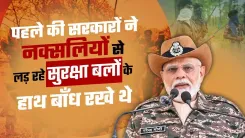
The campaign combined intensified security operations by central armed police forces with targeted development programmes.
The 'Red Corridor' — spanning Chhattisgarh, Jharkhand, Odisha and neighbouring states — was historically the epicentre of Maoist activity.
The next MHA annual report or parliamentary update on remaining LWE-affected areas will serve as the formal verification of the milestone.
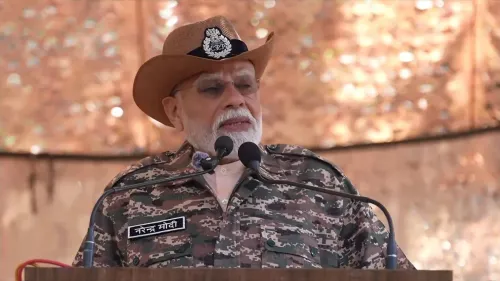
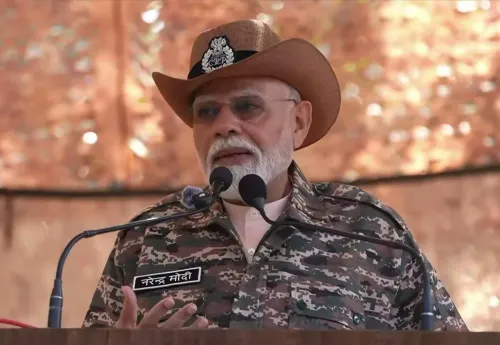
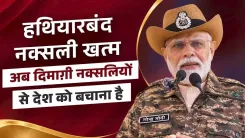
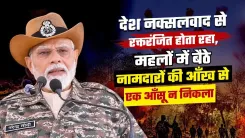
A milestone decades in the making is lighting up this Diwali season. Union Home Minister Amit Shah on Sunday, November 8, 2026 quoted Prime Minister Narendra Modi to frame the festival in historic terms, declaring that a Naxal-free India makes this the country's first truly special Diwali.
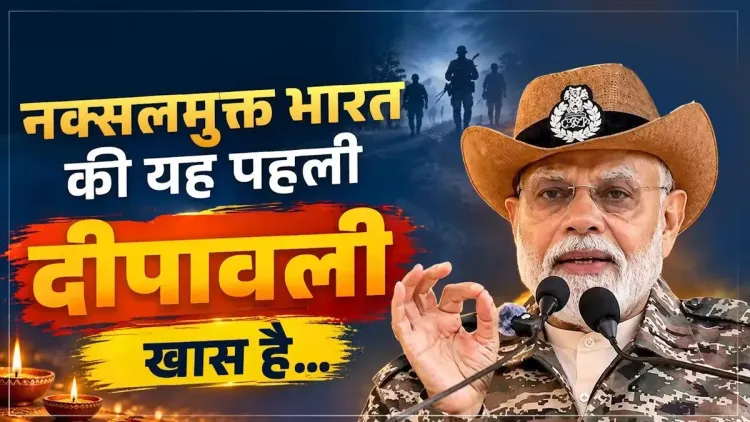
Shah's post carried Modi's words directly: 'नक्सलमुक्त भारत की यह पहली दीपावली खास है' — 'This first Diwali of a Naxal-free India is special.' The framing is deliberate and charged: for communities in central and eastern India that lived under the shadow of Left Wing Extremism for generations, the symbolism of a Diwali without that threat carries real weight.
A decade of pressure, a decade of declining violence
The road to this claim runs through years of parallel pressure. The Ministry of Home Affairs, under Shah since 2019, has pursued a twin-track strategy: intensified security operations by central armed police forces alongside targeted development programmes in affected districts. Official data across the last decade showed a steady shrinkage in the number of LWE-affected districts and a measurable fall in violence incidents.
That pattern accelerated under the current dispensation. District after district was removed from the LWE-affected list as a combination of surrenders, neutralisations, and infrastructure push changed the ground reality across the so-called 'Red Corridor' — the belt running through Chhattisgarh, Jharkhand, Odisha, Maharashtra and neighbouring states that once accounted for the bulk of Maoist activity.
What 'Naxal-free' means for millions at the margins
The practical stakes are not abstract. Residents of former LWE-affected areas — many of them tribal communities living in India's most resource-rich but historically under-served terrain — faced disrupted schooling, stalled infrastructure projects, and the constant threat of violence from both sides of the conflict. A formal declaration of Naxal-free status, if it holds, opens those areas to accelerated road connectivity, banking, and welfare delivery.
Central armed police forces, particularly the CRPF and its specialised units, bore the operational cost of this campaign across years of jungle warfare in difficult terrain. Shah's post, pegged to Modi's words, implicitly acknowledges that sacrifice as the festival of lights arrives.
The political moment around the milestone
Statements of this kind from senior BJP leaders tend to cluster around festivals and electoral cycles — the research record reflects this pattern clearly. What makes the current moment distinct is the specificity of the 'first Diwali' framing: it sets a temporal marker, inviting scrutiny of whether the security gains hold and whether the next MHA report or parliamentary update will formalise the district-level picture that underpins the claim.
The watch item now is straightforward: a formal MHA declaration on remaining LWE-affected areas and updated district-wise violence statistics will either cement the milestone or complicate it.
For now, the message from the country's top security ministry is unambiguous — the lights burn brighter this Diwali because a long war, fought in the forests of India's heartland, is being declared over.
Point of View
The festival of light, deployed as the backdrop for declaring the end of a decades-old insurgency. The 'first Diwali' framing is strategically precise: it creates a commemorative anchor that the BJP can return to electorally while also putting a verifiable stake in the ground that the MHA will need to defend with district-level data. The timing follows an established BJP pattern of linking internal-security milestones to cultural moments, amplifying reach beyond the policy community. If the claim holds through independent verification, it represents one of the most consequential internal-security outcomes of the Modi era; if data shows active pockets remain, the specificity of the declaration becomes a liability.
NationPress
8 Nov 2026
Frequently Asked Questions
What did Amit Shah say about Diwali 2026 and a Naxal-free India?
On November 8, 2026, Amit Shah posted PM Modi's statement that this Diwali is special because it is the first being celebrated in a Naxal-free India, marking what the government described as a historic security milestone.
What is Left Wing Extremism (LWE) in India?
Left Wing Extremism refers to the Maoist insurgency that has operated across central and eastern India — particularly in Chhattisgarh, Jharkhand, and Odisha — for decades, using violence to challenge state authority in tribal and forested areas.
How has the Indian government reduced Naxal violence?
The Ministry of Home Affairs has used a twin-track approach combining intensified security operations by central armed police forces with targeted development programmes, steadily reducing the number of LWE-affected districts and incidents over the past decade.
Which states were most affected by Naxalism in India?
Chhattisgarh, Jharkhand, Odisha, Maharashtra, and parts of Bihar and Andhra Pradesh formed the so-called 'Red Corridor,' which historically accounted for the bulk of Maoist activity in India.
How will India verify that it is truly Naxal-free?
The key indicator will be the Ministry of Home Affairs' next annual report or a formal parliamentary update detailing remaining LWE-affected districts and updated violence statistics, which will confirm or complicate the government's claim.