President Murmu Honors Martyrs of Jallianwala Bagh on 107th Anniversary

Synopsis
On the 107th anniversary of the Jallianwala Bagh massacre, President Droupadi Murmu pays tribute to the brave souls who sacrificed their lives, emphasizing the ongoing inspiration from their patriotism. This significant event highlights the dark chapter of British colonial rule and its lasting impact on India's freedom struggle.
Key Takeaways
107th anniversary of the Jallianwala Bagh massacre commemorates the sacrifices made by freedom fighters.
The event highlights the brutality of British colonial rule in India.
President Murmu and Defence Minister Singh reflected on the significance of this historical tragedy.
The massacre served as a catalyst for India's independence movement .
It is crucial to remember and honor the legacy of those who fought for our freedom.
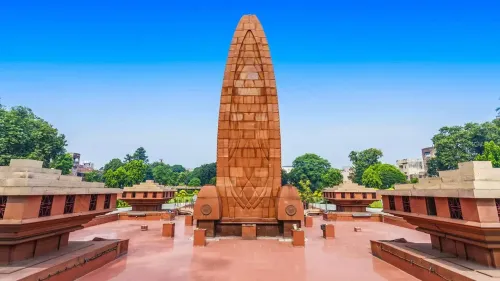
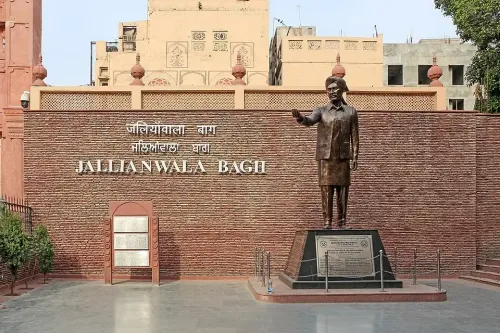
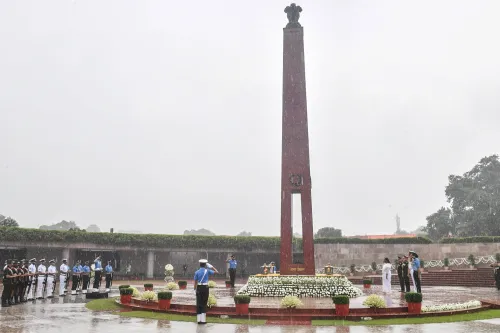
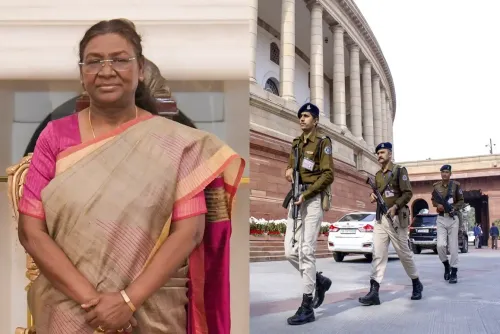
New Delhi, April 13 (NationPress) President Droupadi Murmu on Monday honored the courageous freedom fighters who gave their lives at Jallianwala Bagh, asserting that the nation will always be indebted to them.
President Murmu shared her tribute on social media platform 'X', stating, "I honor all the brave freedom fighters who laid down their lives at Jallianwala Bagh. This tragic event revived the spirit of our nation, igniting a steadfast determination for independence. Our gratitude towards them will never fade. I believe their unwavering patriotism will motivate all of us to pursue national service with earnestness and commitment."
Defence Minister Rajnath Singh also expressed his sentiments on 'X', saying, "On this day in 1919, I remember and pay my sincere respects to all the innocent Indians who lost their lives in the Jallianwala Bagh massacre. Their sacrifice marked a significant chapter in India’s fight for freedom, awakening the collective consciousness of our nation. Their bravery continues to inspire future generations to uphold justice, dignity, and self-respect."
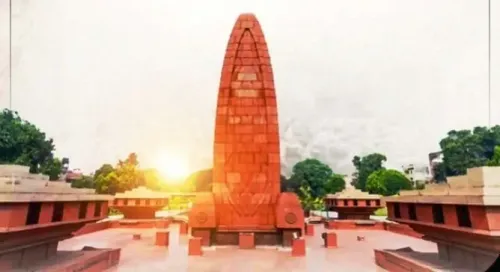
April 13, 2026, marks the 107th anniversary of the Jallianwala Bagh Massacre, a somber yet transformative moment in India's journey towards sovereignty.
Over a century ago, on this fateful day in 1919, the brutal actions of British colonial rulers created an everlasting impact on the Indian independence movement. This calamity served as a clarion call for the populace, exposing the harsh realities of foreign domination and altering the trajectory of the freedom struggle indefinitely.
The incident unfolded during the Baisakhi festival, when thousands of defenseless men, women, and children gathered at Amritsar’s Jallianwala Bagh to celebrate the Sikh New Year. Unbeknownst to them, the British administration had imposed Martial Law, which prohibited public gatherings and enforced strict curfews. This lack of communication led to an unforgettable tragedy.
On April 13, 1919, as the crowd celebrated, Colonel Reginald Dyer, the Acting Brigadier, arrived with his troops. Without any warning or opportunity for the attendees to disperse, he commanded his forces to fire upon them.
Dyer's troops, equipped with two armored vehicles armed with machine guns, along with Gurkha and Baluchi soldiers wielding Scinde rifles, relentlessly unleashed fire on the crowd for 10 to 15 minutes.
In total, over 1,650 rounds were discharged upon the helpless victims.
While official accounts later reported 379 fatalities and approximately 1,200 injuries, the actual death toll is believed to exceed 1,000, with countless more injured.
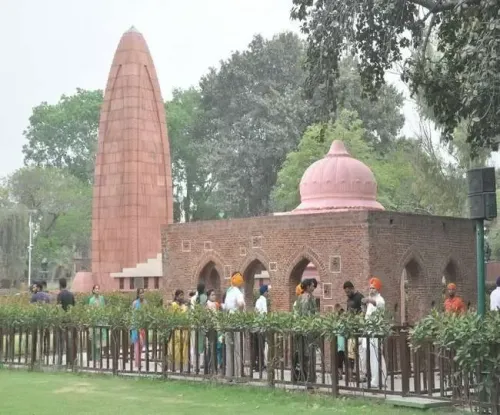
The massacre took place in Jallianwala Bagh, a walled garden surrounded on three sides by buildings, making escape nearly impossible as the sole entry point was overcrowded.
This atrocious incident, also referred to as the Amritsar Massacre, was a shocking act of violence that marked a pivotal moment in India’s struggle for independence.
Point of View
It is essential to acknowledge the immense sacrifices made by countless individuals in the fight for India's freedom. The event serves as a poignant reminder of the struggles endured and the collective resilience that has shaped our nation's identity. Understanding this history allows us to honor their legacy and strive for justice and dignity in our contemporary society.
NationPress
7 Oct 2026
Frequently Asked Questions
What was the Jallianwala Bagh massacre?
The Jallianwala Bagh massacre occurred on April 13, 1919, when British troops opened fire on a large crowd of unarmed Indians gathered in Amritsar, resulting in numerous casualties and injuries. This event is a pivotal moment in India's struggle for independence.
Why is April 13 significant in Indian history?
April 13 is significant as it marks the anniversary of the Jallianwala Bagh massacre, which led to widespread outrage and became a catalyst for the Indian independence movement against British colonial rule.
Who were the key figures in the Jallianwala Bagh incident?
Colonel Reginald Dyer was the British officer responsible for ordering the firing on the crowd. The incident involved thousands of innocent civilians, including men, women, and children, who gathered for the Baisakhi festival.
How did the Jallianwala Bagh massacre impact India?
The massacre awakened the national consciousness and galvanized the Indian population towards the independence movement, highlighting the brutality of colonial rule and fostering a sense of unity among Indians.
What is President Murmu's stance on the sacrifice of freedom fighters?
President Droupadi Murmu expressed deep gratitude towards the freedom fighters who sacrificed their lives at Jallianwala Bagh, emphasizing the importance of their legacy in inspiring future generations to serve the nation.