Is the Trinamool Congress Embracing a Youthful Shift?
Synopsis
As the 2024 Lok Sabha elections approach, the Trinamool Congress appears to be transitioning towards younger leadership. The recent candidate list reveals a blend of experience and fresh faces, signaling a potential shift in the party's direction under Mamata Banerjee's leadership.
Key Takeaways
Youthful Representation: The candidate list reflects a shift towards younger leaders.
Diverse Demographics: A mix of ages, genders, and social backgrounds is represented.
Leadership Dynamics: Abhishek Banerjee is emerging as a key figure in the party.
Political Strategy: The party aims to attract a broader electorate.
Upcoming Elections: West Bengal Assembly elections are set for April 23 and 29.
Kolkata, March 19 (NationPress) In the lead-up to the 2024 Lok Sabha elections, there were clear signals that parts of West Bengal’s ruling Trinamool Congress aimed to showcase a younger generation of leaders. Yet, it was reported that Chief Minister and party leader Mamata Banerjee had the final say, resulting in many of her senior colleagues being included in the Lok Sabha.
However, the list of potential candidates for the upcoming Assembly elections indicates the beginning of a significant shift towards a more youthful representation.
The debate between the 'old guard' and the 'new wave' had become so pronounced that it spilled into public view, with posters and banners declaring national General Secretary Abhishek Banerjee as the party's chief.
Subsequently, a consensus emerged: while Mamata Banerjee would remain the party's figurehead, the younger Banerjee would spearhead the party’s initiatives.
This divide appeared primarily around the management of state governance versus party organization.
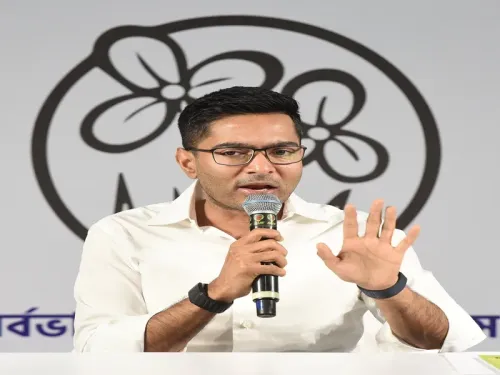
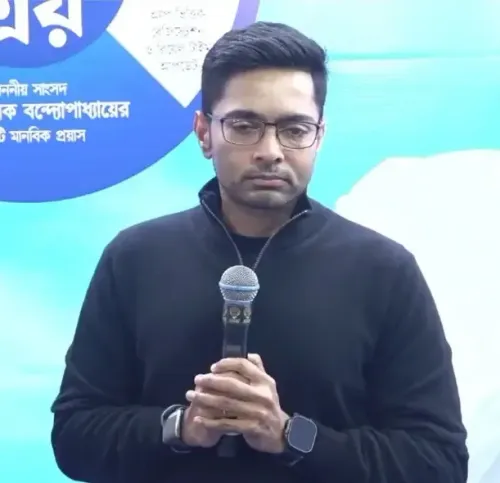
Since then, the organizational direction has been largely influenced by the 39-year-old Abhishek Banerjee, who is viewed as Mamata Banerjee’s successor.
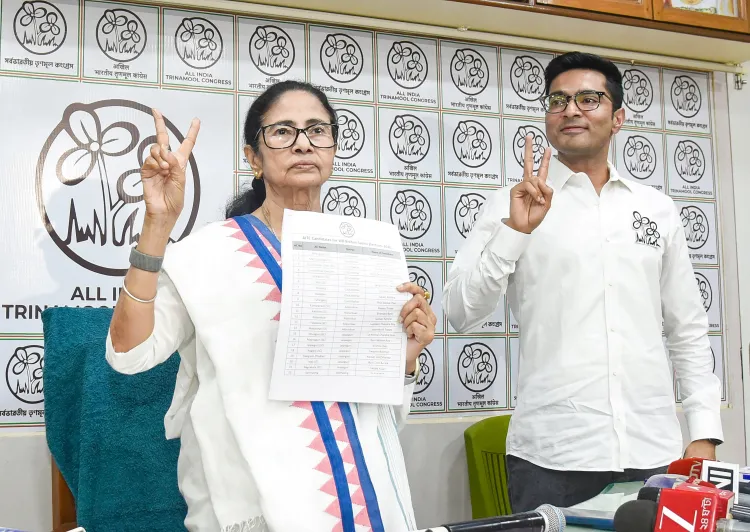
On Tuesday, after Mamata Banerjee and her nephew jointly unveiled the candidate list, Abhishek noted that among the 291 nominees, four candidates were under the age of 31 (1%), while 38 fell between 31 and 40 (13%).
The largest cohort consisted of 88 candidates aged between 41 and 50 years (31%), followed by 89 candidates aged between 51 and 60 (32%).
The remaining candidates included 47 aged between 61 and 70 (17%), 23 from the 71-80 age group (8%), and just two octogenarians, making up 1% of the list.
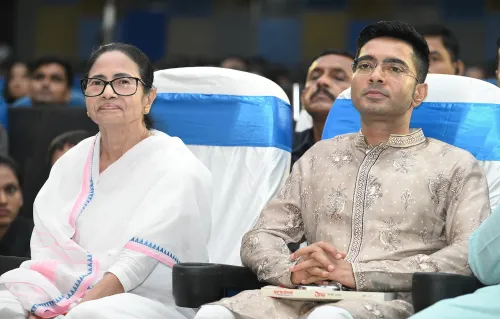
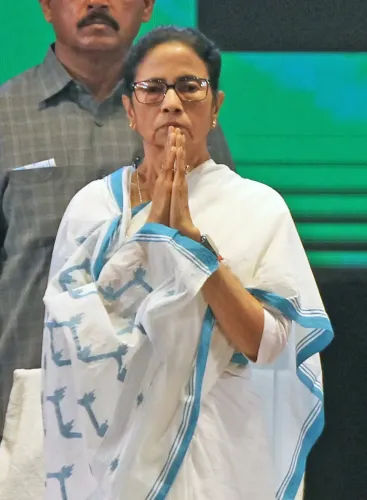
Mamata Banerjee was accompanied by Abhishek Banerjee, a three-time Lok Sabha MP, on one side, and the 75-year-old state party unit President Subrata Bakshi on the other.
The latter, who is also a Rajya Sabha MP, remained quiet during the media briefing.
The candidate list showcased a fresh blend of age, gender, social, and religious diversity, with 52 women, 78 from Scheduled Castes, 17 from Scheduled Tribes, and 47 candidates from minority communities.
Among the candidates announced, 141 were reportedly newcomers, while 135 were sitting MLAs. Additionally, 74 were dropped from the list, and 15 were reassigned to different constituencies.
The remaining three seats of the 294-member Assembly will be contested by the Anit Thapa-led Bharatiya Gorkha Prajatantrik Morcha (BGPM) in the Darjeeling hills.
Among those excluded from the Trinamool’s candidate list was Manoranjan Byapari, recognized as a pioneering author in Bengali Dalit literature despite his modest background. Official records indicate he is around 60, though some earlier reports suggest he may be in his seventies.
The author expressed his disappointment on social media, revealing that he learned of his exclusion through phone calls while taking a nap. However, he acknowledged that it had been anticipated for some time that he would not receive a ticket this election.
"I’ve lived a life of hardship, often lying on a railway platform with an empty stomach. I understand the struggles of the underprivileged and how they lose what is rightfully theirs," he posted on Facebook.
He stated that he entered politics with little and would exit the same way, reflecting on his contributions to the region and his fight against crime and smuggling. He also mentioned the factionalism he encountered as an MLA and hinted at a return to his literary pursuits.
Nonetheless, he acknowledged that Mamata Banerjee built the Trinamool through dedication and sacrifices and has the right to choose its candidates. This sentiment was echoed by sitting minister Tajmul Hossain, 68, and septuagenarians Rabindra Nath Ghosh, Biplab Roy Chowdhury, and Paresh Pal.
However, some younger candidates also found themselves left off the list.
The West Bengal Assembly elections are set to occur in two phases, on April 23 and 29, with results expected on May 4.
Point of View
The Trinamool Congress's candidate list reflects a significant internal shift. Balancing experienced leadership with youthful energy, the party seems poised to attract a broader electorate. This blend may redefine its political strategy as it navigates the upcoming elections.
NationPress
2 Oct 2026
Frequently Asked Questions
What is the significance of the new candidate list?
The new candidate list showcases a blend of youth and experience, indicating a potential shift towards a more dynamic leadership structure within the Trinamool Congress.
Who is Abhishek Banerjee?
Abhishek Banerjee is the national General Secretary of the Trinamool Congress and is viewed as Mamata Banerjee’s successor, playing a key role in shaping the party's direction.
What demographic changes are reflected in the candidate list?
The candidate list includes a diverse mix of ages, genders, and social backgrounds, highlighting the party's effort to represent various communities.
When will the West Bengal Assembly elections take place?
The West Bengal Assembly elections are scheduled for April 23 and 29, with results to be announced on May 4.
What was Manoranjan Byapari's reaction to being dropped?
Manoranjan Byapari expressed disappointment over his exclusion but acknowledged that it had been anticipated, reflecting on his long journey in politics and literature.