Tripura CM Manik Saha Completes Census 2027 Self-Enumeration
Synopsis
Tripura Chief Minister Dr. Manik Saha completed his Census 2027 digital self-enumeration on 17 July 2026, calling on all citizens to participate accurately and on time. India's first digital census follows a fifteen-year gap since the 2011 count, with data critical to welfare planning and constituency delimitation.
Key Takeaways
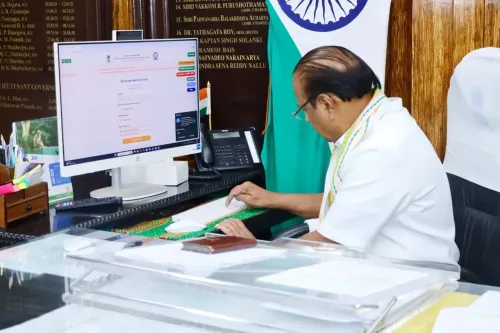
Manik Saha , Chief Minister of Tripura , completed his Census 2027 digital self-enumeration on 17 July 2026 .
He urged every citizen to participate accurately and within the stipulated time frame.
Census 2027 is India's first census with a structured digital self-enumeration component.
India's last completed census was in 2011 ; the 2021 round was postponed due to the COVID-19 pandemic .
Census data underpins fund devolution , welfare targeting, and the forthcoming delimitation of constituencies .
Census operations are overseen by the Registrar General of India under the Ministry of Home Affairs .
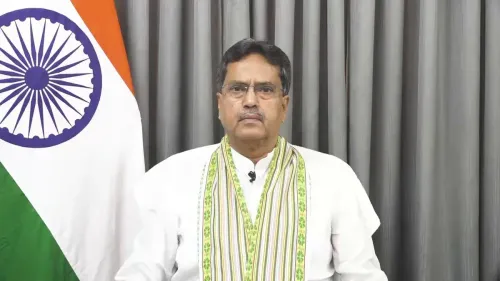
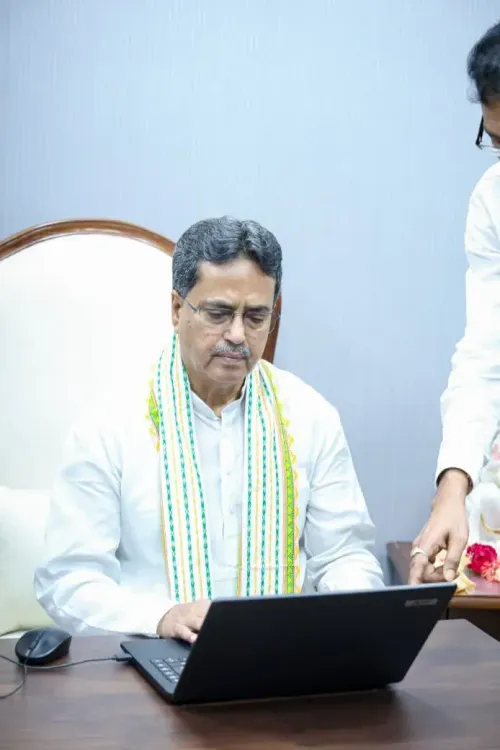
Tripura Chief Minister Dr. Manik Saha on Friday, 17 July 2026, completed his digital self-enumeration as part of Census 2027, urging every Indian citizen to participate in the national exercise accurately and within the stipulated deadline.
Context
Posting on X, Dr. Saha wrote: 'A complete and accurate Census is the foundation for better planning, effective governance, and inclusive development. Your participation matters.' The Chief Minister's public completion of the self-enumeration process is a deliberate signal to citizens in Tripura and beyond to treat the exercise as a civic obligation, not a bureaucratic formality.
India's last completed decennial census was conducted in 2011. The 2021 round was postponed indefinitely due to the COVID-19 pandemic, making Census 2027 the country's first fresh population count in over fifteen years. It is also India's first census to incorporate a structured digital self-enumeration component, a shift first announced in 2020.
Policy Backdrop
Census operations in India are governed by the Census Act, 1948 and overseen by the Registrar General of India under the Ministry of Home Affairs. The digital self-enumeration phase allows households to submit their own data through an official portal before field enumerators conduct verification visits, reducing both cost and human error.
The shift to digital platforms is part of a broader push to modernise India's national statistical machinery. Census data is foundational to fund devolution under Finance Commission formulae, welfare scheme targeting, and — critically — the upcoming delimitation of parliamentary and assembly constituencies, which has been constitutionally deferred pending fresh census figures.
Stakeholders and Impact
Every Indian household is a direct stakeholder in Census 2027. Undercount or inaccurate data can distort resource allocation for schemes covering health, education, housing, and food security — programmes that disproportionately affect marginalised communities in states like Tripura, where tribal populations form a significant share of residents.
State governments play a key amplification role. When a sitting Chief Minister publicly completes the self-enumeration and calls on citizens to follow suit, it lends institutional credibility to the campaign and can improve compliance rates at the grassroots level. Tripura has historically aligned with central data-collection drives, and Dr. Saha's participation continues that pattern.
What's Next
Once the self-enumeration window closes, field enumeration phases will follow, during which trained enumerators will verify and supplement household data. Provisional population totals — eagerly awaited by planners, economists, and political parties alike — are expected to be released in subsequent phases of the census cycle.
The accuracy of Census 2027 will shape policy decisions and political boundaries for the next decade. Broad citizen participation, particularly in the digital self-enumeration phase, is considered essential to ensuring the data reflects ground reality across India's vast and diverse population.
Point of View
The political stakes around census accuracy are unusually high — delimitation, welfare targeting, and Finance Commission allocations all hang on the outcome. A Chief Minister visibly leading by example can meaningfully shift citizen compliance in a state like Tripura, where digital literacy gaps and tribal geography make outreach challenging. The gesture also positions BJP-governed states as proactive partners in a landmark national exercise ahead of what could be a politically consequential delimitation process.
NationPress
17 Jul 2026
Frequently Asked Questions
What is Census 2027 self-enumeration?
Census 2027 self-enumeration is a digital process that allows Indian households to submit their own demographic data through an official government portal before field enumerators conduct verification visits. It is part of India's first digital census.
Why was the 2021 Census not conducted?
The 2021 Census was postponed due to the COVID-19 pandemic, which made large-scale field enumeration impossible. Census 2027 is being conducted to fill the resulting data gap, making it India's first fresh count since 2011.
How does Census data affect welfare schemes in India?
Census data is used to identify beneficiaries for central and state welfare schemes covering food security, housing, health, and education. Inaccurate or incomplete data can lead to eligible households being excluded from benefits.
What is constituency delimitation and why does it depend on the Census?
Delimitation is the redrawing of parliamentary and assembly constituency boundaries based on population changes. It is constitutionally required to be based on the latest Census figures, which is why Census 2027 data is politically significant.
How can Indian citizens complete Census 2027 self-enumeration?
Citizens can complete the self-enumeration process through the official Census digital portal provided by the Registrar General of India. Chief Minister Dr. Manik Saha has urged all citizens to do so accurately and within the stipulated deadline.