Can Tripura Become a Hydrogen Valley Hub for Green Hydrogen Export?

Synopsis
Tripura's Power Minister highlights the state's potential to build a Hydrogen Valley Hub, aligning with India's renewable energy goals. This initiative could transform the region into a key player in Green Hydrogen export, significantly boosting local economies and creating job opportunities.
Key Takeaways
Tripura's potential for a Hydrogen Valley Hub .
Alignment with India's National Green Hydrogen Mission .
Creating employment opportunities and boosting local economies .
Government support for renewable energy initiatives .
Challenges and strategies in implementing renewable energy projects .
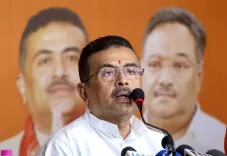
Guwahati, Oct 31 (NationPress) Ratan Lal Nath, the Power Minister of Tripura, stated on Friday that the state possesses remarkable potential to create a Hydrogen Valley Hub dedicated to the blending and export of Green Hydrogen, in accordance with India's renewable energy strategy under the National Green Hydrogen Mission.
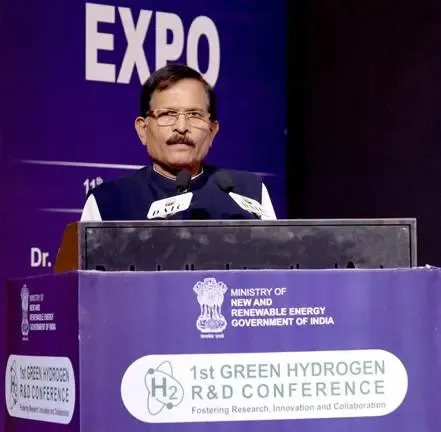
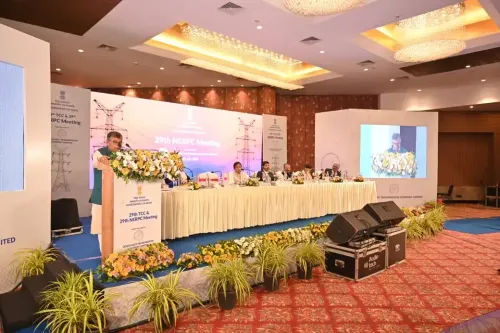
During his address at the Regional Workshop on Renewable Energy for the North Eastern Zone in Guwahati, Nath emphasized that Green Hydrogen is a rapidly growing sector where India has taken a leading position globally.
“The National Green Hydrogen Mission Policy has been officially announced by the Government of India. Tripura is in an advantageous position to establish a Hydrogen Valley Hub for both blending and exporting Green Hydrogen,” he remarked.
The Power Minister highlighted that the Ministry of New and Renewable Energy (MNRE) may offer financial and technical support for pre-feasibility studies of small hydro power projects statewide.
Showcasing Tripura’s achievements in renewable initiatives, Nath noted that the state has attained the top position among the eight Northeastern states in executing the PM-KUSUM Scheme. He received a distinguished award from Union Minister for New and Renewable Energy Pralhad Joshi during this event.
Nath mentioned that as the population and development rise, the demand for energy is escalating rapidly. “Tripura, being a mountainous region in the Northeast, encounters several challenges such as geographical isolation and infrastructure limitations. Nevertheless, the government has undertaken impressive initiatives to broaden renewable energy,” Nath stated.
He further explained that the Tripura government, via the Tripura Renewable Energy Development Agency (TREDA) under the Power Department, has introduced numerous initiatives aimed at creating job opportunities, increasing income for rural households, and enhancing socio-economic conditions.
Detailing advancements under various schemes, Nath shared that 300,000 study lamps have been distributed across 3,335 schools, 15,000 solar street lights have been installed in 1,012 village markets, and 30,000 solar street lights have been set up on village roads and other crucial locations. Moreover, 125 solar high masts have been erected at rural markets, 6,051 solar pumps (under PM-KUSUM-B) are irrigating more than 12,000 acres, 584 agricultural pumps have been solarized (PM-KUSUM-C), and 454 solar pumps have been installed for drinking water supply. Solar micro-grids have illuminated 289 remote villages.
Under the PM-Surya Ghar Muft Bijli Yojana, 16,951 consumers have enrolled thus far, with 1,186 households installing rooftop systems totaling 4.0 MW capacity. Of these, 988 consumers have obtained government subsidies.
“A total of 48.53 MW capacity of green energy systems has been established in Tripura, with a target of reaching 500 MW by 2030,” the Minister noted, highlighting the significant increase in renewable project activities.
Nath also underscored the necessity of developing skilled professionals to support the installation of 813.47 MW of renewable energy by 2030, projecting that approximately 4,234 job opportunities will be created in this process.
He further stressed the importance of manpower support, capacity building, and a new policy tailored for the Northeast to attract private investments in the renewable energy sector.
Tripura Power Secretary Abhishek Singh was also in attendance at the gathering.
Union Minister Pralhad Joshi, addressing the audience, remarked that initiatives like the PM-Surya Ghar Muft Bijli Yojana and PM-KUSUM are significantly transforming lives nationwide by empowering households and farmers. “Through these efforts, the eight Northeastern states — our Ashtalakshmi — will flourish and become pillars of India’s sustainable development,” Joshi concluded.
Point of View
I see Tripura's aspirations to develop a Hydrogen Valley Hub as a significant move towards sustainability. The state's commitment to renewable energy aligns with national goals, and the initiatives outlined by the Minister reflect a proactive approach to overcoming challenges. This development could serve as a model for other regions, promoting economic growth and job creation while contributing to environmental sustainability.
NationPress
3 Oct 2026
Frequently Asked Questions
What is the Hydrogen Valley Hub?
The Hydrogen Valley Hub is an initiative aimed at creating a centralized location for the blending and export of Green Hydrogen, promoting renewable energy.
How does Tripura plan to implement this initiative?
Tripura plans to leverage its geographical advantages and seek financial and technical assistance from the Ministry of New and Renewable Energy for the establishment of the Hydrogen Valley Hub.
What are the expected benefits of this project?
The project is expected to enhance local economies, create job opportunities, and position Tripura as a key player in India's renewable energy landscape.
How will this initiative affect local communities?
The initiative aims to create livelihood opportunities, improve socio-economic conditions, and empower rural families through renewable energy projects.
What is the target capacity for renewable energy in Tripura by 2030?
Tripura aims to achieve a renewable energy capacity of 500 MW by the year 2030.