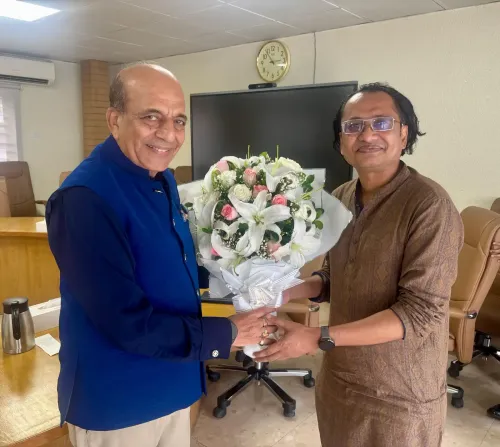
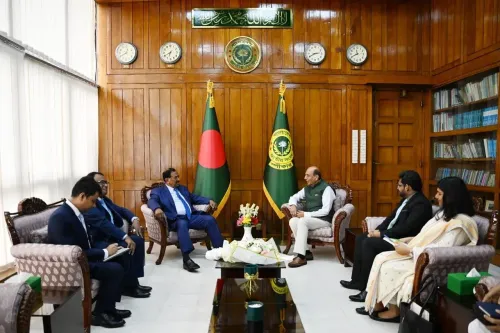
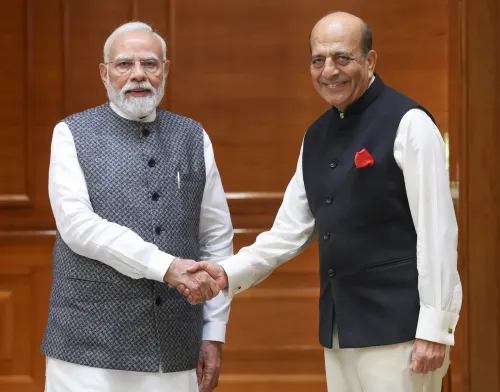
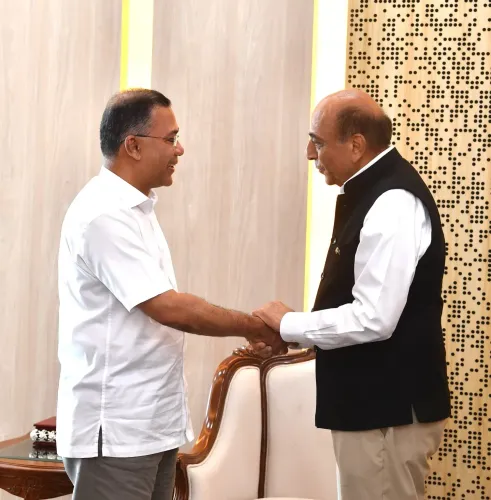
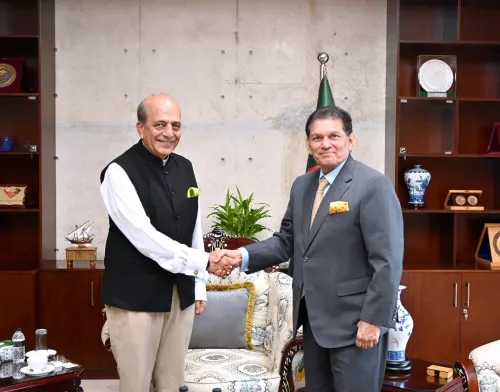
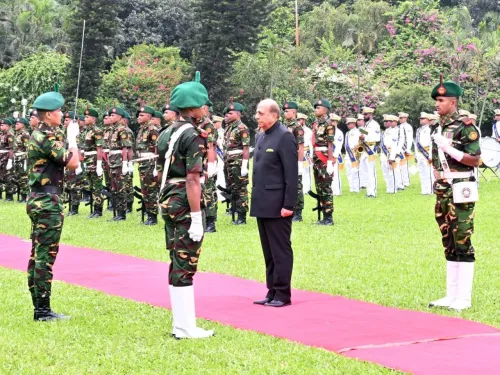
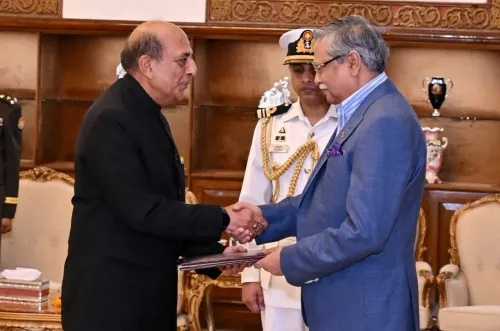
Dinesh Trivedi arrives in Dhaka via land route to begin Bangladesh posting
Synopsis
Dinesh Trivedi walked into one of India's most fraught diplomatic postings on his very first day — arriving in Dhaka as Jamaat-e-Islami prepared street protests over repatriation, China's BRI deepened its hold on Bangladeshi infrastructure, and Dhaka-Islamabad ties warmed. His Bengali fluency and political instincts are New Delhi's calculated bet against a backdrop that career diplomats have struggled to navigate.
Key Takeaways
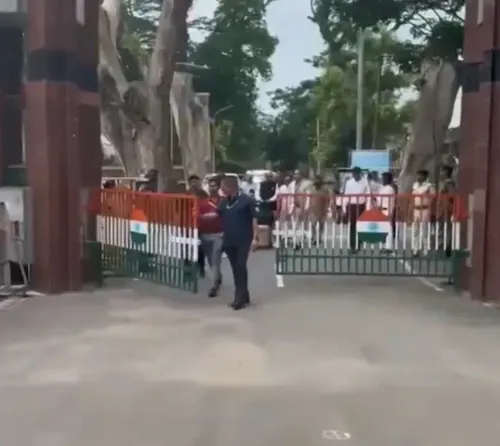
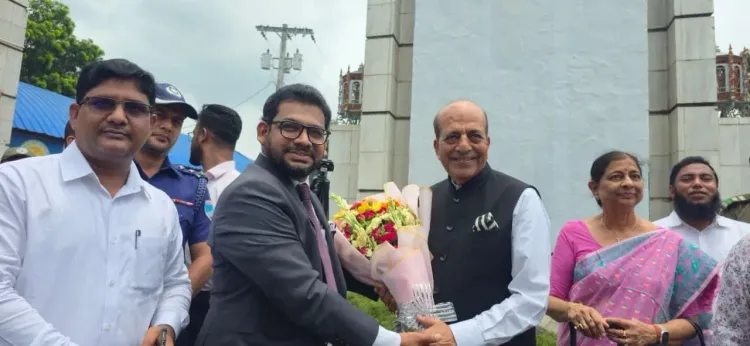
Dinesh Trivedi arrived in Dhaka on Friday, 13 June via the Petrapole-Benapole land border to formally assume his posting as India's High Commissioner to Bangladesh .
Jamaat-e-Islami and its allies were planning major protests on the day of his arrival over India's repatriation of illegal immigrants, with a larger rally set for Monday .
India's Parliamentary Committee on External Affairs flagged growing Chinese influence in Bangladesh across infrastructure, defence, ports, and the medical sector.
Experts cited five key challenges: generational discontinuity, collapse of the 1971 consensus, new political forces, Islamic radicalism, and strategic realignment with China and Pakistan .
Trivedi is fluent in Bengali , has represented Barrackpur in the Lok Sabha twice ( 2009 , 2014 ), and served three terms in the Rajya Sabha .
His appointment follows the precedent of non-career diplomat L.M.
Singhvi , who served as High Commissioner to the UK from 1991 to 1997 .
India's new High Commissioner to Bangladesh, Dinesh Trivedi, crossed into Dhaka on Friday, 13 June via the Petrapole-Benapole land border — a deliberate choice of route as he formally assumed one of India's most diplomatically sensitive postings. The appointment of a seasoned politician rather than a career diplomat signals New Delhi's intent to deploy political capital at a moment when bilateral ties are under unusual strain.
The Arrival
Trivedi, accompanied by his wife, crossed through the Petrapole-Benapole border check posts connecting West Bengal's North 24 Parganas district to Jessore in Bangladesh around noon. He was formally received at the border by Pawankumar Tulshidas Badhe, India's Deputy High Commissioner in Bangladesh, and Arif Mahmud, Deputy Chief of Protocol of the Bangladesh Ministry of Foreign Affairs.
Notably, his arrival coincided with plans by Bangladesh's principal Opposition, Jamaat-e-Islami, and its allies to stage major protests against the repatriation of illegal immigrants from India — protests that the party has characterised as opposition to 'forced pushbacks'. A larger rally is reportedly planned for Monday. India is said to be closely monitoring the situation.
A Volatile Frontier from Day One
The timing leaves Trivedi little room for a quiet settling-in period. With Jamaat-e-Islami mobilising street protests over repatriation, he must navigate a frontier where humanitarian concerns and security imperatives are in direct tension. This is compounded by a broader set of structural challenges that India's own parliamentary scrutiny has flagged.
A report by India's Parliamentary Committee on External Affairs on the 'Future of India-Bangladesh Relationship', released late last year, expressed concern about the 'increasing presence' of China in Bangladesh — particularly through infrastructure, military cooperation, and port developments. The committee specifically noted visits by Bangladesh Jamaat-e-Islami leaders to China as evidence of Beijing's broad engagement with multiple Bangladeshi political factions.
The China and Pakistan Dimensions
Experts who testified before the parliamentary committee identified five drivers of the current challenge: generational discontinuity, the collapse of the 1971 consensus, the rise of new political forces, the growth of Islamic radicalism, and strategic realignment with China and Pakistan. The committee flagged Chinese influence not just in defence and infrastructure but also in Bangladesh's medical sector.
China's Belt and Road Initiative (BRI) has deepened its footprint in Bangladesh through defence establishments, river water management projects, and port expansion. The upcoming renewal of the Ganga Water Treaty and ongoing trade frictions add to the complexity, particularly as Dhaka has sought Chinese technical expertise in negotiations. Trivedi will need to counterbalance Beijing's leverage without appearing heavy-handed — a balance that career diplomats have found difficult to strike.
Mounting concerns over Dhaka's renewed ties with Islamabad — including direct flight services and military cooperation, especially during the Muhammad Yunus-led interim government period — have further complicated the bilateral picture, according to reports.
A Non-Career Diplomat: Precedent and Political Logic
Trivedi's appointment as a non-career diplomat has drawn attention, but it is not without historical precedent. Eminent jurist and parliamentarian L.M. Singhvi served as High Commissioner to the United Kingdom from 1991 to 1997 without a career diplomatic background, and his tenure was widely regarded as effective in projecting India's democratic credentials during the economic liberalisation era.
Trivedi brings his own assets. He is fluent in Bengali, having spent considerable time in Kolkata, and has twice represented West Bengal's Barrackpur Lok Sabha constituency — in 2009 and 2014 — before losing the 2019 contest to the Bharatiya Janata Party (BJP). He has served three terms in the Rajya Sabha: from 1990 to 1996 representing Gujarat for the Janata Dal, and from 2002 to 2008 representing West Bengal for the All India Trinamool Congress (TMC). He was renominated in 2020 but resigned midway following a falling-out with the party leadership, after which he joined the BJP.
As Railway Minister in the United Progressive Alliance (UPA) government, Trivedi rushed to an accident site immediately after taking oath in July 2011 — a gesture that earned him public goodwill at the time.
What Comes Next
With Dhaka in political flux and India's strategic stakes unusually high, Trivedi's political instincts and Bengali fluency may prove more valuable than formal diplomatic training in the months ahead. How he manages the Jamaat protests, the China-Pakistan axis, and the water treaty renewal will be early tests of whether New Delhi's unconventional appointment pays off.
Point of View
Shaped by street mobilisation, identity politics, and great-power competition. Trivedi's Bengali roots and Lok Sabha experience give him cultural access that few IFS officers can replicate. But fluency and goodwill are not a substitute for institutional knowledge when the Ganga Water Treaty comes up for renewal or when Beijing offers Bangladesh a better infrastructure deal. The real question is whether New Delhi has backed this appointment with the analytical and technical support that a non-career envoy will need to avoid being outmanoeuvred on the details.
NationPress
21 Sept 2026
Frequently Asked Questions
Who is Dinesh Trivedi and why was he appointed High Commissioner to Bangladesh?
Dinesh Trivedi is a veteran Indian politician and former Railway Minister who was appointed as India's High Commissioner to Bangladesh. He is a non-career diplomat chosen for his political experience, Bengali fluency, and familiarity with West Bengal — assets considered valuable at a time of heightened political turbulence in Dhaka.
How did Dinesh Trivedi travel to Dhaka to assume his posting?
Trivedi chose the land route, crossing into Bangladesh through the Petrapole-Benapole border check posts connecting West Bengal's North 24 Parganas district to Jessore in Bangladesh. He arrived around noon on Friday and was received by Indian and Bangladeshi protocol officials at the border.
What are the main challenges Trivedi faces as High Commissioner to Bangladesh?
Trivedi faces several immediate challenges: managing Jamaat-e-Islami protests over India's repatriation of illegal immigrants, countering China's growing influence in Bangladesh through BRI infrastructure and defence cooperation, navigating renewed Bangladesh-Pakistan ties, and handling the upcoming renewal of the Ganga Water Treaty.
What has India's parliamentary committee said about China's role in Bangladesh?
India's Parliamentary Committee on External Affairs flagged the 'increasing presence' of China in Bangladesh through infrastructure, military cooperation, port expansion, and even the medical sector. It noted visits by Jamaat-e-Islami leaders to China and called on the government to develop strategies to counter this influence without compromising India's security concerns.
Is appointing a non-career diplomat as High Commissioner to Bangladesh unusual?
It is uncommon but not unprecedented. Eminent jurist L.M. Singhvi served as India's High Commissioner to the United Kingdom from 1991 to 1997 without a career diplomatic background, and his tenure was considered effective. Trivedi's appointment follows a similar logic of deploying political stature and cultural affinity over formal diplomatic training.