TVK targets 85% local body seats in Tamil Nadu, allies push for larger share
Synopsis
TVK is targeting 85% of Tamil Nadu local body seats, offering just 15% to allies like Congress and IUML — a formula already straining the coalition. With control of all municipal corporations also on TVK's wish list, the seat-sharing talks could define whether CM Vijay's party consolidates real grassroots power or fractures its alliance ahead of January 2027.
Key Takeaways
TVK plans to contest approximately 85% of seats in Tamil Nadu local body elections, expected in January 2027 .
Alliance partners Congress and IUML are seeking a larger share than the proposed 15% allocation.
TVK wants to retain control of all municipal corporations , adding another flashpoint to coalition talks.
Ministers, legislators, and district secretaries will lead candidate identification, targeting constituencies where TVK has strong local networks.
Party functionaries acknowledge that CM Vijay 's popularity alone may not be decisive in ward-level contests.
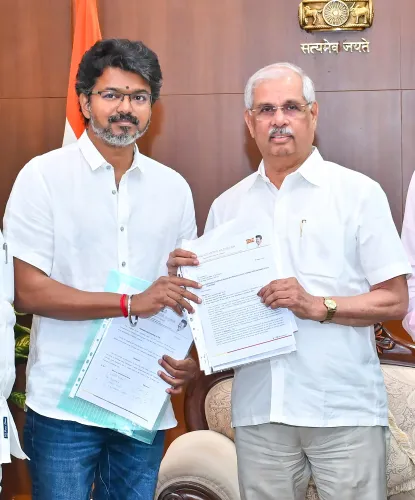
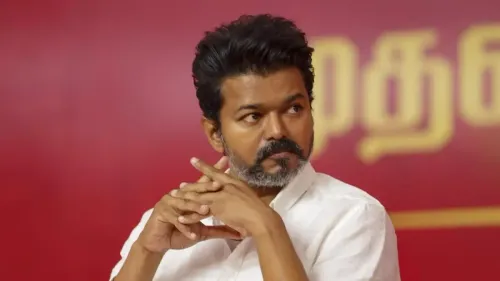
Tamilaga Vettri Kazhagam (TVK), the party led by Tamil Nadu Chief Minister Vijay, is gearing up for the state's local body elections — likely scheduled for January 2027 — with its leadership aiming to contest roughly 85 per cent of available seats, leaving the remaining 15 per cent for alliance partners, according to party functionaries. The move signals TVK's intent to establish deep grassroots roots, but is already generating friction within the coalition.
The Seat-Sharing Flashpoint
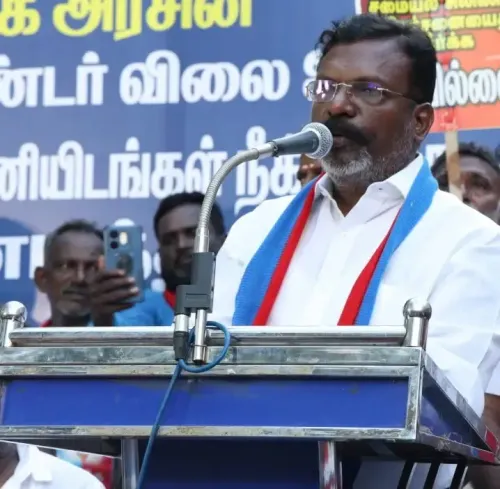
Alliance partners, including the Indian National Congress (Congress) and the Indian Union Muslim League (IUML), are reportedly seeking a significantly larger share of seats than the 15 per cent being offered. Several partners are also pushing for control over mayoral positions and, in some cases, full authority over specific municipal corporations and municipalities.
TVK, however, wants to retain control of all municipal corporations — a stance that is expected to make seat-sharing discussions particularly contentious. Senior party leaders and ministers are expected to hold direct talks with allies to persuade them to accept the proposed formula, according to functionaries. The partners, for their part, are reportedly determined to press their case, citing their contributions to TVK's rise to power.
Why Local Bodies Matter for TVK
The upcoming elections are being viewed within TVK as a critical test of the party's organisational depth, particularly in rural constituencies and among women, workers, and young voters. Control over corporations, municipalities, and panchayats is seen as essential to consolidating the party's structure and expanding its community connections beyond the urban strongholds where CM Vijay's celebrity appeal has been most potent.
Notably, this is TVK's first major electoral push at the grassroots level since its formation, making the outcome a key indicator of whether its support can translate into durable local influence rather than star-driven momentum.
Candidate Selection Strategy
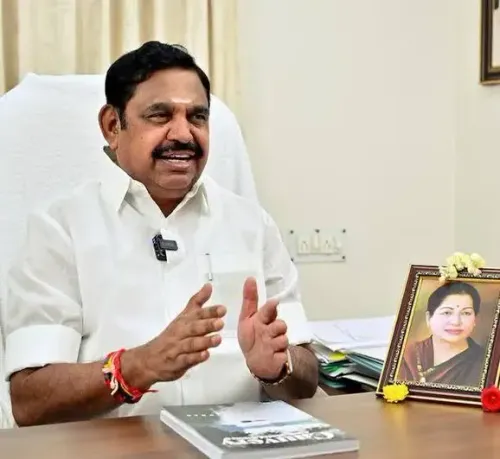
TVK has begun mapping constituencies where it holds strong prospects, with ministers, legislators, and district secretaries tasked with leading election preparations. Candidate selection is expected to prioritise individuals with an established local support base and sustained community engagement — a deliberate counterweight to the entrenched networks of rivals DMK and AIADMK.
Party functionaries have acknowledged openly that CM Vijay's personal popularity alone may not be sufficient in ward-level contests, where voters typically weigh a candidate's accessibility and day-to-day relationship with residents more heavily than top-of-ticket appeal.
What Happens Next
The proposed 85–15 seat-sharing formula remains subject to formal negotiations with alliance partners. The outcome of those talks will shape the coalition's cohesion ahead of an election that TVK's leadership considers pivotal to its long-term political expansion across Tamil Nadu. The party's ability to reconcile its centralising ambitions with the demands of a multi-party alliance will be closely watched as the January 2027 deadline approaches.
Point of View
And it intends to own the grassroots, not share them. The tension is structural — Congress and IUML joined the alliance expecting returns, and a 15% offer after helping a new party into government is unlikely to hold. What is often missed in coverage of TVK's rise is that star power and ward-level dominance are genuinely different things; DMK and AIADMK built their local networks over decades. TVK's bet is that a disciplined candidate selection process can compress that timeline — a wager Tamil Nadu politics has punished before.
NationPress
28 Oct 2026
Frequently Asked Questions
What is TVK's plan for Tamil Nadu local body elections?
TVK plans to contest approximately 85% of seats in the upcoming Tamil Nadu local body elections, tentatively set for January 2027, leaving 15% for alliance partners. The party is also seeking to retain control of all municipal corporations.
Why are TVK's allies unhappy with the proposed seat-sharing formula?
Alliance partners such as Congress and the IUML are reportedly expecting a larger share of seats and opportunities to lead mayoral and municipal corporation positions. They cite their role in supporting TVK's rise to power as justification for greater representation.
When are the Tamil Nadu local body elections expected to be held?
The elections are likely to be held in January 2027, according to party functionaries. TVK is treating them as a critical test of its grassroots organisational strength.
How is TVK selecting candidates for the local body elections?
TVK is prioritising candidates with an established local support base and sustained community engagement, recognising that ward-level contests depend more on a candidate's accessibility than on top-of-ticket appeal. Ministers, legislators, and district secretaries are leading the candidate identification process.
Why does TVK consider local body elections important?
Control over corporations, municipalities, and panchayats is seen as essential for TVK to consolidate its party organisation and build lasting community connections beyond urban areas. Functionaries also acknowledge that CM Vijay's popularity alone may not be sufficient without strong local candidates.