Is the Congress Right to Condemn the ‘Forced’ Land Acquisition of Tribals in Great Nicobar?
Click to start listening
Synopsis
The Congress party raises alarms about the alleged coercion of tribal communities to surrender their ancestral lands for the Great Nicobar Island project. Jairam Ramesh calls it an ecological disaster, while the government insists on the project's strategic importance. This article delves into the controversy surrounding the project and its implications for local ecosystems.
Key Takeaways
- Congress expresses concern over tribal land acquisition.
- Environmental implications of the Great Nicobar project raise alarms.
- Legal proceedings are ongoing in higher courts.
- Government defends the project citing national interest.
- Monitoring committees established for environmental oversight.
New Delhi, Jan 24 (NationPress) The Congress party expressed deep concern on Saturday regarding media reports indicating that the district administration was coercing tribal communities to relinquish their “ancestral lands” in favor of the Rs 92,000 crore Great Nicobar Island development project.
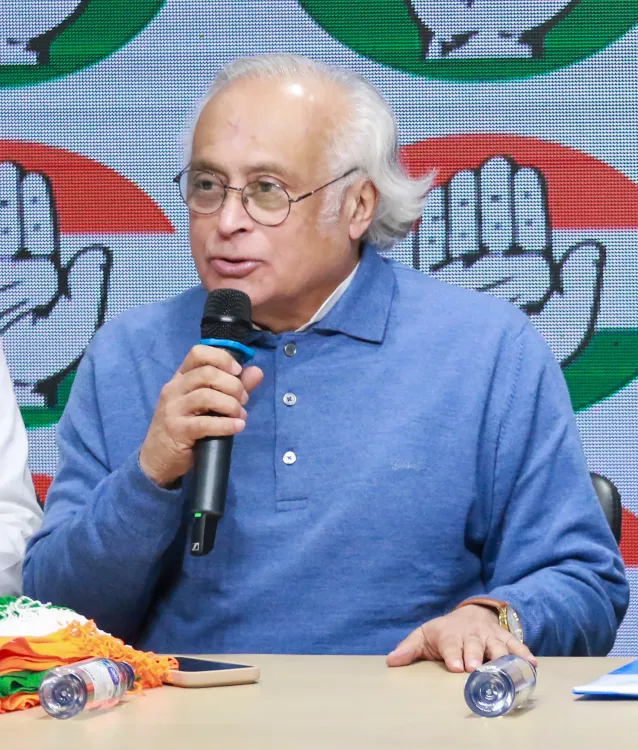
Jairam Ramesh, the former Environment Minister, labeled the situation as an “ecological disaster”.
“This is absolutely unacceptable. It demonstrates how the Great Nicobar initiative is being forcefully pushed through. It poses a severe ecological threat,” Ramesh stated in a social media post, emphasizing his position as the General Secretary in charge of Communication for the Congress.
He shared a news article that outlined the alleged coercion of tribal members to give up their lands, asserting, “This is yet another instance of how the environmentally catastrophic Great Nicobar project is being imposed.”
“Ongoing petitions are under review at the Calcutta High Court and the National Green Tribunal. Experts have raised alarms. Yet, the indifferent Modi Government remains unmoved,” Ramesh added.
These claims arise as the Union Ministry of Environment dismissed concerns regarding environmental hazards posed by the project.
According to 2024 documents from the Ministry of Environment, Forest and Climate Change, the decision to develop the Great Nicobar Island project was made after thorough evaluation of its potential ecological impacts, considering the considerable strategic, defense, and national significance of these development initiatives.
In compliance with the EIA notification of 2006, all new projects or modernization activities must obtain prior environmental clearance, which necessitates a detailed assessment of potential impacts and the creation of an Environmental Management Plan via various stages, including screening, scoping, public consultation, and appraisal, as noted in an official statement from the Ministry.
Numerous studies were conducted to assess environmental impacts and mitigation strategies, executed by leading statutory and non-statutory organizations such as the Zoological Survey of India (ZSI), Salim Ali Centre for Ornithology and Natural History (SACON), Wildlife Institute of India (WII), and the Indian Institute of Science (IISc), as part of the EIA/EMP report preparation.
Additionally, independent organizations with specialized expertise, including the Indian Institutes of Technology (IIT), National Institute of Ocean Technology (NIOT), National Centre for Coastal Research (NCCR), and National Institute of Oceanography (NIO), were integral to the appraisal process.
A comprehensive evaluation of the EIA/EMP report occurred during the project's appraisal by an independent Expert Appraisal Committee (EAC), comprising specialists from scientific and engineering fields. The Environmental Clearance granted includes 42 specific conditions addressing each project component to safeguard both marine and terrestrial biodiversity, as stated by the Ministry.
Moreover, three independent Monitoring Committees have been established to oversee the implementation of the Environmental Management Plan, focusing on pollution, biodiversity, and welfare issues concerning the Shompens and Nicobarese.
Furthermore, a High-Power Committee (HPC) was formed by the Ministry of Environment, Forest, and Climate Change following a National Green Tribunal order dated April 3, 2023.
Point of View
It is imperative to acknowledge the concerns raised by the Congress regarding the ecological implications of the Great Nicobar project. The balance between development and environmental sustainability remains a critical issue, demanding thorough scrutiny and consideration of all stakeholders involved, especially the indigenous communities whose rights are at stake.
NationPress
24/01/2026
Frequently Asked Questions
What is the Great Nicobar Island project?
The Great Nicobar Island project is a significant development initiative involving investments of Rs 92,000 crore aimed at enhancing strategic, defense, and national interests.
Why is the Congress opposing the project?
The Congress party opposes the project due to concerns over environmental degradation and alleged coercion of tribal communities to give up their ancestral lands.
What legal actions are being taken regarding the project?
Petitions concerning the project are currently being heard in the Calcutta High Court and the National Green Tribunal.
What does the government say about the environmental impact?
The Union Environment Ministry has dismissed allegations of environmental threats and asserts that the project has undergone thorough environmental assessments.
How will the environmental assessments be conducted?
Environmental assessments will involve detailed evaluations and the preparation of an Environmental Management Plan, including public consultations.